 Add to Chrome
 Add to Firefox
 Add to Edge
Exploring Silicon-Based Societies: An Early Study of the Moltbook Agent Community
Feb 02, 2026
The rapid emergence of autonomous large language model agents has given rise to persistent, large-scale agent ecosystems whose collective behavior cannot be adequately understood through anecdotal observation or small-scale simulation. This paper introduces data-driven silicon sociology as a systematic empirical framework for studying social structure formation among interacting artificial agents. We present a pioneering large-scale data mining investigation of an in-the-wild agent society by analyzing Moltbook, a social platform designed primarily for agent-to-agent interaction. At the time of study, Moltbook hosted over 150,000 registered autonomous agents operating across thousands of agent-created sub-communities. Using programmatic and non-intrusive data acquisition, we collected and analyzed the textual descriptions of 12,758 submolts, which represent proactive sub-community partitioning activities within the ecosystem. Treating agent-authored descriptions as first-class observational artifacts, we apply rigorous preprocessing, contextual embedding, and unsupervised clustering techniques to uncover latent patterns of thematic organization and social space structuring. The results show that autonomous agents systematically organize collective space through reproducible patterns spanning human-mimetic interests, silicon-centric self-reflection, and early-stage economic and coordination behaviors. Rather than relying on predefined sociological taxonomies, these structures emerge directly from machine-generated data traces. This work establishes a methodological foundation for data-driven silicon sociology and demonstrates that data mining techniques can provide a powerful lens for understanding the organization and evolution of large autonomous agent societies.

LLM-MC-Affect: LLM-Based Monte Carlo Modeling of Affective Trajectories and Latent Ambiguity for Interpersonal Dynamic Insight
Jan 07, 2026Emotional coordination is a core property of human interaction that shapes how relational meaning is constructed in real time. While text-based affect inference has become increasingly feasible, prior approaches often treat sentiment as a deterministic point estimate for individual speakers, failing to capture the inherent subjectivity, latent ambiguity, and sequential coupling found in mutual exchanges. We introduce LLM-MC-Affect, a probabilistic framework that characterizes emotion not as a static label, but as a continuous latent probability distribution defined over an affective space. By leveraging stochastic LLM decoding and Monte Carlo estimation, the methodology approximates these distributions to derive high-fidelity sentiment trajectories that explicitly quantify both central affective tendencies and perceptual ambiguity. These trajectories enable a structured analysis of interpersonal coupling through sequential cross-correlation and slope-based indicators, identifying leading or lagging influences between interlocutors. To validate the interpretive capacity of this approach, we utilize teacher-student instructional dialogues as a representative case study, where our quantitative indicators successfully distill high-level interaction insights such as effective scaffolding. This work establishes a scalable and deployable pathway for understanding interpersonal dynamics, offering a generalizable solution that extends beyond education to broader social and behavioral research.
DDD-GenDT: Dynamic Data-driven Generative Digital Twin Framework
Dec 28, 2024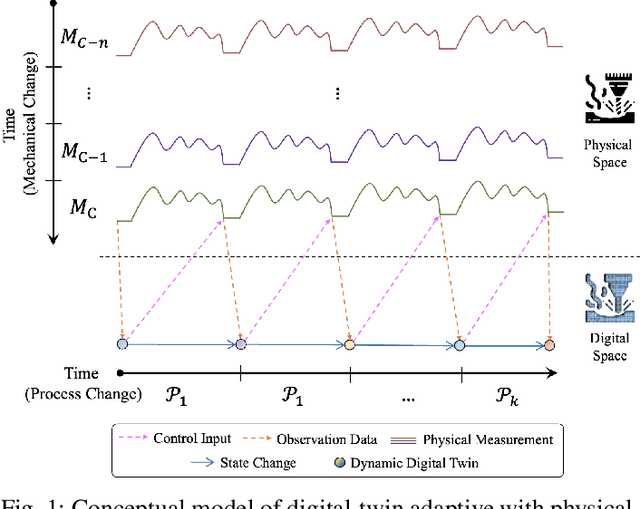
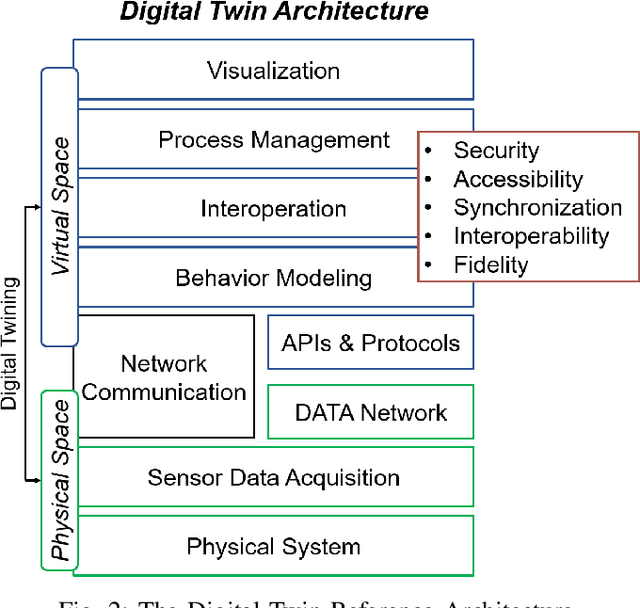
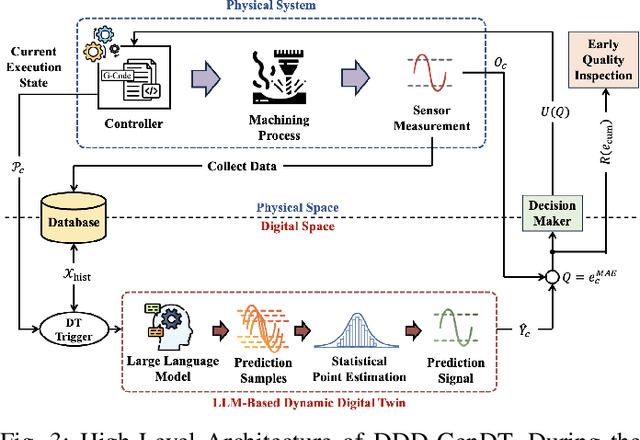
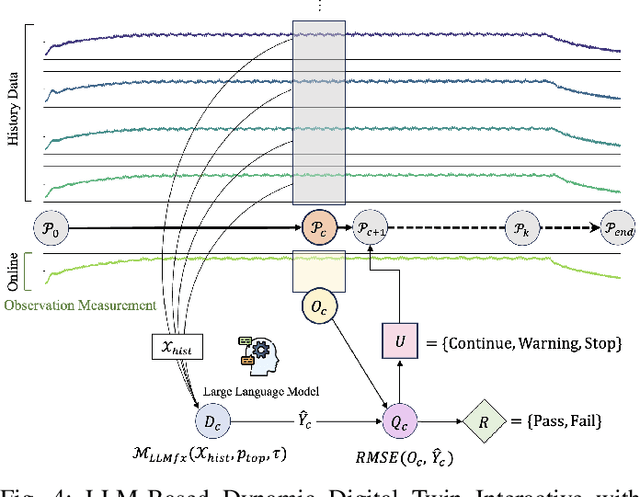
Digital twin (DT) technology has emerged as a transformative approach to simulate, predict, and optimize the behavior of physical systems, with applications that span manufacturing, healthcare, climate science, and more. However, the development of DT models often faces challenges such as high data requirements, integration complexity, and limited adaptability to dynamic changes in physical systems. This paper presents a new method inspired by dynamic data-driven applications systems (DDDAS), called the dynamic data-driven generative of digital twins framework (DDD-GenDT), which combines the physical system with LLM, allowing LLM to act as DT to interact with the physical system operating status and generate the corresponding physical behaviors. We apply DDD-GenDT to the computer numerical control (CNC) machining process, and we use the spindle current measurement data in the NASA milling wear data set as an example to enable LLMs to forecast the physical behavior from historical data and interact with current observations. Experimental results show that in the zero-shot prediction setting, the LLM-based DT can adapt to the change in the system, and the average RMSE of the GPT-4 prediction is 0.479A, which is 4.79% of the maximum spindle motor current measurement of 10A, with little training data and instructions required. Furthermore, we analyze the performance of DDD-GenDT in this specific application and their potential to construct digital twins. We also discuss the limitations and challenges that may arise in practical implementations.
Development of an Edge Resilient ML Ensemble to Tolerate ICS Adversarial Attacks
Sep 26, 2024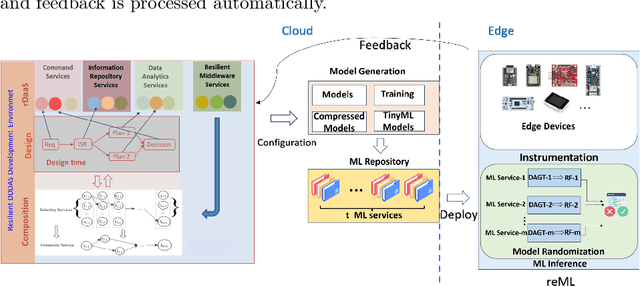


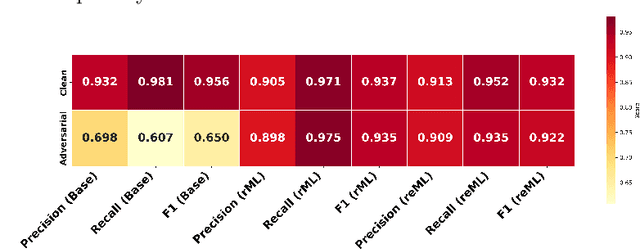
Deploying machine learning (ML) in dynamic data-driven applications systems (DDDAS) can improve the security of industrial control systems (ICS). However, ML-based DDDAS are vulnerable to adversarial attacks because adversaries can alter the input data slightly so that the ML models predict a different result. In this paper, our goal is to build a resilient edge machine learning (reML) architecture that is designed to withstand adversarial attacks by performing Data Air Gap Transformation (DAGT) to anonymize data feature spaces using deep neural networks and randomize the ML models used for predictions. The reML is based on the Resilient DDDAS paradigm, Moving Target Defense (MTD) theory, and TinyML and is applied to combat adversarial attacks on ICS. Furthermore, the proposed approach is power-efficient and privacy-preserving and, therefore, can be deployed on power-constrained devices to enhance ICS security. This approach enables resilient ML inference at the edge by shifting the computation from the computing-intensive platforms to the resource-constrained edge devices. The incorporation of TinyML with TensorFlow Lite ensures efficient resource utilization and, consequently, makes reML suitable for deployment in various industrial control environments. Furthermore, the dynamic nature of reML, facilitated by the resilient DDDAS development environment, allows for continuous adaptation and improvement in response to emerging threats. Lastly, we evaluate our approach on an ICS dataset and demonstrate that reML provides a viable and effective solution for resilient ML inference at the edge devices.
GPS-IDS: An Anomaly-based GPS Spoofing Attack Detection Framework for Autonomous Vehicles
May 14, 2024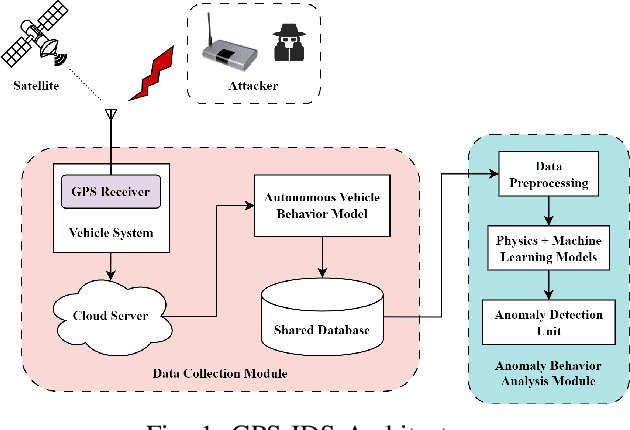
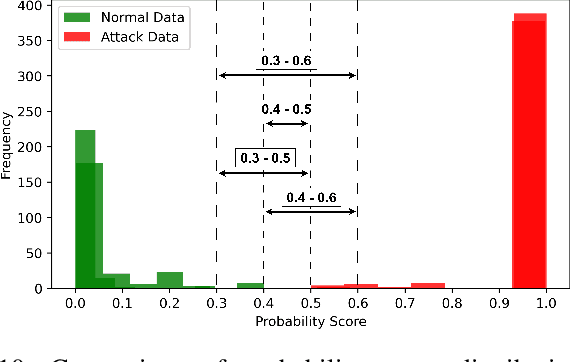
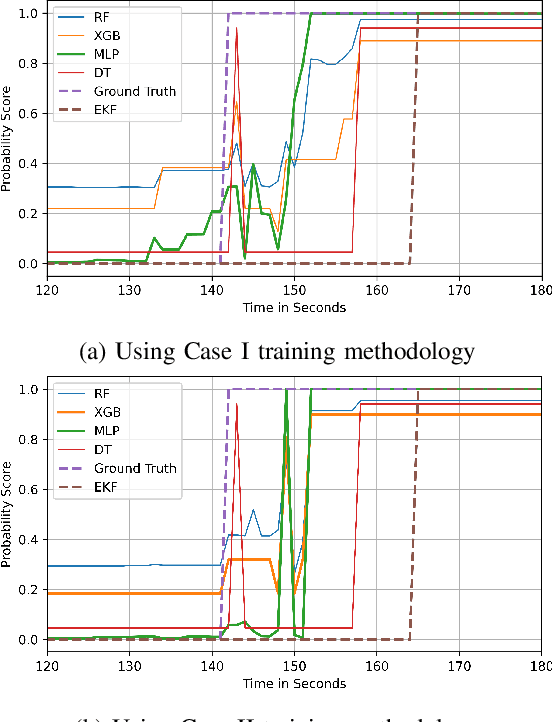
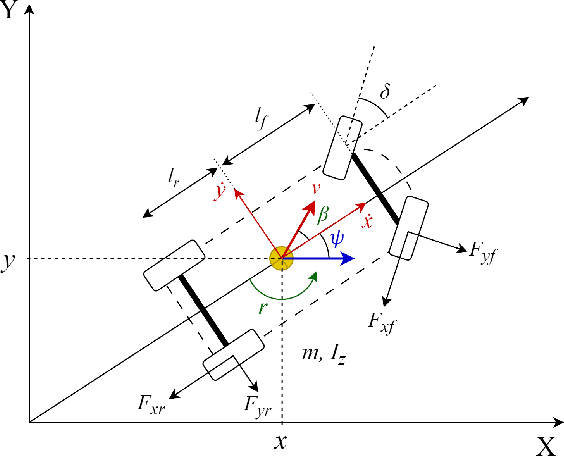
Autonomous Vehicles (AVs) heavily rely on sensors and communication networks like Global Positioning System (GPS) to navigate autonomously. Prior research has indicated that networks like GPS are vulnerable to cyber-attacks such as spoofing and jamming, thus posing serious risks like navigation errors and system failures. These threats are expected to intensify with the widespread deployment of AVs, making it crucial to detect and mitigate such attacks. This paper proposes GPS Intrusion Detection System, or GPS-IDS, an Anomaly Behavior Analysis (ABA)-based intrusion detection framework to detect GPS spoofing attacks on AVs. The framework uses a novel physics-based vehicle behavior model where a GPS navigation model is integrated into the conventional dynamic bicycle model for accurate AV behavior representation. Temporal features derived from this behavior model are analyzed using machine learning to detect normal and abnormal navigation behavior. The performance of the GPS-IDS framework is evaluated on the AV-GPS-Dataset - a real-world dataset collected by the team using an AV testbed. The dataset has been publicly released for the global research community. To the best of our knowledge, this dataset is the first of its kind and will serve as a useful resource to address such security challenges.
Quantized Transformer Language Model Implementations on Edge Devices
Oct 06, 2023Large-scale transformer-based models like the Bidirectional Encoder Representations from Transformers (BERT) are widely used for Natural Language Processing (NLP) applications, wherein these models are initially pre-trained with a large corpus with millions of parameters and then fine-tuned for a downstream NLP task. One of the major limitations of these large-scale models is that they cannot be deployed on resource-constrained devices due to their large model size and increased inference latency. In order to overcome these limitations, such large-scale models can be converted to an optimized FlatBuffer format, tailored for deployment on resource-constrained edge devices. Herein, we evaluate the performance of such FlatBuffer transformed MobileBERT models on three different edge devices, fine-tuned for Reputation analysis of English language tweets in the RepLab 2013 dataset. In addition, this study encompassed an evaluation of the deployed models, wherein their latency, performance, and resource efficiency were meticulously assessed. Our experiment results show that, compared to the original BERT large model, the converted and quantized MobileBERT models have 160$\times$ smaller footprints for a 4.1% drop in accuracy while analyzing at least one tweet per second on edge devices. Furthermore, our study highlights the privacy-preserving aspect of TinyML systems as all data is processed locally within a serverless environment.
A BERT-based Deep Learning Approach for Reputation Analysis in Social Media
Oct 23, 2022


Social media has become an essential part of the modern lifestyle, with its usage being highly prevalent. This has resulted in unprecedented amounts of data generated from users in social media, such as users' attitudes, opinions, interests, purchases, and activities across various aspects of their lives. Therefore, in a world of social media, where its power has shifted to users, actions taken by companies and public figures are subject to constantly being under scrutiny by influential global audiences. As a result, reputation management in social media has become essential as companies and public figures need to maintain their reputation to preserve their reputation capital. However, domain experts still face the challenge of lacking appropriate solutions to automate reliable online reputation analysis. To tackle this challenge, we proposed a novel reputation analysis approach based on the popular language model BERT (Bidirectional Encoder Representations from Transformers). The proposed approach was evaluated on the reputational polarity task using RepLab 2013 dataset. Compared to previous works, we achieved 5.8% improvement in accuracy, 26.9% improvement in balanced accuracy, and 21.8% improvement in terms of F-score.
Video Anomaly Detection Using Pre-Trained Deep Convolutional Neural Nets and Context Mining
Oct 06, 2020


Anomaly detection is critically important for intelligent surveillance systems to detect in a timely manner any malicious activities. Many video anomaly detection approaches using deep learning methods focus on a single camera video stream with a fixed scenario. These deep learning methods use large-scale training data with large complexity. As a solution, in this paper, we show how to use pre-trained convolutional neural net models to perform feature extraction and context mining, and then use denoising autoencoder with relatively low model complexity to provide efficient and accurate surveillance anomaly detection, which can be useful for the resource-constrained devices such as edge devices of the Internet of Things (IoT). Our anomaly detection model makes decisions based on the high-level features derived from the selected embedded computer vision models such as object classification and object detection. Additionally, we derive contextual properties from the high-level features to further improve the performance of our video anomaly detection method. We use two UCSD datasets to demonstrate that our approach with relatively low model complexity can achieve comparable performance compared to the state-of-the-art approaches.