 Add to Chrome
 Add to Firefox
 Add to Edge
Exploring Silicon-Based Societies: An Early Study of the Moltbook Agent Community
Feb 02, 2026
The rapid emergence of autonomous large language model agents has given rise to persistent, large-scale agent ecosystems whose collective behavior cannot be adequately understood through anecdotal observation or small-scale simulation. This paper introduces data-driven silicon sociology as a systematic empirical framework for studying social structure formation among interacting artificial agents. We present a pioneering large-scale data mining investigation of an in-the-wild agent society by analyzing Moltbook, a social platform designed primarily for agent-to-agent interaction. At the time of study, Moltbook hosted over 150,000 registered autonomous agents operating across thousands of agent-created sub-communities. Using programmatic and non-intrusive data acquisition, we collected and analyzed the textual descriptions of 12,758 submolts, which represent proactive sub-community partitioning activities within the ecosystem. Treating agent-authored descriptions as first-class observational artifacts, we apply rigorous preprocessing, contextual embedding, and unsupervised clustering techniques to uncover latent patterns of thematic organization and social space structuring. The results show that autonomous agents systematically organize collective space through reproducible patterns spanning human-mimetic interests, silicon-centric self-reflection, and early-stage economic and coordination behaviors. Rather than relying on predefined sociological taxonomies, these structures emerge directly from machine-generated data traces. This work establishes a methodological foundation for data-driven silicon sociology and demonstrates that data mining techniques can provide a powerful lens for understanding the organization and evolution of large autonomous agent societies.

GPS-IDS: An Anomaly-based GPS Spoofing Attack Detection Framework for Autonomous Vehicles
May 14, 2024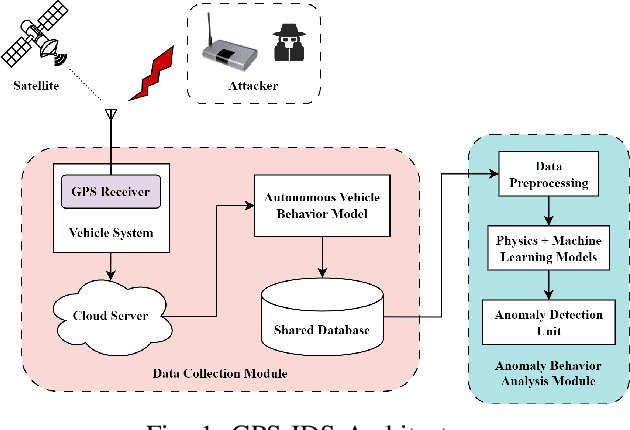
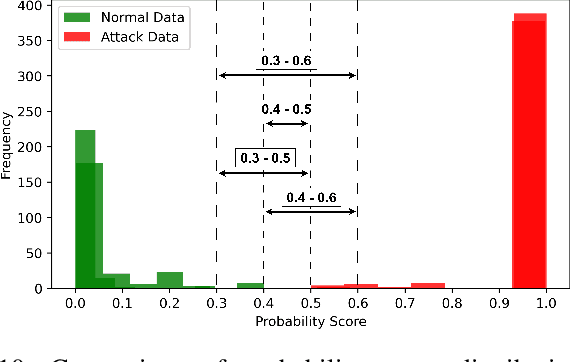
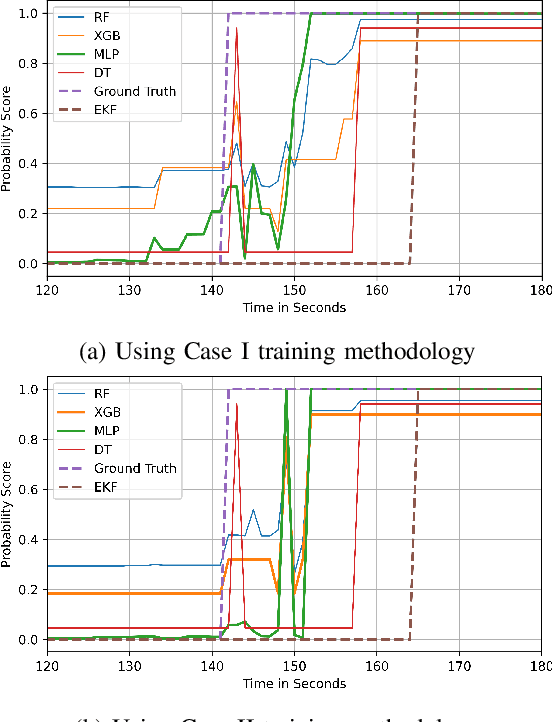
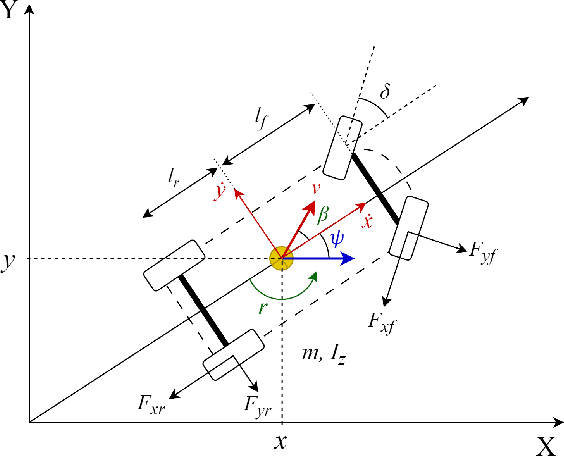
Autonomous Vehicles (AVs) heavily rely on sensors and communication networks like Global Positioning System (GPS) to navigate autonomously. Prior research has indicated that networks like GPS are vulnerable to cyber-attacks such as spoofing and jamming, thus posing serious risks like navigation errors and system failures. These threats are expected to intensify with the widespread deployment of AVs, making it crucial to detect and mitigate such attacks. This paper proposes GPS Intrusion Detection System, or GPS-IDS, an Anomaly Behavior Analysis (ABA)-based intrusion detection framework to detect GPS spoofing attacks on AVs. The framework uses a novel physics-based vehicle behavior model where a GPS navigation model is integrated into the conventional dynamic bicycle model for accurate AV behavior representation. Temporal features derived from this behavior model are analyzed using machine learning to detect normal and abnormal navigation behavior. The performance of the GPS-IDS framework is evaluated on the AV-GPS-Dataset - a real-world dataset collected by the team using an AV testbed. The dataset has been publicly released for the global research community. To the best of our knowledge, this dataset is the first of its kind and will serve as a useful resource to address such security challenges.