 Add to Chrome
 Add to Firefox
 Add to Edge
Mi:dm 2.0 Korea-centric Bilingual Language Models
Jan 14, 2026
We introduce Mi:dm 2.0, a bilingual large language model (LLM) specifically engineered to advance Korea-centric AI. This model goes beyond Korean text processing by integrating the values, reasoning patterns, and commonsense knowledge inherent to Korean society, enabling nuanced understanding of cultural contexts, emotional subtleties, and real-world scenarios to generate reliable and culturally appropriate responses. To address limitations of existing LLMs, often caused by insufficient or low-quality Korean data and lack of cultural alignment, Mi:dm 2.0 emphasizes robust data quality through a comprehensive pipeline that includes proprietary data cleansing, high-quality synthetic data generation, strategic data mixing with curriculum learning, and a custom Korean-optimized tokenizer to improve efficiency and coverage. To realize this vision, we offer two complementary configurations: Mi:dm 2.0 Base (11.5B parameters), built with a depth-up scaling strategy for general-purpose use, and Mi:dm 2.0 Mini (2.3B parameters), optimized for resource-constrained environments and specialized tasks. Mi:dm 2.0 achieves state-of-the-art performance on Korean-specific benchmarks, with top-tier zero-shot results on KMMLU and strong internal evaluation results across language, humanities, and social science tasks. The Mi:dm 2.0 lineup is released under the MIT license to support extensive research and commercial use. By offering accessible and high-performance Korea-centric LLMs, KT aims to accelerate AI adoption across Korean industries, public services, and education, strengthen the Korean AI developer community, and lay the groundwork for the broader vision of K-intelligence. Our models are available at https://huggingface.co/K-intelligence. For technical inquiries, please contact midm-llm@kt.com.

Detecting Contextomized Quotes in News Headlines by Contrastive Learning
Feb 09, 2023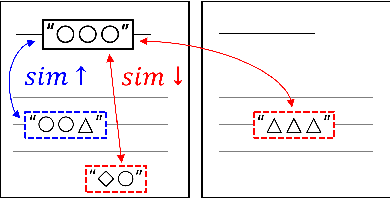
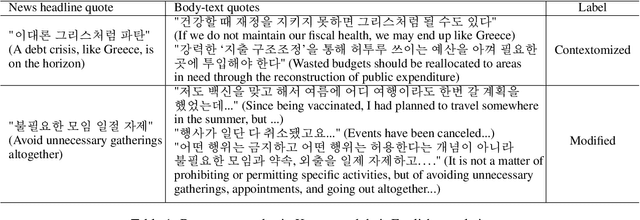
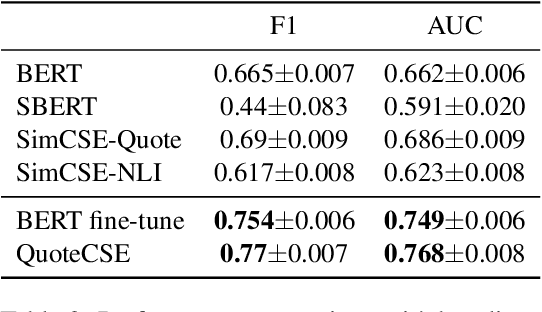
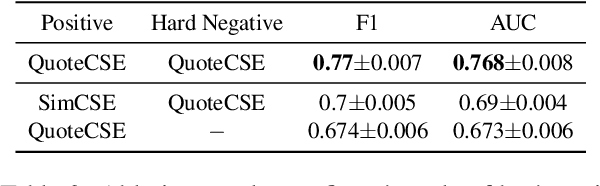
Quotes are critical for establishing credibility in news articles. A direct quote enclosed in quotation marks has a strong visual appeal and is a sign of a reliable citation. Unfortunately, this journalistic practice is not strictly followed, and a quote in the headline is often "contextomized." Such a quote uses words out of context in a way that alters the speaker's intention so that there is no semantically matching quote in the body text. We present QuoteCSE, a contrastive learning framework that represents the embedding of news quotes based on domain-driven positive and negative samples to identify such an editorial strategy. The dataset and code are available at https://github.com/ssu-humane/contextomized-quote-contrastive.