 Add to Chrome
 Add to Firefox
 Add to Edge
Trainability-Oriented Hybrid Quantum Regression via Geometric Preconditioning and Curriculum Optimization
Jan 17, 2026
Quantum neural networks (QNNs) have attracted growing interest for scientific machine learning, yet in regression settings they often suffer from limited trainability under noisy gradients and ill-conditioned optimization. We propose a hybrid quantum-classical regression framework designed to mitigate these bottlenecks. Our model prepends a lightweight classical embedding that acts as a learnable geometric preconditioner, reshaping the input representation to better condition a downstream variational quantum circuit. Building on this architecture, we introduce a curriculum optimization protocol that progressively increases circuit depth and transitions from SPSA-based stochastic exploration to Adam-based gradient fine-tuning. We evaluate the approach on PDE-informed regression benchmarks and standard regression datasets under a fixed training budget in a simulator setting. Empirically, the proposed framework consistently improves over pure QNN baselines and yields more stable convergence in data-limited regimes. We further observe reduced structured errors that are visually correlated with oscillatory components on several scientific benchmarks, suggesting that geometric preconditioning combined with curriculum training is a practical approach for stabilizing quantum regression.

MAFS: Multi-head Attention Feature Selection for High-Dimensional Data via Deep Fusion of Filter Methods
Jan 06, 2026Feature selection is essential for high-dimensional biomedical data, enabling stronger predictive performance, reduced computational cost, and improved interpretability in precision medicine applications. Existing approaches face notable challenges. Filter methods are highly scalable but cannot capture complex relationships or eliminate redundancy. Deep learning-based approaches can model nonlinear patterns but often lack stability, interpretability, and efficiency at scale. Single-head attention improves interpretability but is limited in capturing multi-level dependencies and remains sensitive to initialization, reducing reproducibility. Most existing methods rarely combine statistical interpretability with the representational power of deep learning, particularly in ultra-high-dimensional settings. Here, we introduce MAFS (Multi-head Attention-based Feature Selection), a hybrid framework that integrates statistical priors with deep learning capabilities. MAFS begins with filter-based priors for stable initialization and guide learning. It then uses multi-head attention to examine features from multiple perspectives in parallel, capturing complex nonlinear relationships and interactions. Finally, a reordering module consolidates outputs across attention heads, resolving conflicts and minimizing information loss to generate robust and consistent feature rankings. This design combines statistical guidance with deep modeling capacity, yielding interpretable importance scores while maximizing retention of informative signals. Across simulated and real-world datasets, including cancer gene expression and Alzheimer's disease data, MAFS consistently achieves superior coverage and stability compared with existing filter-based and deep learning-based alternatives, offering a scalable, interpretable, and robust solution for feature selection in high-dimensional biomedical data.
Wind power ramp prediction algorithm based on wavelet deep belief network
Feb 11, 2022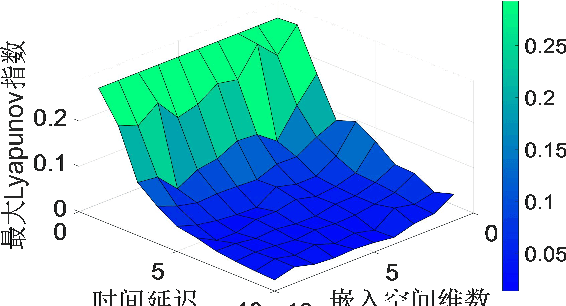
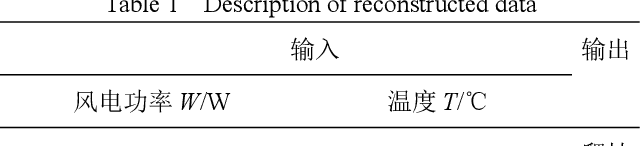
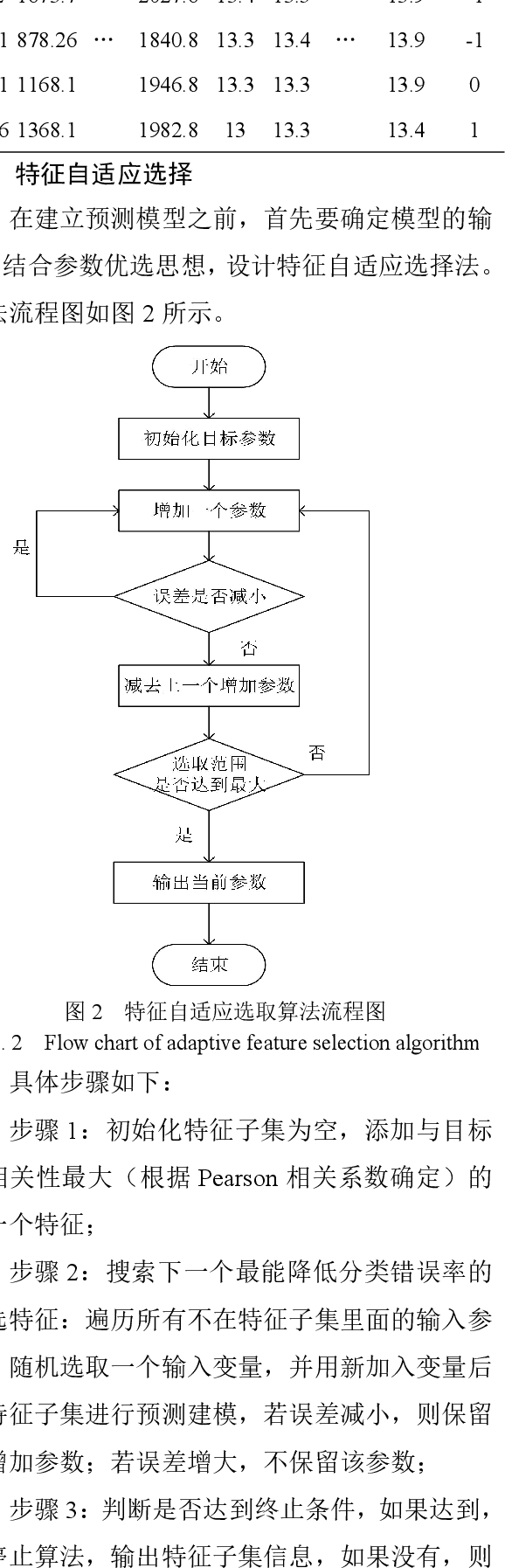
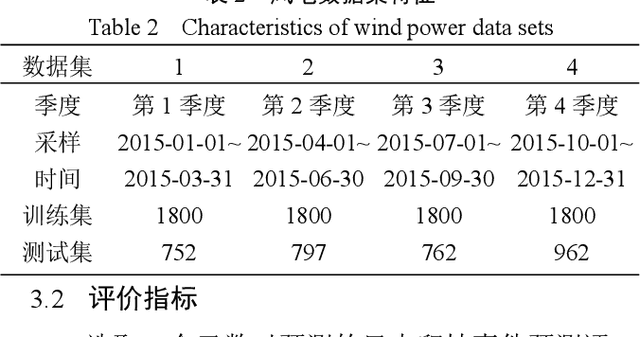
The wind power ramp events threaten the power grid safety significantly. To improve the ramp prediction accuracy, a hybrid wavelet deep belief network algorithm with adaptive feature selection (WDBNAFS) is proposed. First, the wind power characteristic is analyzed. Then, wavelet decomposition is addressed to the time series, and an adaptive feature selection algorithm is proposed to select the inputs of the prediction model. Finally, a deep belief network is employed to predict the wind power ramp event, and the proposed WDBNAFS was testified with the experiments based on the practical data. The simulation results demonstrate that the prediction accuracy of the proposed algorithm is more than 90%.
* in Chinese language