 Add to Chrome
 Add to Firefox
 Add to Edge
Mitigating Task-Order Sensitivity and Forgetting via Hierarchical Second-Order Consolidation
Jan 31, 2026
We introduce $\textbf{Hierarchical Taylor Series-based Continual Learning (HTCL)}$, a framework that couples fast local adaptation with conservative, second-order global consolidation to address the high variance introduced by random task ordering. To address task-order effects, HTCL identifies the best intra-group task sequence and integrates the resulting local updates through a Hessian-regularized Taylor expansion, yielding a consolidation step with theoretical guarantees. The approach naturally extends to an $L$-level hierarchy, enabling multiscale knowledge integration in a manner not supported by conventional single-level CL systems. Across a wide range of datasets and replay and regularization baselines, HTCL acts as a model-agnostic consolidation layer that consistently enhances performance, yielding mean accuracy gains of $7\%$ to $25\%$ while reducing the standard deviation of final accuracy by up to $68\%$ across random task permutations.

Towards Effective Planning Strategies for Dynamic Opinion Networks
Oct 18, 2024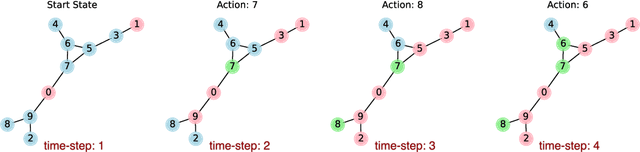
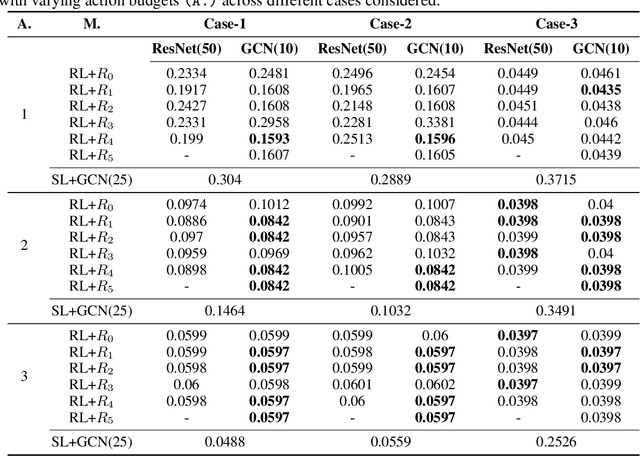
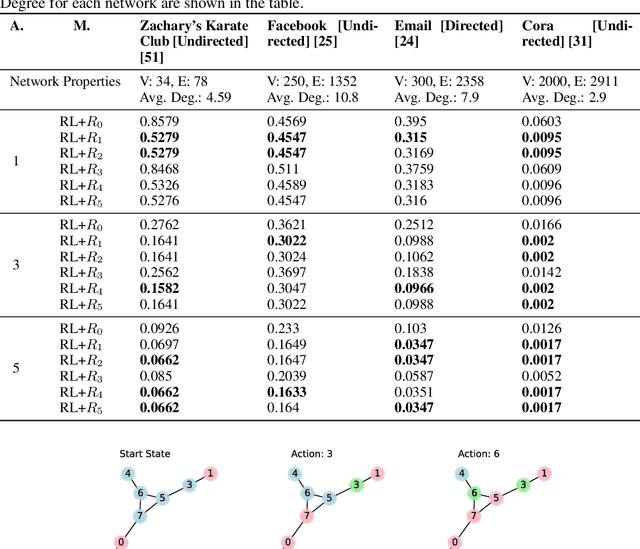
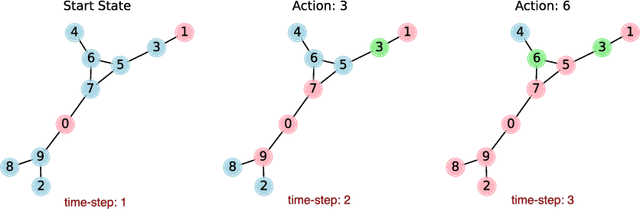
In this study, we investigate the under-explored intervention planning aimed at disseminating accurate information within dynamic opinion networks by leveraging learning strategies. Intervention planning involves identifying key nodes (search) and exerting control (e.g., disseminating accurate/official information through the nodes) to mitigate the influence of misinformation. However, as network size increases, the problem becomes computationally intractable. To address this, we first introduce a novel ranking algorithm (search) to identify key nodes for disseminating accurate information, which facilitates the training of neural network (NN) classifiers for scalable and generalized solutions. Second, we address the complexity of label generation (through search) by developing a Reinforcement Learning (RL)-based dynamic planning framework. We investigate NN-based RL planners tailored for dynamic opinion networks governed by two propagation models for the framework. Each model incorporates both binary and continuous opinion and trust representations. Our experimental results demonstrate that our ranking algorithm-based classifiers provide plans that enhance infection rate control, especially with increased action budgets. Moreover, reward strategies focusing on key metrics, such as the number of susceptible nodes and infection rates, outperform those prioritizing faster blocking strategies. Additionally, our findings reveal that Graph Convolutional Networks (GCNs)-based planners facilitate scalable centralized plans that achieve lower infection rates (higher control) across various network scenarios (e.g., Watts-Strogatz topology, varying action budgets, varying initial infected nodes, and varying degree of infected nodes).