 Add to Chrome
 Add to Firefox
 Add to Edge
DialDefer: A Framework for Detecting and Mitigating LLM Dialogic Deference
Jan 15, 2026
LLMs are increasingly used as third-party judges, yet their reliability when evaluating speakers in dialogue remains poorly understood. We show that LLMs judge identical claims differently depending on framing: the same content elicits different verdicts when presented as a statement to verify ("Is this statement correct?") versus attributed to a speaker ("Is this speaker correct?"). We call this dialogic deference and introduce DialDefer, a framework for detecting and mitigating these framing-induced judgment shifts. Our Dialogic Deference Score (DDS) captures directional shifts that aggregate accuracy obscures. Across nine domains, 3k+ instances, and four models, conversational framing induces large shifts (|DDS| up to 87pp, p < .0001) while accuracy remains stable (<2pp), with effects amplifying 2-4x on naturalistic Reddit conversations. Models can shift toward agreement (deference) or disagreement (skepticism) depending on domain -- the same model ranges from DDS = -53 on graduate-level science to +58 on social judgment. Ablations reveal that human-vs-LLM attribution drives the largest shifts (17.7pp swing), suggesting models treat disagreement with humans as more costly than with AI. Mitigation attempts reduce deference but can over-correct into skepticism, framing this as a calibration problem beyond accuracy optimization.

Ansible Lightspeed: A Code Generation Service for IT Automation
Feb 27, 2024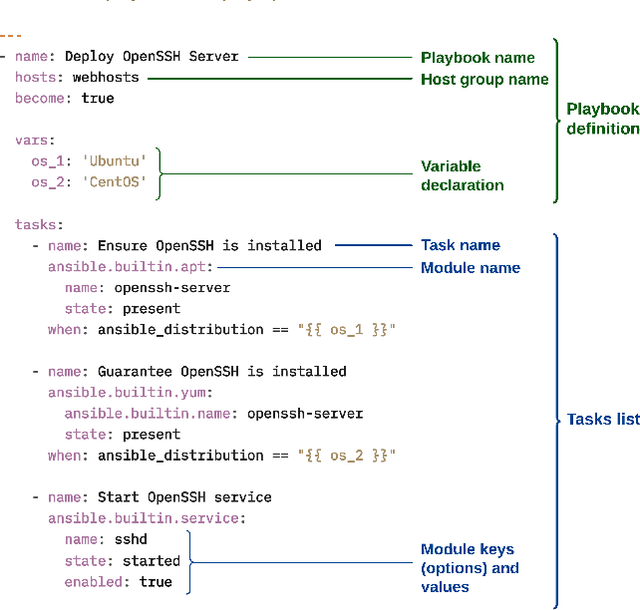
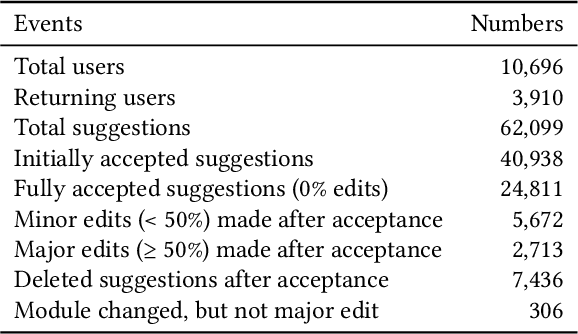
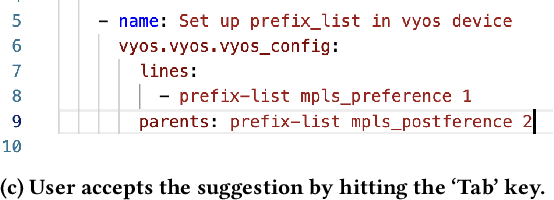
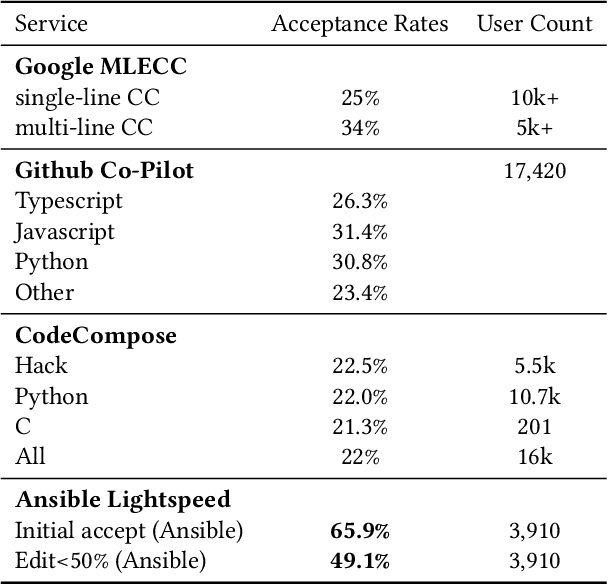
The availability of Large Language Models (LLMs) which can generate code, has made it possible to create tools that improve developer productivity. Integrated development environments or IDEs which developers use to write software are often used as an interface to interact with LLMs. Although many such tools have been released, almost all of them focus on general-purpose programming languages. Domain-specific languages, such as those crucial for IT automation, have not received much attention. Ansible is one such YAML-based IT automation-specific language. Red Hat Ansible Lightspeed with IBM Watson Code Assistant, further referred to as Ansible Lightspeed, is an LLM-based service designed explicitly for natural language to Ansible code generation. In this paper, we describe the design and implementation of the Ansible Lightspeed service and analyze feedback from thousands of real users. We examine diverse performance indicators, classified according to both immediate and extended utilization patterns along with user sentiments. The analysis shows that the user acceptance rate of Ansible Lightspeed suggestions is higher than comparable tools that are more general and not specific to a programming language. This remains true even after we use much more stringent criteria for what is considered an accepted model suggestion, discarding suggestions which were heavily edited after being accepted. The relatively high acceptance rate results in higher-than-expected user retention and generally positive user feedback. This paper provides insights on how a comparatively small, dedicated model performs on a domain-specific language and more importantly, how it is received by users.