 Add to Chrome
 Add to Firefox
 Add to Edge
Hierarchical Distribution Matcher Design for Probabilistic Constellation Shaping Based on a Novel Semi-Analytical Optimization Approach
Jan 23, 2026
A novel design procedure for practical hierarchical distribution matchers (HiDMs) in probabilistically shaped constellation systems is presented. The proposed approach enables the determination of optimal parameters for any target distribution matcher rate. Specifically, lower bounds on energy loss, rate loss, and memory requirements are analytically estimated for HiDM architectures approximating the Maxwell Boltzmann (MB) distribution. A semi analytical optimization framework is employed to jointly optimize rate and energy loss, allowing the selection of the number of hierarchical layers, memory size, and block length required to optimize channel capacity. The accuracy of the proposed model is validated through probabilistic amplitude shaping of 16QAM (PAS 16QAM), showing good agreement between analytical predictions and simulated results. The proposed analytical tool facilitates the design of HiDM structures that are compatible with practical hardware and implementation constraints, such as those imposed by state-of-the-art application-specific integrated circuits (ASICs) and field-programmable gate arrays (FPGAs). Furthermore, the performance of the optimized HiDM structure, incorporating layer selection based on lower-bound energy loss, is evaluated over the AWGN channel in terms of normalized generalized mutual information (NGMI) as a function of the optical signal-to-noise ratio (OSNR). At a net data rate of 200 Gbps with 25% forward error correction (FEC) overhead, the proposed scheme achieves a shaping gain improvement of 2.8% compared to previously reported solutions.

Optical identification using physical unclonable functions
May 03, 2023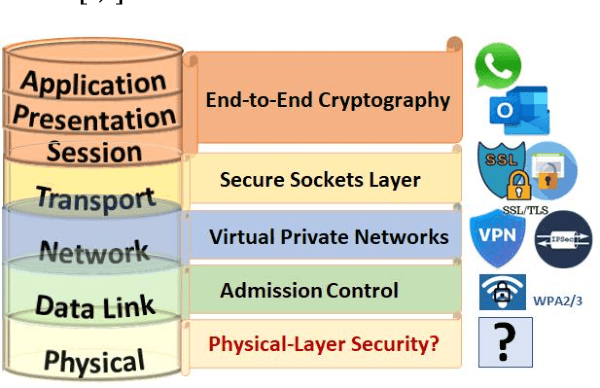
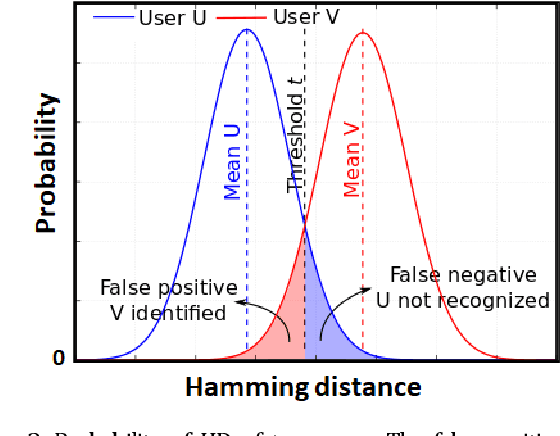
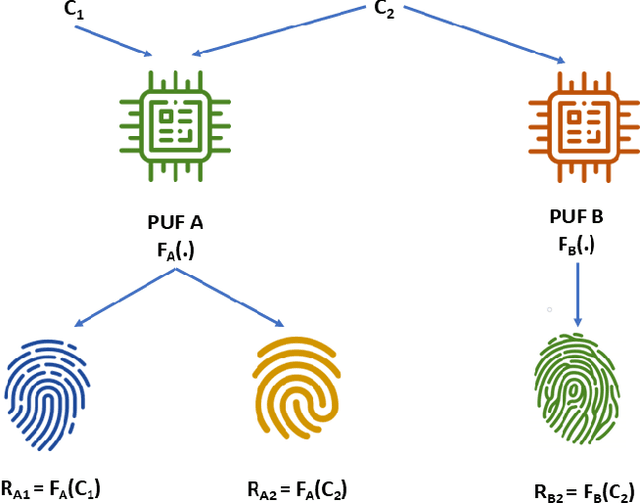
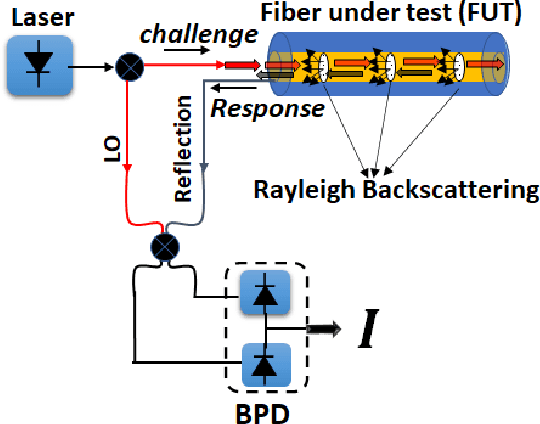
In this work, the concept of optical identification (OI) is introduced for the first time. The OI assigns an optical fingerprint and the corresponding digital signature to each sub-system of the network and estimates its reliability in different measures. We highlight the large potential applications of OI as a physical layer approach for security, identification, authentication, and monitoring purposes. To identify most of the sub-systems of a network, we propose to use the Rayleigh backscattering pattern, which is an optical physical unclonable function and allows to achieve OI with a simple procedure and without additional devices. The application of OI to fiber and path identification in a network, and to the authentication of the users in a quantum key distribution system are described.