 Add to Chrome
 Add to Firefox
 Add to Edge
Learning noisy tissue dynamics across time scales
Oct 21, 2025
Tissue dynamics play a crucial role in biological processes ranging from wound healing to morphogenesis. However, these noisy multicellular dynamics are notoriously hard to predict. Here, we introduce a biomimetic machine learning framework capable of inferring noisy multicellular dynamics directly from experimental movies. This generative model combines graph neural networks, normalizing flows and WaveNet algorithms to represent tissues as neural stochastic differential equations where cells are edges of an evolving graph. This machine learning architecture reflects the architecture of the underlying biological tissues, substantially reducing the amount of data needed to train it compared to convolutional or fully-connected neural networks. Taking epithelial tissue experiments as a case study, we show that our model not only captures stochastic cell motion but also predicts the evolution of cell states in their division cycle. Finally, we demonstrate that our method can accurately generate the experimental dynamics of developmental systems, such as the fly wing, and cell signaling processes mediated by stochastic ERK waves, paving the way for its use as a digital twin in bioengineering and clinical contexts.

CarbonChat: Large Language Model-Based Corporate Carbon Emission Analysis and Climate Knowledge Q&A System
Jan 03, 2025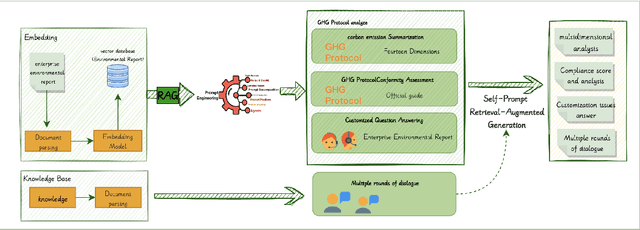
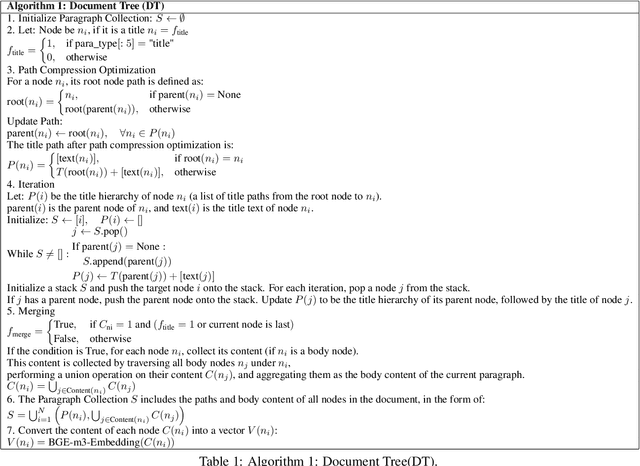

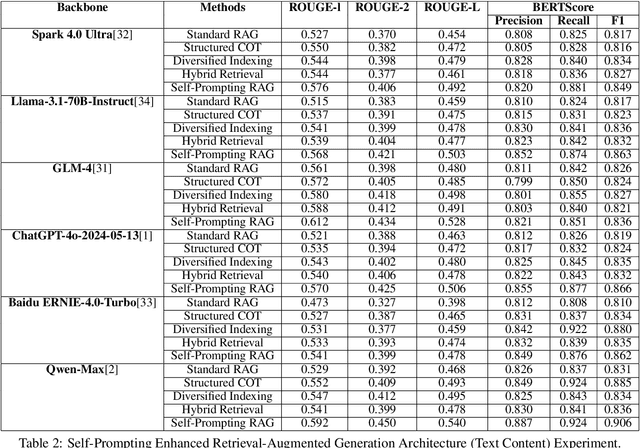
As the impact of global climate change intensifies, corporate carbon emissions have become a focal point of global attention. In response to issues such as the lag in climate change knowledge updates within large language models, the lack of specialization and accuracy in traditional augmented generation architectures for complex problems, and the high cost and time consumption of sustainability report analysis, this paper proposes CarbonChat: Large Language Model-based corporate carbon emission analysis and climate knowledge Q&A system, aimed at achieving precise carbon emission analysis and policy understanding.First, a diversified index module construction method is proposed to handle the segmentation of rule-based and long-text documents, as well as the extraction of structured data, thereby optimizing the parsing of key information.Second, an enhanced self-prompt retrieval-augmented generation architecture is designed, integrating intent recognition, structured reasoning chains, hybrid retrieval, and Text2SQL, improving the efficiency of semantic understanding and query conversion.Next, based on the greenhouse gas accounting framework, 14 dimensions are established for carbon emission analysis, enabling report summarization, relevance evaluation, and customized responses.Finally, through a multi-layer chunking mechanism, timestamps, and hallucination detection features, the accuracy and verifiability of the analysis results are ensured, reducing hallucination rates and enhancing the precision of the responses.