 Add to Chrome
 Add to Firefox
 Add to Edge
Speaker-Aware Simulation Improves Conversational Speech Recognition
Feb 04, 2026
Automatic speech recognition (ASR) for conversational speech remains challenging due to the limited availability of large-scale, well-annotated multi-speaker dialogue data and the complex temporal dynamics of natural interactions. Speaker-aware simulated conversations (SASC) offer an effective data augmentation strategy by transforming single-speaker recordings into realistic multi-speaker dialogues. However, prior work has primarily focused on English data, leaving questions about the applicability to lower-resource languages. In this paper, we adapt and implement the SASC framework for Hungarian conversational ASR. We further propose C-SASC, an extended variant that incorporates pause modeling conditioned on utterance duration, enabling a more faithful representation of local temporal dependencies observed in human conversation while retaining the simplicity and efficiency of the original approach. We generate synthetic Hungarian dialogues from the BEA-Large corpus and combine them with real conversational data for ASR training. Both SASC and C-SASC are evaluated extensively under a wide range of simulation configurations, using conversational statistics derived from CallHome, BEA-Dialogue, and GRASS corpora. Experimental results show that speaker-aware conversational simulation consistently improves recognition performance over naive concatenation-based augmentation. While the additional duration conditioning in C-SASC yields modest but systematic gains--most notably in character-level error rates--its effectiveness depends on the match between source conversational statistics and the target domain. Overall, our findings confirm the robustness of speaker-aware conversational simulation for Hungarian ASR and highlight the benefits and limitations of increasingly detailed temporal modeling in synthetic dialogue generation.

Toward Conversational Hungarian Speech Recognition: Introducing the BEA-Large and BEA-Dialogue Datasets
Nov 17, 2025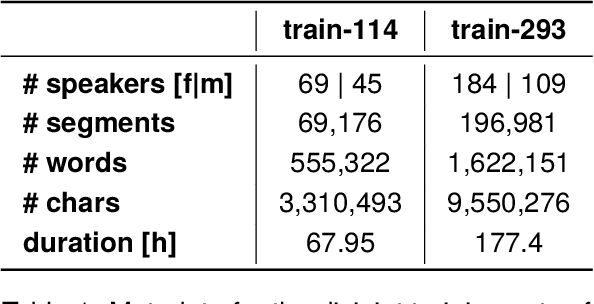
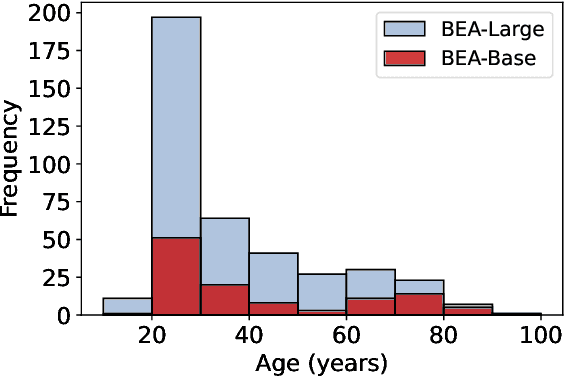
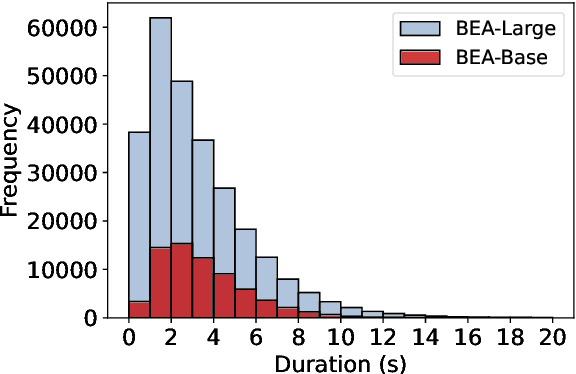
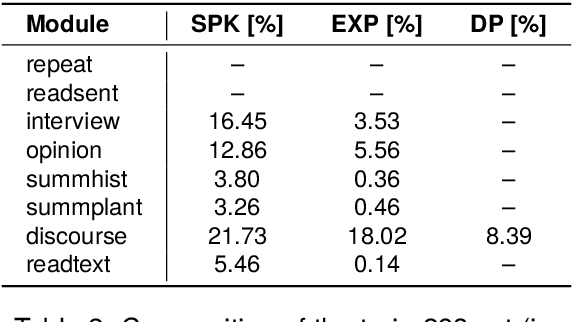
The advancement of automatic speech recognition (ASR) has been largely enhanced by extensive datasets in high-resource languages, while languages such as Hungarian remain underrepresented due to limited spontaneous and conversational corpora. To address this gap, we introduce two new datasets -- BEA-Large and BEA-Dialogue -- constructed from the previously unprocessed portions of the Hungarian speech corpus named BEA. BEA-Large extends BEA-Base with 255 hours of spontaneous speech from 433 speakers, enriched with detailed segment-level metadata. BEA-Dialogue, comprising 85 hours of spontaneous conversations, is a Hungarian speech corpus featuring natural dialogues partitioned into speaker-independent subsets, supporting research in conversational ASR and speaker diarization. We establish reproducible baselines on these datasets using publicly available ASR models, with the fine-tuned Fast Conformer model achieving word error rates as low as 14.18\% on spontaneous and 4.8\% on repeated speech. Diarization experiments yield diarization error rates between 13.05\% and 18.26\%, providing reference points for future improvements. The results highlight the persistent difficulty of conversational ASR, particularly due to disfluencies, overlaps, and informal speech patterns. By releasing these datasets and baselines, we aim to advance Hungarian speech technology and offer a methodological framework for developing spontaneous and conversational benchmarks in other languages.
From Independence to Interaction: Speaker-Aware Simulation of Multi-Speaker Conversational Timing
Sep 19, 2025We present a speaker-aware approach for simulating multi-speaker conversations that captures temporal consistency and realistic turn-taking dynamics. Prior work typically models aggregate conversational statistics under an independence assumption across speakers and turns. In contrast, our method uses speaker-specific deviation distributions enforcing intra-speaker temporal consistency, while a Markov chain governs turn-taking and a fixed room impulse response preserves spatial realism. We also unify pauses and overlaps into a single gap distribution, modeled with kernel density estimation for smooth continuity. Evaluation on Switchboard using intrinsic metrics - global gap statistics, correlations between consecutive gaps, copula-based higher-order dependencies, turn-taking entropy, and gap survival functions - shows that speaker-aware simulation better aligns with real conversational patterns than the baseline method, capturing fine-grained temporal dependencies and realistic speaker alternation, while revealing open challenges in modeling long-range conversational structure.
A Comparative Analysis of Static Word Embeddings for Hungarian
May 12, 2025This paper presents a comprehensive analysis of various static word embeddings for Hungarian, including traditional models such as Word2Vec, FastText, as well as static embeddings derived from BERT-based models using different extraction methods. We evaluate these embeddings on both intrinsic and extrinsic tasks to provide a holistic view of their performance. For intrinsic evaluation, we employ a word analogy task, which assesses the embeddings ability to capture semantic and syntactic relationships. Our results indicate that traditional static embeddings, particularly FastText, excel in this task, achieving high accuracy and mean reciprocal rank (MRR) scores. Among the BERT-based models, the X2Static method for extracting static embeddings demonstrates superior performance compared to decontextualized and aggregate methods, approaching the effectiveness of traditional static embeddings. For extrinsic evaluation, we utilize a bidirectional LSTM model to perform Named Entity Recognition (NER) and Part-of-Speech (POS) tagging tasks. The results reveal that embeddings derived from dynamic models, especially those extracted using the X2Static method, outperform purely static embeddings. Notably, ELMo embeddings achieve the highest accuracy in both NER and POS tagging tasks, underscoring the benefits of contextualized representations even when used in a static form. Our findings highlight the continued relevance of static word embeddings in NLP applications and the potential of advanced extraction methods to enhance the utility of BERT-based models. This piece of research contributes to the understanding of embedding performance in the Hungarian language and provides valuable insights for future developments in the field. The training scripts, evaluation codes, restricted vocabulary, and extracted embeddings will be made publicly available to support further research and reproducibility.
Retrieval-Enhanced Few-Shot Prompting for Speech Event Extraction
Apr 30, 2025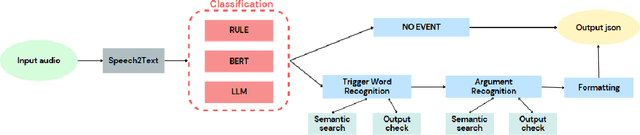

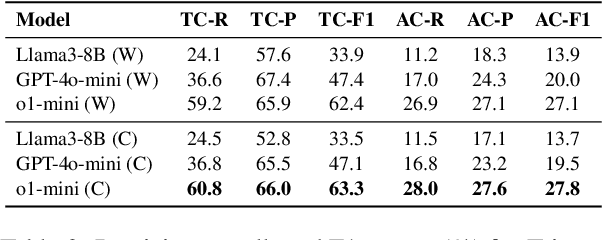

Speech Event Extraction (SpeechEE) is a challenging task that lies at the intersection of Automatic Speech Recognition (ASR) and Natural Language Processing (NLP), requiring the identification of structured event information from spoken language. In this work, we present a modular, pipeline-based SpeechEE framework that integrates high-performance ASR with semantic search-enhanced prompting of Large Language Models (LLMs). Our system first classifies speech segments likely to contain events using a hybrid filtering mechanism including rule-based, BERT-based, and LLM-based models. It then employs few-shot LLM prompting, dynamically enriched via semantic similarity retrieval, to identify event triggers and extract corresponding arguments. We evaluate the pipeline using multiple LLMs (Llama3-8B, GPT-4o-mini, and o1-mini) highlighting significant performance gains with o1-mini, which achieves 63.3% F1 on trigger classification and 27.8% F1 on argument classification, outperforming prior benchmarks. Our results demonstrate that pipeline approaches, when empowered by retrieval-augmented LLMs, can rival or exceed end-to-end systems while maintaining interpretability and modularity. This work provides practical insights into LLM-driven event extraction and opens pathways for future hybrid models combining textual and acoustic features.
Do Attention Heads Compete or Cooperate during Counting?
Feb 10, 2025We present an in-depth mechanistic interpretability analysis of training small transformers on an elementary task, counting, which is a crucial deductive step in many algorithms. In particular, we investigate the collaboration/competition among the attention heads: we ask whether the attention heads behave as a pseudo-ensemble, all solving the same subtask, or they perform different subtasks, meaning that they can only solve the original task in conjunction. Our work presents evidence that on the semantics of the counting task, attention heads behave as a pseudo-ensemble, but their outputs need to be aggregated in a non-uniform manner in order to create an encoding that conforms to the syntax. Our source code will be available upon publication.