 Add to Chrome
 Add to Firefox
 Add to Edge
Enhancing Credit Risk Prediction: A Meta-Learning Framework Integrating Baseline Models, LASSO, and ECOC for Superior Accuracy
Sep 26, 2025
Effective credit risk management is fundamental to financial decision-making, necessitating robust models for default probability prediction and financial entity classification. Traditional machine learning approaches face significant challenges when confronted with high-dimensional data, limited interpretability, rare event detection, and multi-class imbalance problems in risk assessment. This research proposes a comprehensive meta-learning framework that synthesizes multiple complementary models: supervised learning algorithms, including XGBoost, Random Forest, Support Vector Machine, and Decision Tree; unsupervised methods such as K-Nearest Neighbors; deep learning architectures like Multilayer Perceptron; alongside LASSO regularization for feature selection and dimensionality reduction; and Error-Correcting Output Codes as a meta-classifier for handling imbalanced multi-class problems. We implement Permutation Feature Importance analysis for each prediction class across all constituent models to enhance model transparency. Our framework aims to optimize predictive performance while providing a more holistic approach to credit risk assessment. This research contributes to the development of more accurate and reliable computational models for strategic financial decision support by addressing three fundamental challenges in credit risk modeling. The empirical validation of our approach involves an analysis of the Corporate Credit Ratings dataset with credit ratings for 2,029 publicly listed US companies. Results demonstrate that our meta-learning framework significantly enhances the accuracy of financial entity classification regarding credit rating migrations (upgrades and downgrades) and default probability estimation.

Enhancing supply chain security with automated machine learning
Jun 19, 2024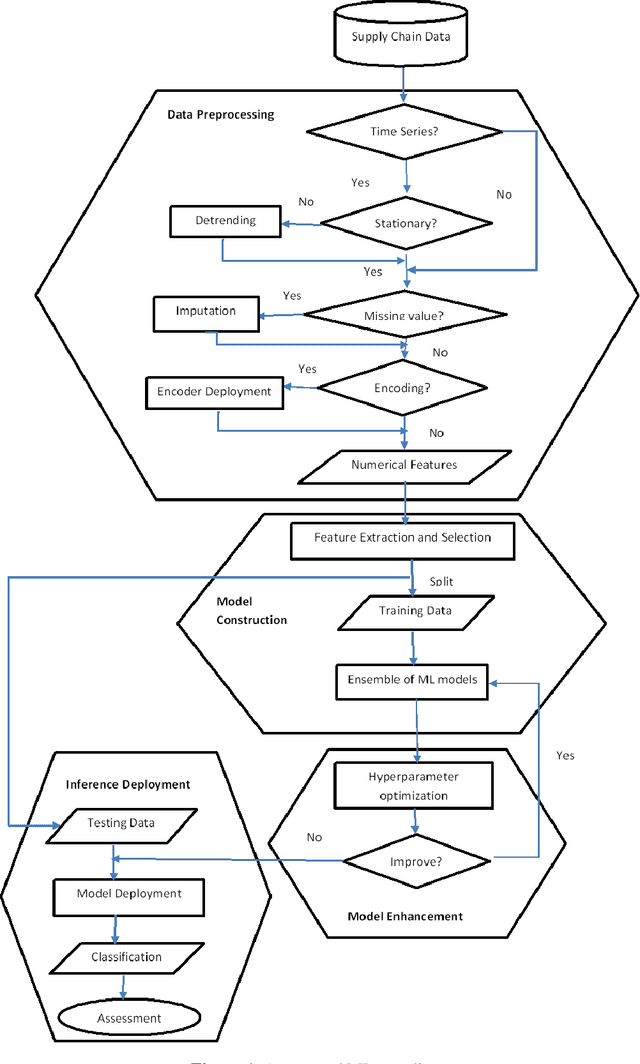
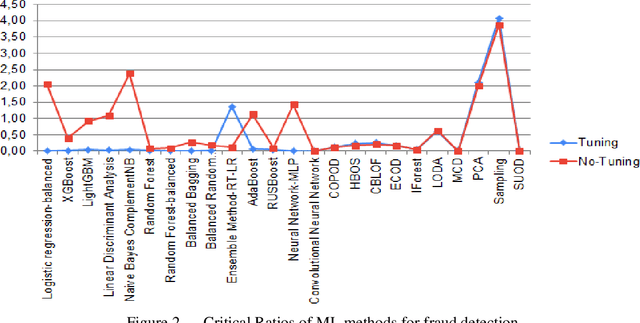
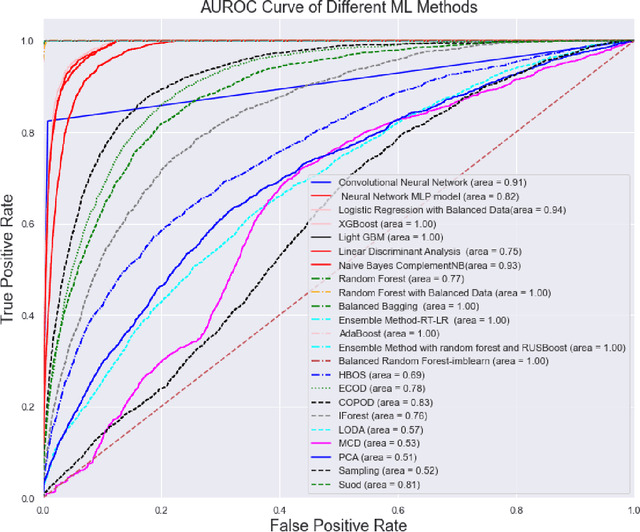
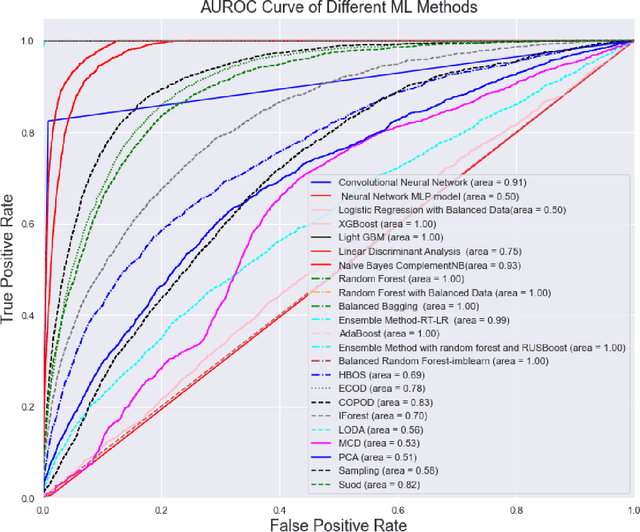
This study tackles the complexities of global supply chains, which are increasingly vulnerable to disruptions caused by port congestion, material shortages, and inflation. To address these challenges, we explore the application of machine learning methods, which excel in predicting and optimizing solutions based on large datasets. Our focus is on enhancing supply chain security through fraud detection, maintenance prediction, and material backorder forecasting. We introduce an automated machine learning framework that streamlines data analysis, model construction, and hyperparameter optimization for these tasks. By automating these processes, our framework improves the efficiency and effectiveness of supply chain security measures. Our research identifies key factors that influence machine learning performance, including sampling methods, categorical encoding, feature selection, and hyperparameter optimization. We demonstrate the importance of considering these factors when applying machine learning to supply chain challenges. Traditional mathematical programming models often struggle to cope with the complexity of large-scale supply chain problems. Our study shows that machine learning methods can provide a viable alternative, particularly when dealing with extensive datasets and complex patterns. The automated machine learning framework presented in this study offers a novel approach to supply chain security, contributing to the existing body of knowledge in the field. Its comprehensive automation of machine learning processes makes it a valuable contribution to the domain of supply chain management.