 Add to Chrome
 Add to Firefox
 Add to Edge
BaGGLS: A Bayesian Shrinkage Framework for Interpretable Modeling of Interactions in High-Dimensional Biological Data
Nov 19, 2025
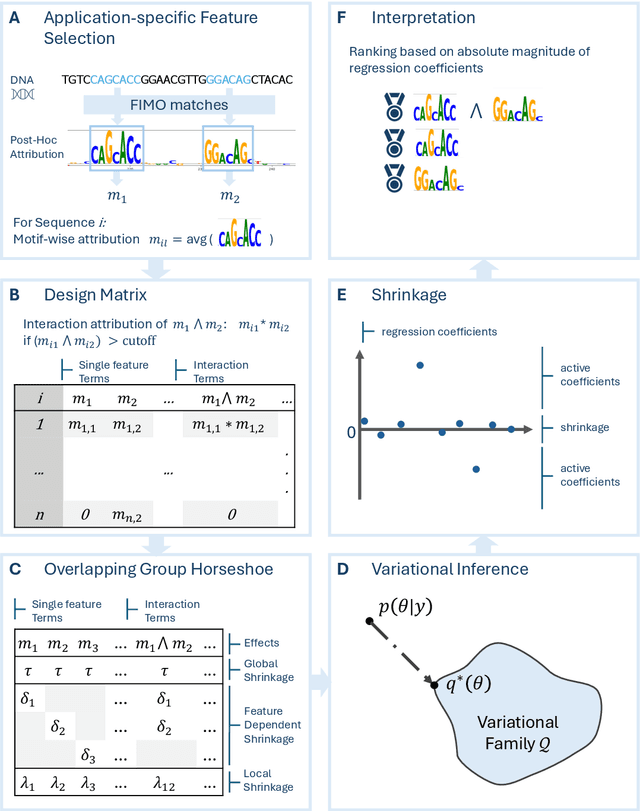
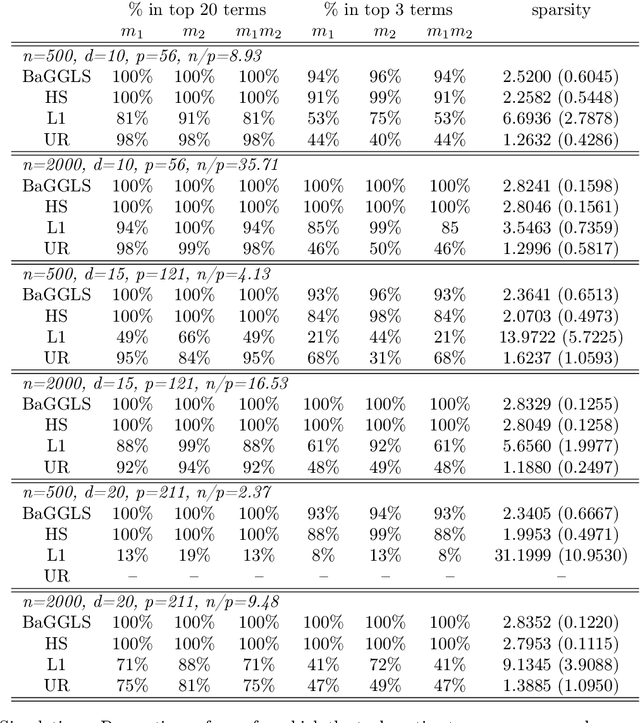
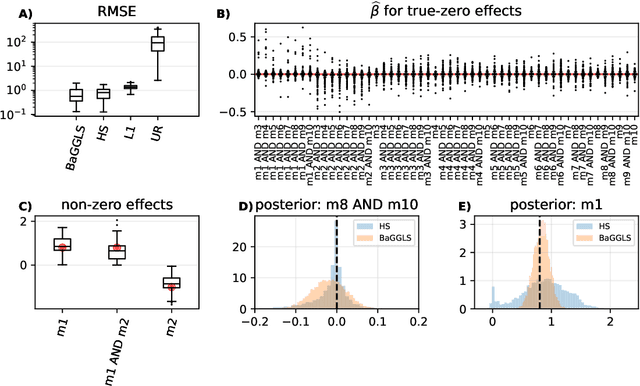
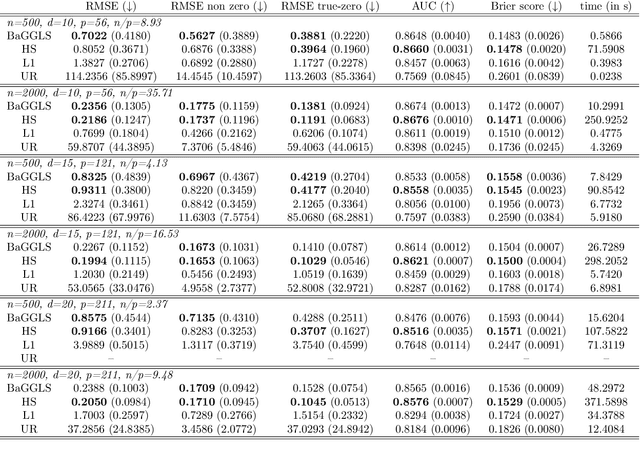
Biological data sets are often high-dimensional, noisy, and governed by complex interactions among sparse signals. This poses major challenges for interpretability and reliable feature selection. Tasks such as identifying motif interactions in genomics exemplify these difficulties, as only a small subset of biologically relevant features (e.g., motifs) are typically active, and their effects are often non-linear and context-dependent. While statistical approaches often result in more interpretable models, deep learning models have proven effective in modeling complex interactions and prediction accuracy, yet their black-box nature limits interpretability. We introduce BaGGLS, a flexible and interpretable probabilistic binary regression model designed for high-dimensional biological inference involving feature interactions. BaGGLS incorporates a Bayesian group global-local shrinkage prior, aligned with the group structure introduced by interaction terms. This prior encourages sparsity while retaining interpretability, helping to isolate meaningful signals and suppress noise. To enable scalable inference, we employ a partially factorized variational approximation that captures posterior skewness and supports efficient learning even in large feature spaces. In extensive simulations, we can show that BaGGLS outperforms the other methods with regard to interaction detection and is many times faster than MCMC sampling under the horseshoe prior. We also demonstrate the usefulness of BaGGLS in the context of interaction discovery from motif scanner outputs and noisy attribution scores from deep learning models. This shows that BaGGLS is a promising approach for uncovering biologically relevant interaction patterns, with potential applicability across a range of high-dimensional tasks in computational biology.

Dropout Regularization in Extended Generalized Linear Models based on Double Exponential Families
May 11, 2023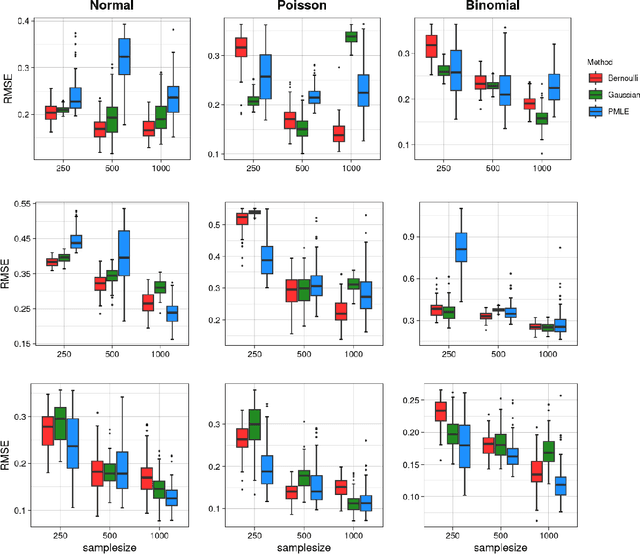
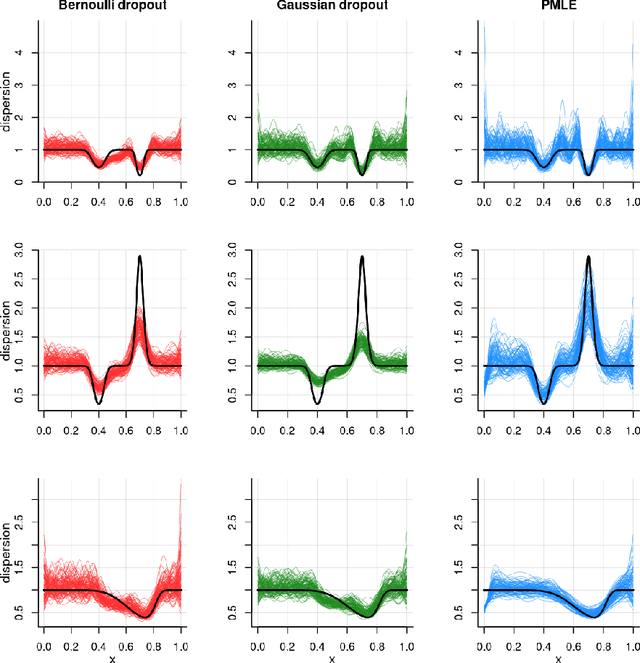
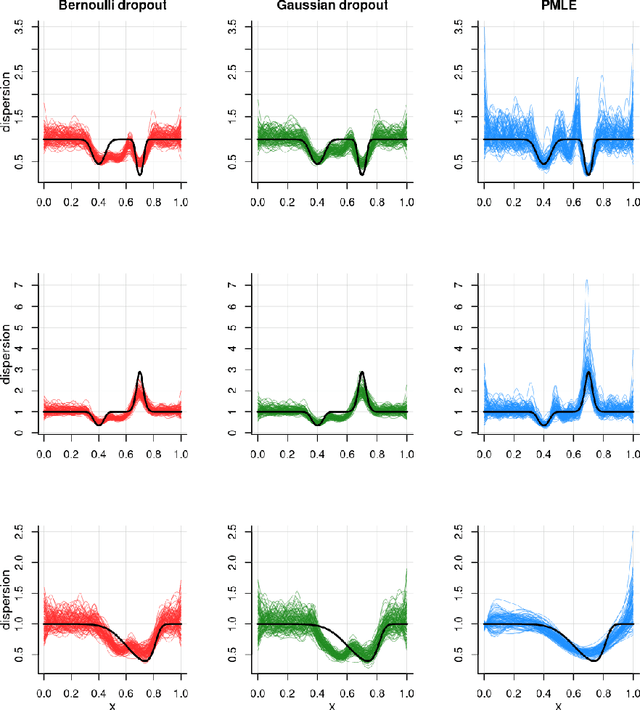
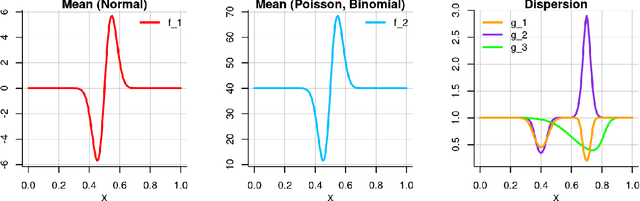
Even though dropout is a popular regularization technique, its theoretical properties are not fully understood. In this paper we study dropout regularization in extended generalized linear models based on double exponential families, for which the dispersion parameter can vary with the features. A theoretical analysis shows that dropout regularization prefers rare but important features in both the mean and dispersion, generalizing an earlier result for conventional generalized linear models. Training is performed using stochastic gradient descent with adaptive learning rate. To illustrate, we apply dropout to adaptive smoothing with B-splines, where both the mean and dispersion parameters are modelled flexibly. The important B-spline basis functions can be thought of as rare features, and we confirm in experiments that dropout is an effective form of regularization for mean and dispersion parameters that improves on a penalized maximum likelihood approach with an explicit smoothness penalty.