 Add to Chrome
 Add to Firefox
 Add to Edge
An autonomous living database for perovskite photovoltaics
Jan 25, 2026
Scientific discovery is severely bottlenecked by the inability of manual curation to keep pace with exponential publication rates. This creates a widening knowledge gap. This is especially stark in photovoltaics, where the leading database for perovskite solar cells has been stagnant since 2021 despite massive ongoing research output. Here, we resolve this challenge by establishing an autonomous, self-updating living database (PERLA). Our pipeline integrates large language models with physics-aware validation to extract complex device data from the continuous literature stream, achieving human-level precision (>90%) and eliminating annotator variance. By employing this system on the previously inaccessible post-2021 literature, we uncover critical evolutionary trends hidden by data lag: the field has decisively shifted toward inverted architectures employing self-assembled monolayers and formamidinium-rich compositions, driving a clear trajectory of sustained voltage loss reduction. PERLA transforms static publications into dynamic knowledge resources that enable data-driven discovery to operate at the speed of publication.

DScribe: Library of Descriptors for Machine Learning in Materials Science
Apr 18, 2019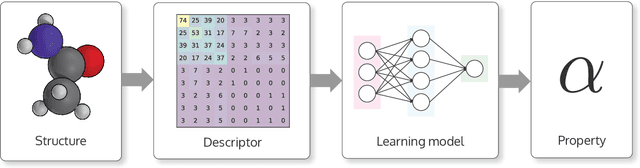


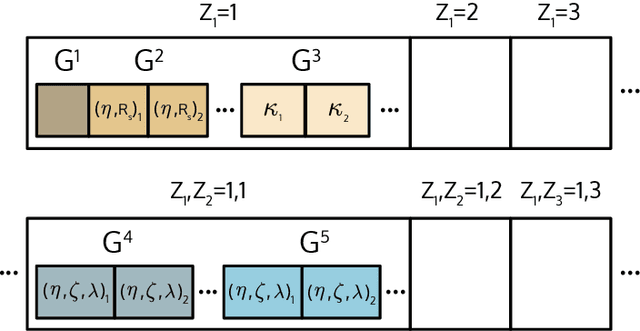
DScribe is a software package for machine learning that provides popular feature transformations ("descriptors") for atomistic materials simulations. DScribe accelerates the application of machine learning for atomistic property prediction by providing user-friendly, off-the-shelf descriptor implementations. The package currently contains implementations for Coulomb matrix, Ewald sum matrix, sine matrix, Many-body Tensor Representation (MBTR), Atom-centered Symmetry Function (ACSF) and Smooth Overlap of Atomic Positions (SOAP). Usage of the package is illustrated for two different applications: formation energy prediction for solids and ionic charge prediction for atoms in organic molecules. The package is freely available under the open-source Apache License 2.0.