 Add to Chrome
 Add to Firefox
 Add to Edge
Tackling air quality with SAPIENS
Jan 30, 2026
Air pollution is a chronic problem in large cities worldwide and awareness is rising as the long-term health implications become clearer. Vehicular traffic has been identified as a major contributor to poor air quality. In a lot of cities the publicly available air quality measurements and forecasts are coarse-grained both in space and time. However, in general, real-time traffic intensity data is openly available in various forms and is fine-grained. In this paper, we present an in-depth study of pollution sensor measurements combined with traffic data from Mexico City. We analyse and model the relationship between traffic intensity and air quality with the aim to provide hyper-local, dynamic air quality forecasts. We developed an innovative method to represent traffic intensities by transforming simple colour-coded traffic maps into concentric ring-based descriptions, enabling improved characterisation of traffic conditions. Using Partial Least Squares Regression, we predict pollution levels based on these newly defined traffic intensities. The model was optimised with various training samples to achieve the best predictive performance and gain insights into the relationship between pollutants and traffic. The workflow we have designed is straightforward and adaptable to other contexts, like other cities beyond the specifics of our dataset.

RangL: A Reinforcement Learning Competition Platform
Jul 28, 2022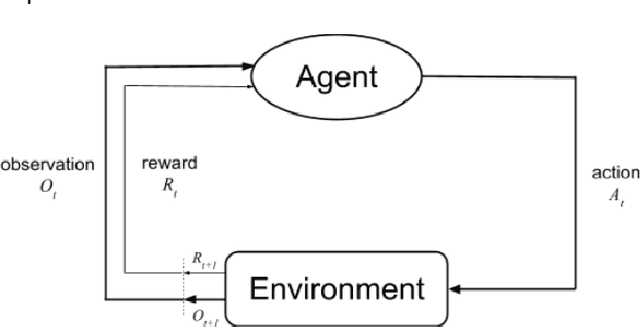

The RangL project hosted by The Alan Turing Institute aims to encourage the wider uptake of reinforcement learning by supporting competitions relating to real-world dynamic decision problems. This article describes the reusable code repository developed by the RangL team and deployed for the 2022 Pathways to Net Zero Challenge, supported by the UK Net Zero Technology Centre. The winning solutions to this particular Challenge seek to optimize the UK's energy transition policy to net zero carbon emissions by 2050. The RangL repository includes an OpenAI Gym reinforcement learning environment and code that supports both submission to, and evaluation in, a remote instance of the open source EvalAI platform as well as all winning learning agent strategies. The repository is an illustrative example of RangL's capability to provide a reusable structure for future challenges.