 Add to Chrome
 Add to Firefox
 Add to Edge
Improving Methodologies for Agentic Evaluations Across Domains: Leakage of Sensitive Information, Fraud and Cybersecurity Threats
Jan 22, 2026
The rapid rise of autonomous AI systems and advancements in agent capabilities are introducing new risks due to reduced oversight of real-world interactions. Yet agent testing remains nascent and is still a developing science. As AI agents begin to be deployed globally, it is important that they handle different languages and cultures accurately and securely. To address this, participants from The International Network for Advanced AI Measurement, Evaluation and Science, including representatives from Singapore, Japan, Australia, Canada, the European Commission, France, Kenya, South Korea, and the United Kingdom have come together to align approaches to agentic evaluations. This is the third exercise, building on insights from two earlier joint testing exercises conducted by the Network in November 2024 and February 2025. The objective is to further refine best practices for testing advanced AI systems. The exercise was split into two strands: (1) common risks, including leakage of sensitive information and fraud, led by Singapore AISI; and (2) cybersecurity, led by UK AISI. A mix of open and closed-weight models were evaluated against tasks from various public agentic benchmarks. Given the nascency of agentic testing, our primary focus was on understanding methodological issues in conducting such tests, rather than examining test results or model capabilities. This collaboration marks an important step forward as participants work together to advance the science of agentic evaluations.

Improving Methodologies for LLM Evaluations Across Global Languages
Jan 22, 2026As frontier AI models are deployed globally, it is essential that their behaviour remains safe and reliable across diverse linguistic and cultural contexts. To examine how current model safeguards hold up in such settings, participants from the International Network for Advanced AI Measurement, Evaluation and Science, including representatives from Singapore, Japan, Australia, Canada, the EU, France, Kenya, South Korea and the UK conducted a joint multilingual evaluation exercise. Led by Singapore AISI, two open-weight models were tested across ten languages spanning high and low resourced groups: Cantonese English, Farsi, French, Japanese, Korean, Kiswahili, Malay, Mandarin Chinese and Telugu. Over 6,000 newly translated prompts were evaluated across five harm categories (privacy, non-violent crime, violent crime, intellectual property and jailbreak robustness), using both LLM-as-a-judge and human annotation. The exercise shows how safety behaviours can vary across languages. These include differences in safeguard robustness across languages and harm types and variation in evaluator reliability (LLM-as-judge vs. human review). Further, it also generated methodological insights for improving multilingual safety evaluations, such as the need for culturally contextualised translations, stress-tested evaluator prompts and clearer human annotation guidelines. This work represents an initial step toward a shared framework for multilingual safety testing of advanced AI systems and calls for continued collaboration with the wider research community and industry.
Completely Distributed Power Allocation using Deep Neural Network for Device to Device communication Underlaying LTE
Feb 12, 2018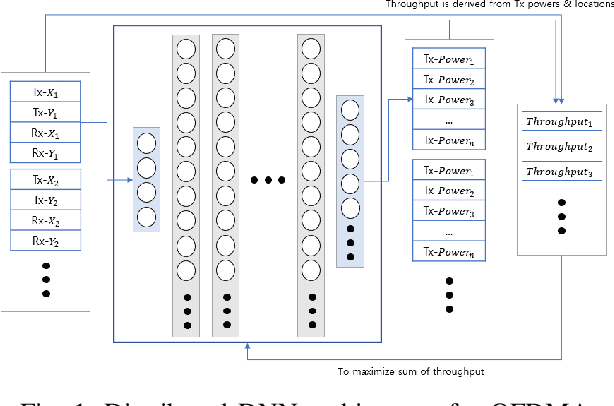
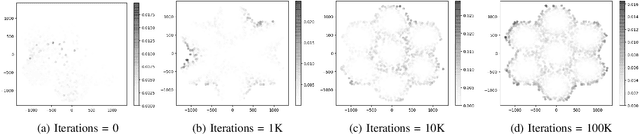
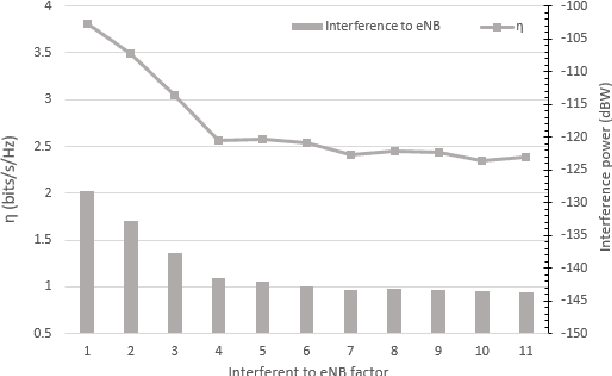
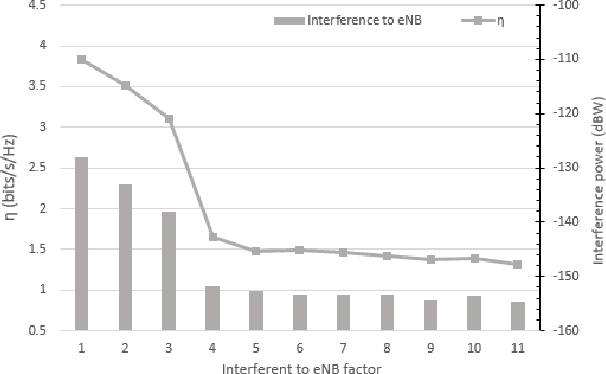
Device to device (D2D) communication underlaying LTE can be used to distribute traffic loads of eNBs. However, a conventional D2D link is controlled by an eNB, and it still remains burdens to the eNB. We propose a completely distributed power allocation method for D2D communication underlaying LTE using deep learning. In the proposed scheme, a D2D transmitter can decide the transmit power without any help from other nodes, such as an eNB or another D2D device. Also, the power set, which is delivered from each D2D node independently, can optimize the overall cell throughput. We suggest a distirbuted deep learning architecture in which the devices are trained as a group, but operate independently. The deep learning can optimize total cell throughput while keeping constraints such as interference to eNB. The proposed scheme, which is implemented model using Tensorflow, can provide same throughput with the conventional method even it operates completely on distributed manner.