 Add to Chrome
 Add to Firefox
 Add to Edge
Disentangling Aleatoric and Epistemic Uncertainty in Physics-Informed Neural Networks. Application to Insulation Material Degradation Prognostics
Jan 07, 2026
Physics-Informed Neural Networks (PINNs) provide a framework for integrating physical laws with data. However, their application to Prognostics and Health Management (PHM) remains constrained by the limited uncertainty quantification (UQ) capabilities. Most existing PINN-based prognostics approaches are deterministic or account only for epistemic uncertainty, limiting their suitability for risk-aware decision-making. This work introduces a heteroscedastic Bayesian Physics-Informed Neural Network (B-PINN) framework that jointly models epistemic and aleatoric uncertainty, yielding full predictive posteriors for spatiotemporal insulation material ageing estimation. The approach integrates Bayesian Neural Networks (BNNs) with physics-based residual enforcement and prior distributions, enabling probabilistic inference within a physics-informed learning architecture. The framework is evaluated on transformer insulation ageing application, validated with a finite-element thermal model and field measurements from a solar power plant, and benchmarked against deterministic PINNs, dropout-based PINNs (d-PINNs), and alternative B-PINN variants. Results show that the proposed B-PINN provides improved predictive accuracy and better-calibrated uncertainty estimates than competing approaches. A systematic sensitivity study further analyzes the impact of boundary-condition, initial-condition, and residual sampling strategies on accuracy, calibration, and generalization. Overall, the findings highlight the potential of Bayesian physics-informed learning to support uncertainty-aware prognostics and informed decision-making in transformer asset management.

Residual-based Attention Physics-informed Neural Networks for Efficient Spatio-Temporal Lifetime Assessment of Transformers Operated in Renewable Power Plants
May 10, 2024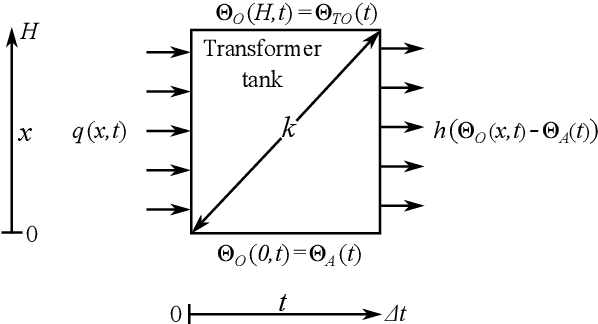
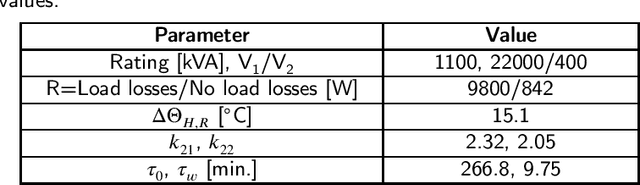
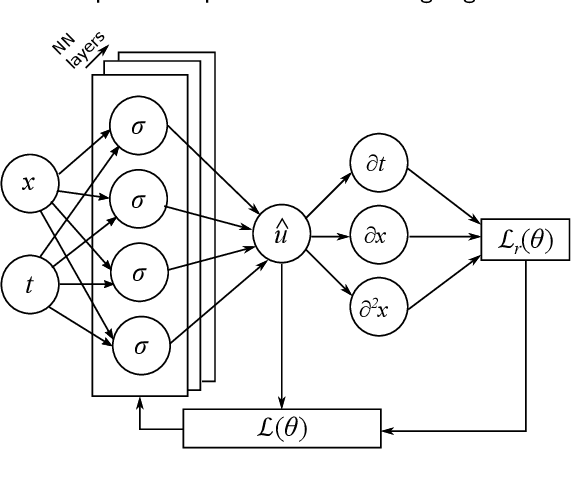
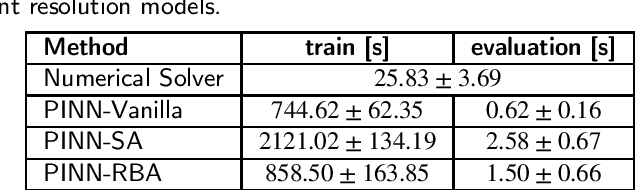
Transformers are vital assets for the reliable and efficient operation of power and energy systems. They support the integration of renewables to the grid through improved grid stability and operation efficiency. Monitoring the health of transformers is essential to ensure grid reliability and efficiency. Thermal insulation ageing is a key transformer failure mode, which is generally tracked by monitoring the hotspot temperature (HST). However, HST measurement is complex and expensive and often estimated from indirect measurements. Existing computationally-efficient HST models focus on space-agnostic thermal models, providing worst-case HST estimates. This article introduces an efficient spatio-temporal model for transformer winding temperature and ageing estimation, which leverages physics-based partial differential equations (PDEs) with data-driven Neural Networks (NN) in a Physics Informed Neural Networks (PINNs) configuration to improve prediction accuracy and acquire spatio-temporal resolution. The computational efficiency of the PINN model is improved through the implementation of the Residual-Based Attention scheme that accelerates the PINN model convergence. PINN based oil temperature predictions are used to estimate spatio-temporal transformer winding temperature values, which are validated through PDE resolution models and fiber optic sensor measurements, respectively. Furthermore, the spatio-temporal transformer ageing model is inferred, aiding transformer health management decision-making and providing insights into localized thermal ageing phenomena in the transformer insulation. Results are validated with a distribution transformer operated on a floating photovoltaic power plant.