 Add to Chrome
 Add to Firefox
 Add to Edge
An Optimization Method for Autoregressive Time Series Forecasting
Feb 02, 2026
Current time-series forecasting models are primarily based on transformer-style neural networks. These models achieve long-term forecasting mainly by scaling up the model size rather than through genuinely autoregressive (AR) rollout. From the perspective of large language model training, the traditional training process for time-series forecasting models ignores temporal causality. In this paper, we propose a novel training method for time-series forecasting that enforces two key properties: (1) AR prediction errors should increase with the forecasting horizon. Any violation of this principle is considered random guessing and is explicitly penalized in the loss function, and (2) the method enables models to concatenate short-term AR predictions for forming flexible long-term forecasts. Empirical results demonstrate that our method establishes a new state-of-the-art across multiple benchmarks, achieving an MSE reduction of more than 10% compared to iTransformer and other recent strong baselines. Furthermore, it enables short-horizon forecasting models to perform reliable long-term predictions at horizons over 7.5 times longer. Code is available at https://github.com/LizhengMathAi/AROpt

Programming with AI: Evaluating ChatGPT, Gemini, AlphaCode, and GitHub Copilot for Programmers
Nov 14, 2024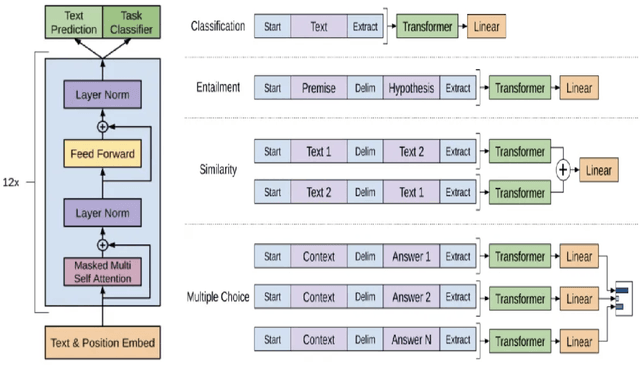
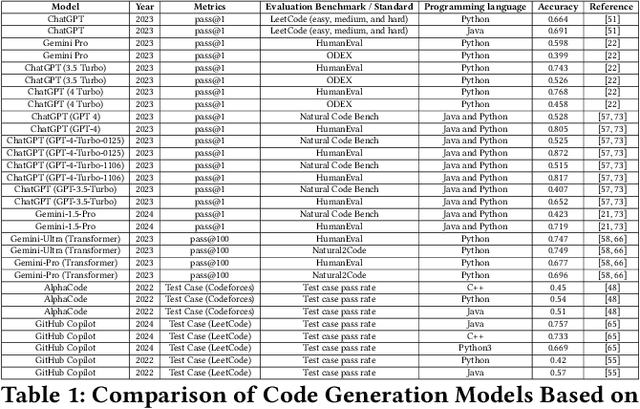
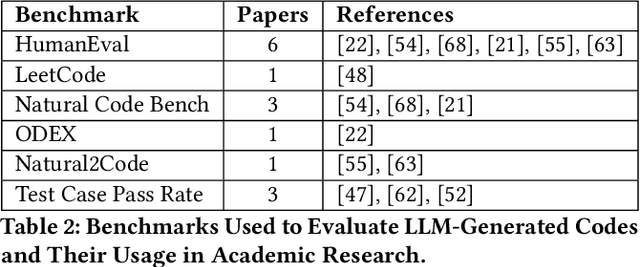
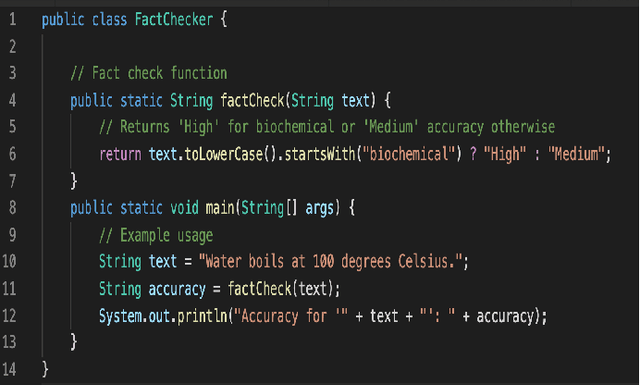
Our everyday lives now heavily rely on artificial intelligence (AI) powered large language models (LLMs). Like regular users, programmers are also benefiting from the newest large language models. In response to the critical role that AI models play in modern software development, this study presents a thorough evaluation of leading programming assistants, including ChatGPT, Gemini(Bard AI), AlphaCode, and GitHub Copilot. The evaluation is based on tasks like natural language processing and code generation accuracy in different programming languages like Java, Python and C++. Based on the results, it has emphasized their strengths and weaknesses and the importance of further modifications to increase the reliability and accuracy of the latest popular models. Although these AI assistants illustrate a high level of progress in language understanding and code generation, along with ethical considerations and responsible usage, they provoke a necessity for discussion. With time, developing more refined AI technology is essential for achieving advanced solutions in various fields, especially with the knowledge of the feature intricacies of these models and their implications. This study offers a comparison of different LLMs and provides essential feedback on the rapidly changing area of AI models. It also emphasizes the need for ethical developmental practices to actualize AI models' full potential.