 Add to Chrome
 Add to Firefox
 Add to Edge
Theoretical Convergence of SMOTE-Generated Samples
Jan 05, 2026
Imbalanced data affects a wide range of machine learning applications, from healthcare to network security. As SMOTE is one of the most popular approaches to addressing this issue, it is imperative to validate it not only empirically but also theoretically. In this paper, we provide a rigorous theoretical analysis of SMOTE's convergence properties. Concretely, we prove that the synthetic random variable Z converges in probability to the underlying random variable X. We further prove a stronger convergence in mean when X is compact. Finally, we show that lower values of the nearest neighbor rank lead to faster convergence offering actionable guidance to practitioners. The theoretical results are supported by numerical experiments using both real-life and synthetic data. Our work provides a foundational understanding that enhances data augmentation techniques beyond imbalanced data scenarios.

Synthetic Data for Feature Selection
Nov 06, 2022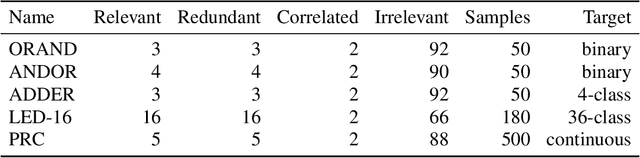
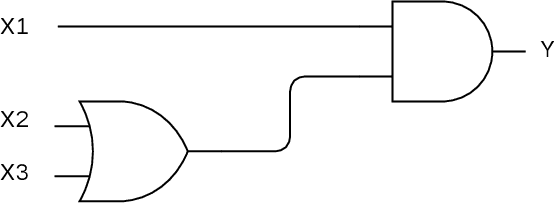
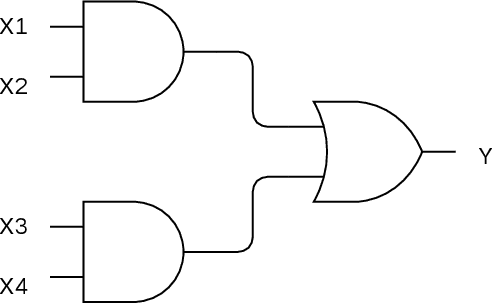
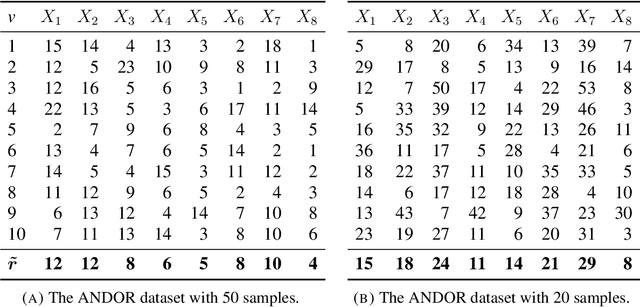
Feature selection is an important and active field of research in machine learning and data science. Our goal in this paper is to propose a collection of synthetic datasets that can be used as a common reference point for feature selection algorithms. Synthetic datasets allow for precise evaluation of selected features and control of the data parameters for comprehensive assessment. The proposed datasets are based on applications from electronics in order to mimic real life scenarios. To illustrate the utility of the proposed data we employ one of the datasets to test several popular feature selection algorithms. The datasets are made publicly available on GitHub and can be used by researchers to evaluate feature selection algorithms.
Machine learning applications for COVID-19: A state-of-the-art review
Jan 19, 2021


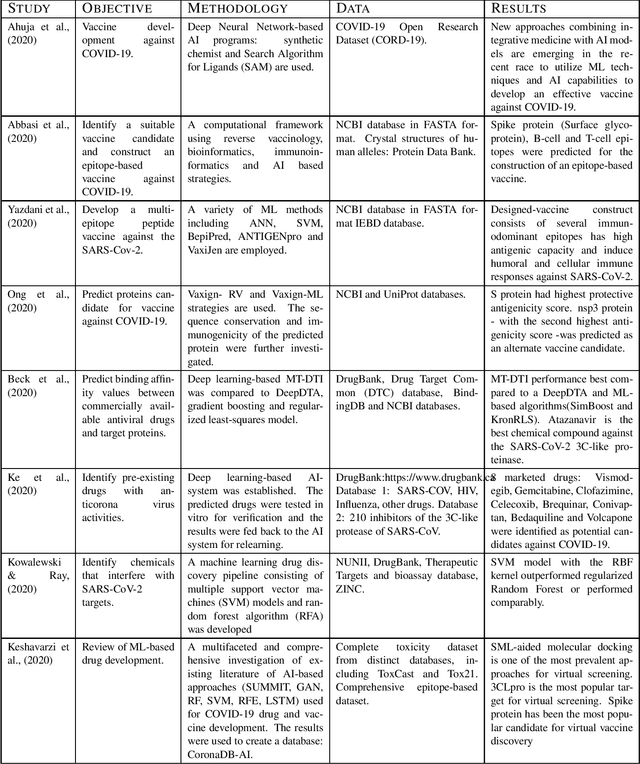
The COVID-19 pandemic has galvanized the machine learning community to create new solutions that can help in the fight against the virus. The body of literature related to applications of machine learning and artificial intelligence to COVID-19 is constantly growing. The goal of this article is to present the latest advances in machine learning research applied to COVID-19. We cover four major areas of research: forecasting, medical diagnostics, drug development, and contact tracing. We review and analyze the most successful state of the art studies. In contrast to other existing surveys on the subject, our article presents a high level overview of the current research that is sufficiently detailed to provide an informed insight.