 Add to Chrome
 Add to Firefox
 Add to Edge
A CODECO Case Study and Initial Validation for Edge Orchestration of Autonomous Mobile Robots
Nov 11, 2025
Autonomous Mobile Robots (AMRs) increasingly adopt containerized micro-services across the Edge-Cloud continuum. While Kubernetes is the de-facto orchestrator for such systems, its assumptions of stable networks, homogeneous resources, and ample compute capacity do not fully hold in mobile, resource-constrained robotic environments. This paper describes a case study on smart-manufacturing AMRs and performs an initial comparison between CODECO orchestration and standard Kubernetes using a controlled KinD environment. Metrics include pod deployment and deletion times, CPU and memory usage, and inter-pod data rates. The observed results indicate that CODECO offers reduced CPU consumption and more stable communication patterns, at the cost of modest memory overhead (10-15%) and slightly increased pod lifecycle latency due to secure overlay initialization.

Neural Network Methods for Radiation Detectors and Imaging
Nov 09, 2023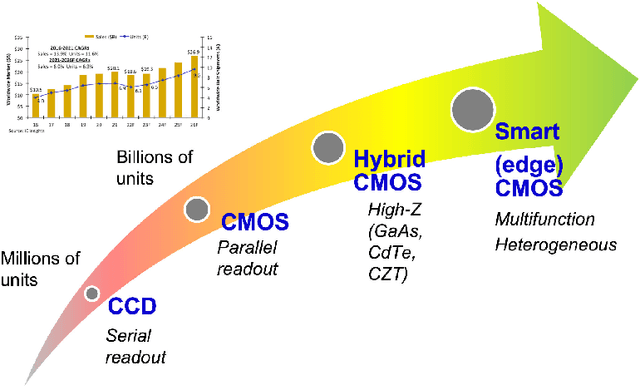
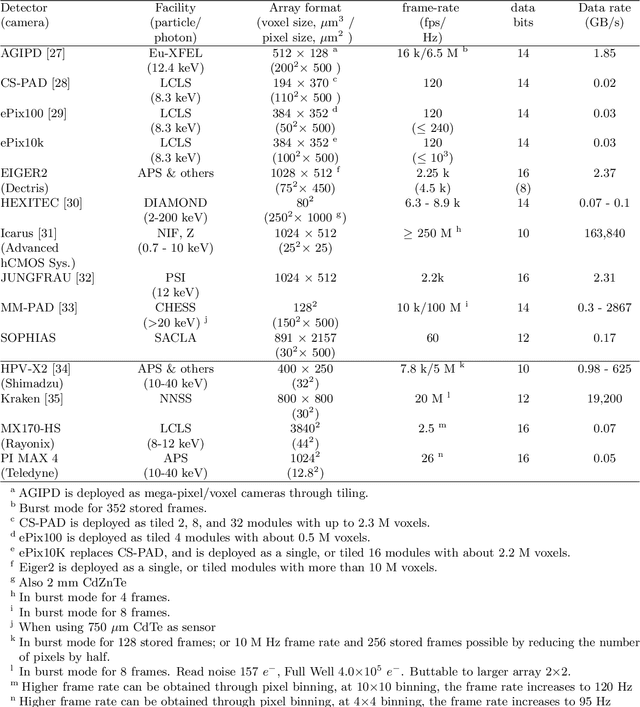
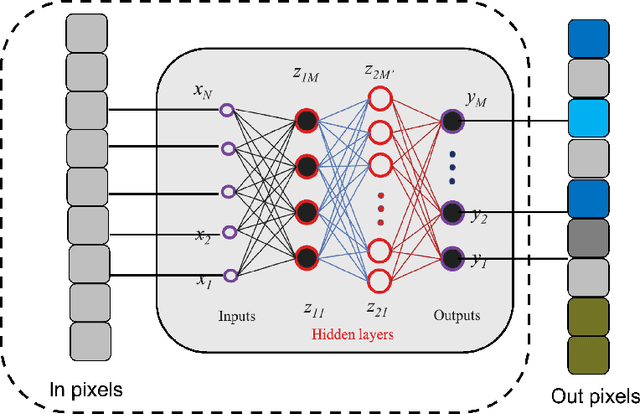
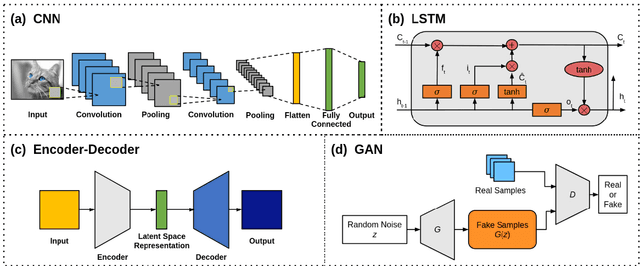
Recent advances in image data processing through machine learning and especially deep neural networks (DNNs) allow for new optimization and performance-enhancement schemes for radiation detectors and imaging hardware through data-endowed artificial intelligence. We give an overview of data generation at photon sources, deep learning-based methods for image processing tasks, and hardware solutions for deep learning acceleration. Most existing deep learning approaches are trained offline, typically using large amounts of computational resources. However, once trained, DNNs can achieve fast inference speeds and can be deployed to edge devices. A new trend is edge computing with less energy consumption (hundreds of watts or less) and real-time analysis potential. While popularly used for edge computing, electronic-based hardware accelerators ranging from general purpose processors such as central processing units (CPUs) to application-specific integrated circuits (ASICs) are constantly reaching performance limits in latency, energy consumption, and other physical constraints. These limits give rise to next-generation analog neuromorhpic hardware platforms, such as optical neural networks (ONNs), for high parallel, low latency, and low energy computing to boost deep learning acceleration.