 Add to Chrome
 Add to Firefox
 Add to Edge
LLM-Driven Feature-Level Adversarial Attacks on Android Malware Detectors
Dec 24, 2025
The rapid growth in both the scale and complexity of Android malware has driven the widespread adoption of machine learning (ML) techniques for scalable and accurate malware detection. Despite their effectiveness, these models remain vulnerable to adversarial attacks that introduce carefully crafted feature-level perturbations to evade detection while preserving malicious functionality. In this paper, we present LAMLAD, a novel adversarial attack framework that exploits the generative and reasoning capabilities of large language models (LLMs) to bypass ML-based Android malware classifiers. LAMLAD employs a dual-agent architecture composed of an LLM manipulator, which generates realistic and functionality-preserving feature perturbations, and an LLM analyzer, which guides the perturbation process toward successful evasion. To improve efficiency and contextual awareness, LAMLAD integrates retrieval-augmented generation (RAG) into the LLM pipeline. Focusing on Drebin-style feature representations, LAMLAD enables stealthy and high-confidence attacks against widely deployed Android malware detection systems. We evaluate LAMLAD against three representative ML-based Android malware detectors and compare its performance with two state-of-the-art adversarial attack methods. Experimental results demonstrate that LAMLAD achieves an attack success rate (ASR) of up to 97%, requiring on average only three attempts per adversarial sample, highlighting its effectiveness, efficiency, and adaptability in practical adversarial settings. Furthermore, we propose an adversarial training-based defense strategy that reduces the ASR by more than 30% on average, significantly enhancing model robustness against LAMLAD-style attacks.

Detection and Prediction of Cardiac Anomalies Using Wireless Body Sensors and Bayesian Belief Networks
Apr 16, 2019

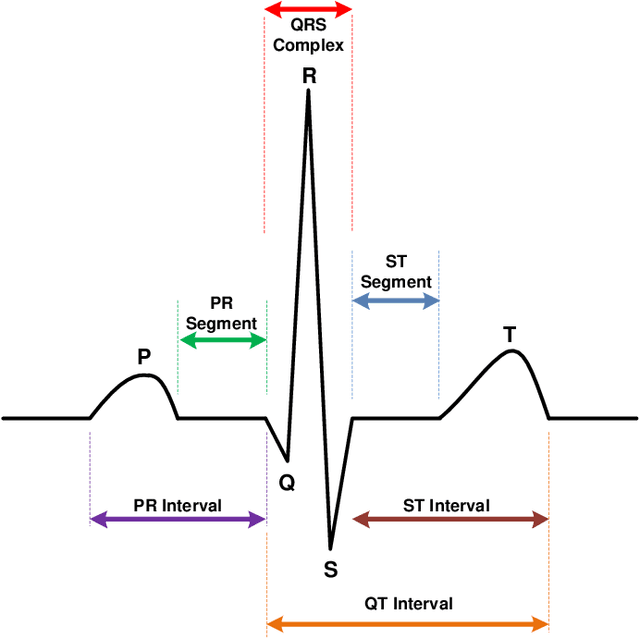
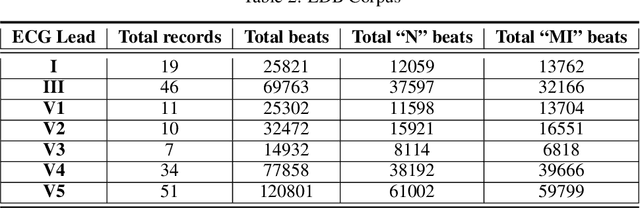
Intricating cardiac complexities are the primary factor associated with healthcare costs and the highest cause of death rate in the world. However, preventive measures like the early detection of cardiac anomalies can prevent severe cardiovascular arrests of varying complexities and can impose a substantial impact on healthcare cost. Encountering such scenarios usually the electrocardiogram (ECG or EKG) is the first diagnostic choice of a medical practitioner or clinical staff to measure the electrical and muscular fitness of an individual heart. This paper presents a system which is capable of reading the recorded ECG and predict the cardiac anomalies without the intervention of a human expert. The paper purpose an algorithm which read and perform analysis on electrocardiogram datasets. The proposed architecture uses the Discrete Wavelet Transform (DWT) at first place to perform preprocessing of ECG data followed by undecimated Wavelet transform (UWT) to extract nine relevant features which are of high interest to a cardiologist. The probabilistic mode named Bayesian Network Classifier is trained using the extracted nine parameters on UCL arrhythmia dataset. The proposed system classifies a recorded heartbeat into four classes using Bayesian Network classifier and Tukey's box analysis. The four classes for the prediction of a heartbeat are (a) Normal Beat, (b) Premature Ventricular Contraction (PVC) (c) Premature Atrial Contraction (PAC) and (d) Myocardial Infarction. The results of experimental setup depict that the proposed system has achieved an average accuracy of 96.6 for PAC\% 92.8\% for MI and 87\% for PVC, with an average error rate of 3.3\% for PAC, 6\% for MI and 12.5\% for PVC on real electrocardiogram datasets including Physionet and European ST-T Database (EDB).