 Add to Chrome
 Add to Firefox
 Add to Edge
Trojan Attacks on Neural Network Controllers for Robotic Systems
Feb 04, 2026
Neural network controllers are increasingly deployed in robotic systems for tasks such as trajectory tracking and pose stabilization. However, their reliance on potentially untrusted training pipelines or supply chains introduces significant security vulnerabilities. This paper investigates backdoor (Trojan) attacks against neural controllers, using a differential-drive mobile robot platform as a case study. In particular, assuming that the robot's tracking controller is implemented as a neural network, we design a lightweight, parallel Trojan network that can be embedded within the controller. This malicious module remains dormant during normal operation but, upon detecting a highly specific trigger condition defined by the robot's pose and goal parameters, compromises the primary controller's wheel velocity commands, resulting in undesired and potentially unsafe robot behaviours. We provide a proof-of-concept implementation of the proposed Trojan network, which is validated through simulation under two different attack scenarios. The results confirm the effectiveness of the proposed attack and demonstrate that neural network-based robotic control systems are subject to potentially critical security threats.

An Optimized Density-Based Lane Keeping System for A Cost-Efficient Autonomous Vehicle Platform: AurigaBot V1
Apr 05, 2025
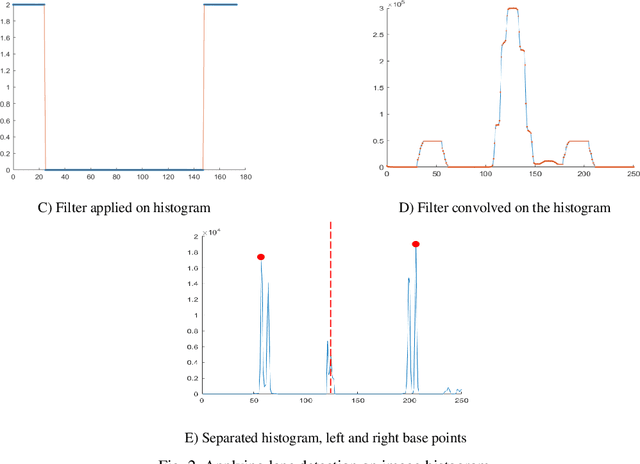
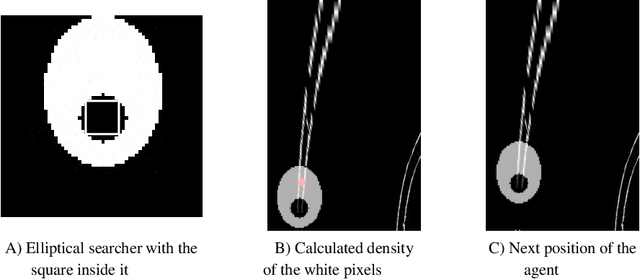
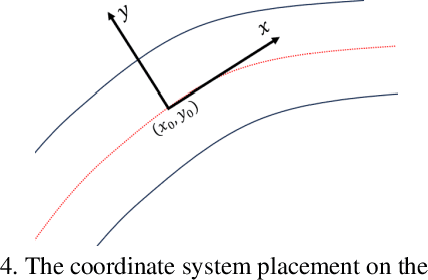
The development of self-driving cars has garnered significant attention from researchers, universities, and industries worldwide. Autonomous vehicles integrate numerous subsystems, including lane tracking, object detection, and vehicle control, which require thorough testing and validation. Scaled-down vehicles offer a cost-effective and accessible platform for experimentation, providing researchers with opportunities to optimize algorithms under constraints of limited computational power. This paper presents a four-wheeled autonomous vehicle platform designed to facilitate research and prototyping in autonomous driving. Key contributions include (1) a novel density-based clustering approach utilizing histogram statistics for landmark tracking, (2) a lateral controller, and (3) the integration of these innovations into a cohesive platform. Additionally, the paper explores object detection through systematic dataset augmentation and introduces an autonomous parking procedure. The results demonstrate the platform's effectiveness in achieving reliable lane tracking under varying lighting conditions, smooth trajectory following, and consistent object detection performance. Though developed for small-scale vehicles, these modular solutions are adaptable for full-scale autonomous systems, offering a versatile and cost-efficient framework for advancing research and industry applications.