 Add to Chrome
 Add to Firefox
 Add to Edge
PALMS: Pavlovian Associative Learning Models Simulator
Feb 07, 2026
Simulations are an indispensable step in the cycle of theory development and refinement, helping researchers formulate precise definitions, generate models, and make accurate predictions. This paper introduces the Pavlovian Associative Learning Models Simulator (PALMS), a Python environment to simulate Pavlovian conditioning experiments. In addition to the canonical Rescorla-Wagner model, PALMS incorporates several attentional learning approaches, including Pearce-Kaye-Hall, Mackintosh Extended, Le Pelley's Hybrid, and a novel extension of the Rescorla-Wagner model with a unified variable learning rate that integrates Mackintosh's and Pearce and Hall's opposing conceptualisations. The simulator's graphical interface allows for the input of entire experimental designs in an alphanumeric format, akin to that used by experimental neuroscientists. Moreover, it uniquely enables the simulation of experiments involving hundreds of stimuli, as well as the computation of configural cues and configural-cue compounds across all models, thereby considerably expanding their predictive capabilities. PALMS operates efficiently, providing instant visualisation of results, supporting rapid, precise comparisons of various models' predictions within a single architecture and environment. Furthermore, graphic displays can be easily saved, and simulated data can be exported to spreadsheets. To illustrate the simulator's capabilities and functionalities, we provide a detailed description of the software and examples of use, reproducing published experiments in the associative learning literature. PALMS is licensed under the open-source GNU Lesser General Public License 3.0. The simulator source code and the latest multiplatform release build are accessible as a GitHub repository at https://github.com/cal-r/PALMS-Simulator

DiT-Head: High-Resolution Talking Head Synthesis using Diffusion Transformers
Dec 11, 2023We propose a novel talking head synthesis pipeline called "DiT-Head", which is based on diffusion transformers and uses audio as a condition to drive the denoising process of a diffusion model. Our method is scalable and can generalise to multiple identities while producing high-quality results. We train and evaluate our proposed approach and compare it against existing methods of talking head synthesis. We show that our model can compete with these methods in terms of visual quality and lip-sync accuracy. Our results highlight the potential of our proposed approach to be used for a wide range of applications, including virtual assistants, entertainment, and education. For a video demonstration of the results and our user study, please refer to our supplementary material.
Cognitively Inspired Components for Social Conversational Agents
Nov 09, 2023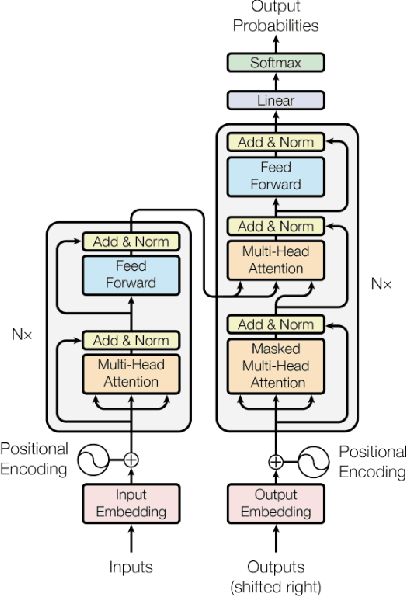
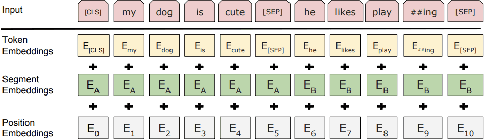
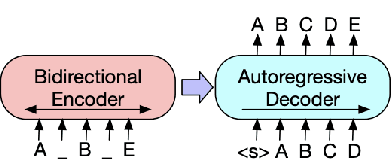
Current conversational agents (CA) have seen improvement in conversational quality in recent years due to the influence of large language models (LLMs) like GPT3. However, two key categories of problem remain. Firstly there are the unique technical problems resulting from the approach taken in creating the CA, such as scope with retrieval agents and the often nonsensical answers of former generative agents. Secondly, humans perceive CAs as social actors, and as a result expect the CA to adhere to social convention. Failure on the part of the CA in this respect can lead to a poor interaction and even the perception of threat by the user. As such, this paper presents a survey highlighting a potential solution to both categories of problem through the introduction of cognitively inspired additions to the CA. Through computational facsimiles of semantic and episodic memory, emotion, working memory, and the ability to learn, it is possible to address both the technical and social problems encountered by CAs.