 Add to Chrome
 Add to Firefox
 Add to Edge
Using Legacy Polysomnography Data to Train a Radar System to Quantify Sleep in Older Adults and People living with Dementia
Jan 07, 2026
Objective: Ultra-wideband radar technology offers a promising solution for unobtrusive and cost-effective in-home sleep monitoring. However, the limited availability of radar sleep data poses challenges in building robust models that generalize across diverse cohorts and environments. This study proposes a novel deep transfer learning framework to enhance sleep stage classification using radar data. Methods: An end-to-end neural network was developed to classify sleep stages based on nocturnal respiratory and motion signals. The network was trained using a combination of large-scale polysomnography (PSG) datasets and radar data. A domain adaptation approach employing adversarial learning was utilized to bridge the knowledge gap between PSG and radar signals. Validation was performed on a radar dataset of 47 older adults (mean age: 71.2), including 18 participants with prodromal or mild Alzheimer disease. Results: The proposed network structure achieves an accuracy of 79.5% with a Kappa value of 0.65 when classifying wakefulness, rapid eye movement, light sleep and deep sleep. Experimental results confirm that our deep transfer learning approach significantly enhances automatic sleep staging performance in the target domain. Conclusion: This method effectively addresses challenges associated with data variability and limited sample size, substantially improving the reliability of automatic sleep staging models, especially in contexts where radar data is limited. Significance: The findings underscore the viability of UWB radar as a nonintrusive, forward-looking sleep assessment tool that could significantly benefit care for older people and people with neurodegenerative disorders.

Embedding digital chronotherapy into medical devices -- A canine case study in controlling status epilepticus through multi-scale rhythmic brain stimulation
Jul 07, 2021
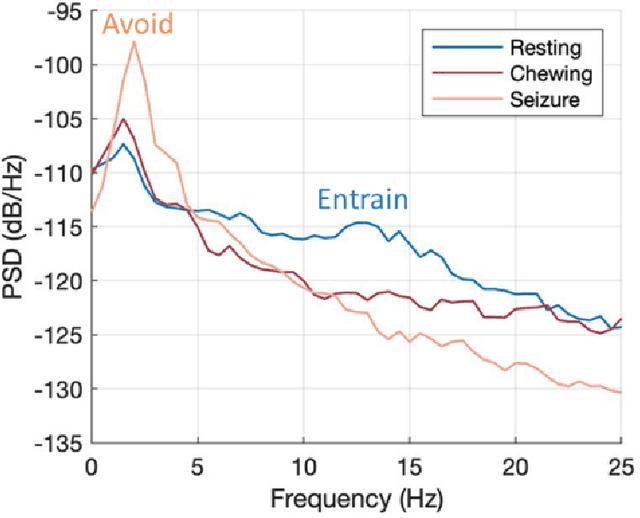
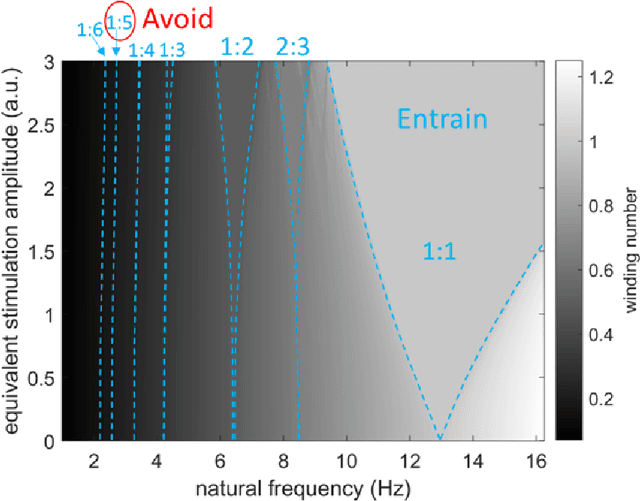

Circadian and other physiological rhythms play a key role in both normal homeostasis and disease processes. Such is the case of circadian and infradian seizure patterns observed in epilepsy. However, these rhythms are not fully exploited in the design of active implantable medical devices. In this paper we explore a new implantable stimulator that implements chronotherapy as a feedforward input to supplement both open-loop and closed-loop methods. This integrated algorithm allows for stimulation to be adjusted to the ultradian, circadian, and infradian patterns observed in patients through slowly-varying temporal adjustments of stimulation and algorithm sub-components, while also enabling adaption of stimulation based on immediate physiological needs such as a breakthrough seizure or change of posture. Embedded physiological sensors in the stimulator can be used to refine the baseline stimulation circadian pattern as a "digital zeitgeber". This algorithmic approach is tested on a canine with severe drug-resistant idiopathic generalized epilepsy exhibiting a characteristic diurnal pattern correlated with sleep-wake cycles. Prior to implantation, the canine's cluster seizures evolved to status epilepticus (SE) and required emergency pharmacological intervention. The cranially-mounted system was fully-implanted bilaterally into the centromedian nucleus of the thalamus. Using combinations of time-based modulation, thalamocortical rhythm-specific tuning of frequency parameters, and fast-adaptive modes based on activity, the canine has experienced no further SE events post-implant at the time of writing (7 months), and no significant clusters are observed any longer. The use of digitally-enabled chronotherapy as a feedforward signal to augment adaptive neurostimulators could prove a useful algorithmic method where sensitivity to temporal patterns are characteristics of the disease state.