 Add to Chrome
 Add to Firefox
 Add to Edge
AgentGuardian: Learning Access Control Policies to Govern AI Agent Behavior
Jan 15, 2026
Artificial intelligence (AI) agents are increasingly used in a variety of domains to automate tasks, interact with users, and make decisions based on data inputs. Ensuring that AI agents perform only authorized actions and handle inputs appropriately is essential for maintaining system integrity and preventing misuse. In this study, we introduce the AgentGuardian, a novel security framework that governs and protects AI agent operations by enforcing context-aware access-control policies. During a controlled staging phase, the framework monitors execution traces to learn legitimate agent behaviors and input patterns. From this phase, it derives adaptive policies that regulate tool calls made by the agent, guided by both real-time input context and the control flow dependencies of multi-step agent actions. Evaluation across two real-world AI agent applications demonstrates that AgentGuardian effectively detects malicious or misleading inputs while preserving normal agent functionality. Moreover, its control-flow-based governance mechanism mitigates hallucination-driven errors and other orchestration-level malfunctions.

Temporal Pattern Discovery for Accurate Sepsis Diagnosis in ICU Patients
Sep 06, 2017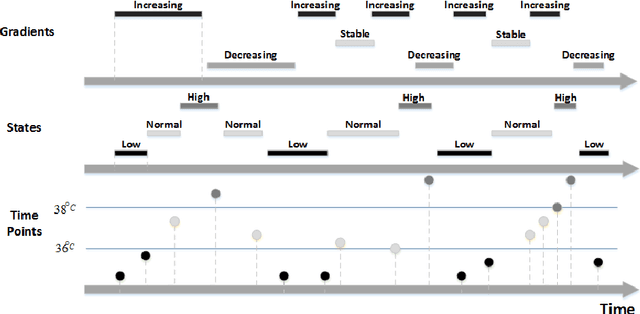
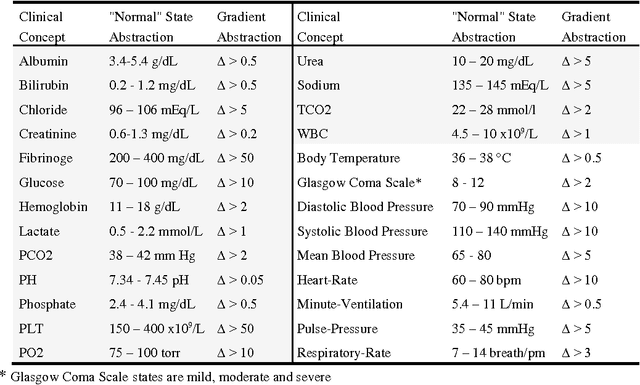

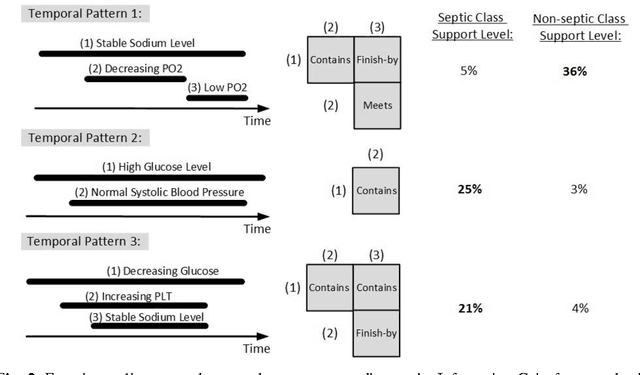
Sepsis is a condition caused by the body's overwhelming and life-threatening response to infection, which can lead to tissue damage, organ failure, and finally death. Common signs and symptoms include fever, increased heart rate, increased breathing rate, and confusion. Sepsis is difficult to predict, diagnose, and treat. Patients who develop sepsis have an increased risk of complications and death and face higher health care costs and longer hospitalization. Today, sepsis is one of the leading causes of mortality among populations in intensive care units (ICUs). In this paper, we look at the problem of early detection of sepsis by using temporal data mining. We focus on the use of knowledge-based temporal abstraction to create meaningful interval-based abstractions, and on time-interval mining to discover frequent interval-based patterns. We used 2,560 cases derived from the MIMIC-III database. We found that the distribution of the temporal patterns whose frequency is above 10% discovered in the records of septic patients during the last 6 and 12 hours before onset of sepsis is significantly different from that distribution within a similar period, during an equivalent time window during hospitalization, in the records of non-septic patients. This discovery is encouraging for the purpose of performing an early diagnosis of sepsis using the discovered patterns as constructed features.