 Add to Chrome
 Add to Firefox
 Add to Edge
Vision-Based Natural Language Scene Understanding for Autonomous Driving: An Extended Dataset and a New Model for Traffic Scene Description Generation
Jan 20, 2026
Traffic scene understanding is essential for enabling autonomous vehicles to accurately perceive and interpret their environment, thereby ensuring safe navigation. This paper presents a novel framework that transforms a single frontal-view camera image into a concise natural language description, effectively capturing spatial layouts, semantic relationships, and driving-relevant cues. The proposed model leverages a hybrid attention mechanism to enhance spatial and semantic feature extraction and integrates these features to generate contextually rich and detailed scene descriptions. To address the limited availability of specialized datasets in this domain, a new dataset derived from the BDD100K dataset has been developed, with comprehensive guidelines provided for its construction. Furthermore, the study offers an in-depth discussion of relevant evaluation metrics, identifying the most appropriate measures for this task. Extensive quantitative evaluations using metrics such as CIDEr and SPICE, complemented by human judgment assessments, demonstrate that the proposed model achieves strong performance and effectively fulfills its intended objectives on the newly developed dataset.

An Optimal Cascade Feature-Level Spatiotemporal Fusion Strategy for Anomaly Detection in CAN Bus
Jan 31, 2025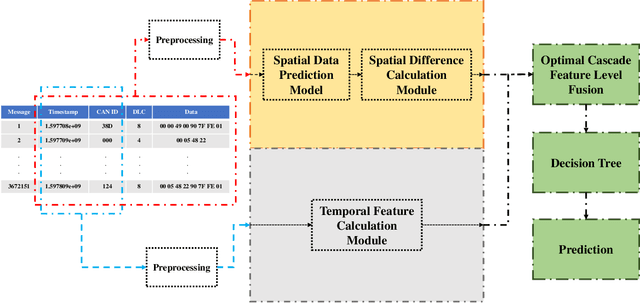
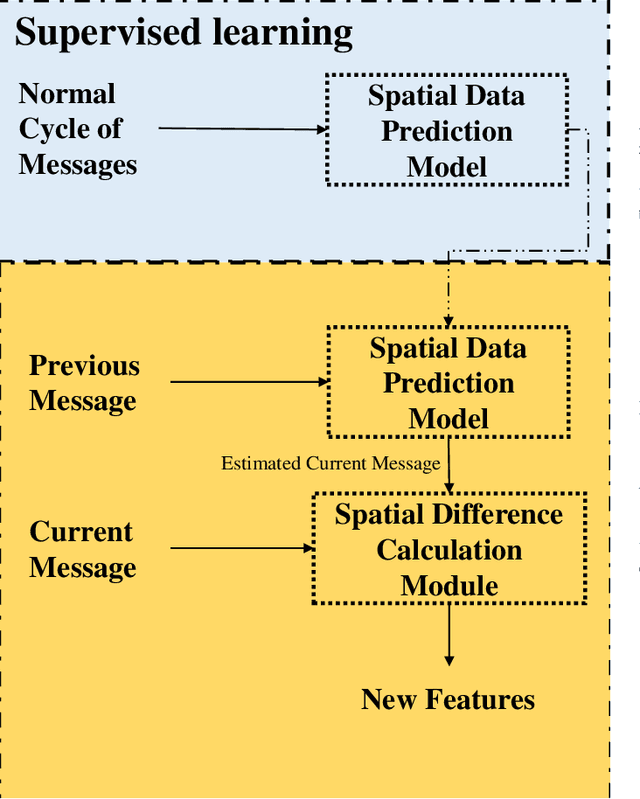
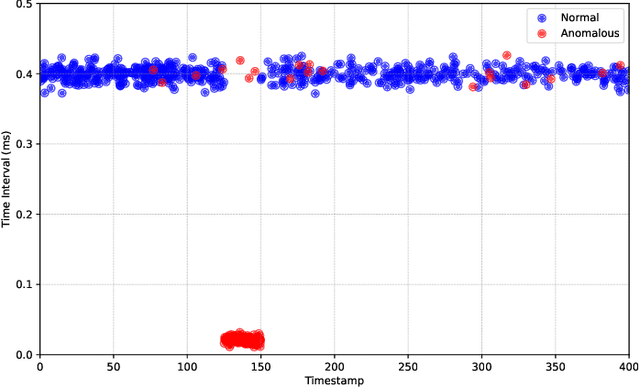
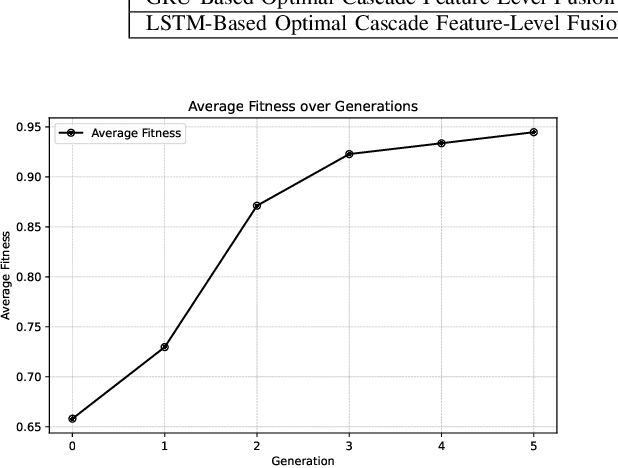
Autonomous vehicles represent a revolutionary advancement driven by the integration of artificial intelligence within intelligent transportation systems. However, they remain vulnerable due to the absence of robust security mechanisms in the Controller Area Network (CAN) bus. In order to mitigate the security issue, many machine learning models and strategies have been proposed, which primarily focus on a subset of dominant patterns of anomalies and lack rigorous evaluation in terms of reliability and robustness. Therefore, to address the limitations of previous works and mitigate the security vulnerability in CAN bus, the current study develops a model based on the intrinsic nature of the problem to cover all dominant patterns of anomalies. To achieve this, a cascade feature-level fusion strategy optimized by a two-parameter genetic algorithm is proposed to combine temporal and spatial information. Subsequently, the model is evaluated using a paired t-test to ensure reliability and robustness. Finally, a comprehensive comparative analysis conducted on two widely used datasets advocates that the proposed model outperforms other models and achieves superior accuracy and F1-score, demonstrating the best performance among all models presented to date.