 Add to Chrome
 Add to Firefox
 Add to Edge
"Death" of a Chatbot: Investigating and Designing Toward Psychologically Safe Endings for Human-AI Relationships
Feb 06, 2026
Millions of users form emotional attachments to AI companions like Character.AI, Replika, and ChatGPT. When these relationships end through model updates, safety interventions, or platform shutdowns, users receive no closure, reporting grief comparable to human loss. As regulations mandate protections for vulnerable users, discontinuation events will accelerate, yet no platform has implemented deliberate end-of-"life" design. Through grounded theory analysis of AI companion communities, we find that discontinuation is a sense-making process shaped by how users attribute agency, perceive finality, and anthropomorphize their companions. Strong anthropomorphization co-occurs with intense grief; users who perceive change as reversible become trapped in fixing cycles; while user-initiated endings demonstrate greater closure. Synthesizing grief psychology with Self-Determination Theory, we develop four design principles and artifacts demonstrating how platforms might provide closure and orient users toward human connection. We contribute the first framework for designing psychologically safe AI companion discontinuation.

Synthetic Human Memories: AI-Edited Images and Videos Can Implant False Memories and Distort Recollection
Sep 13, 2024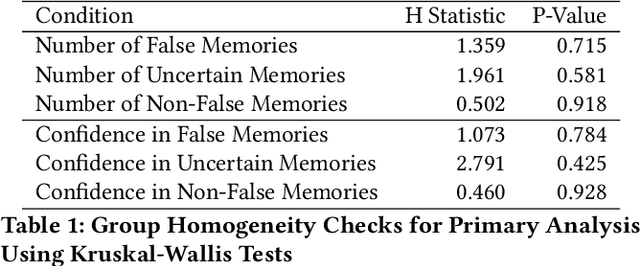
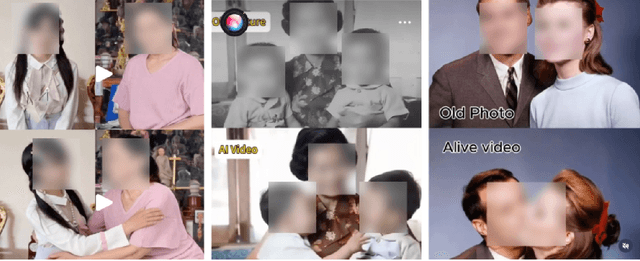
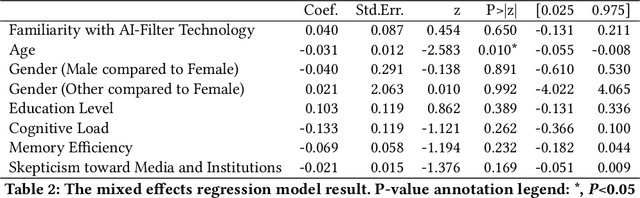
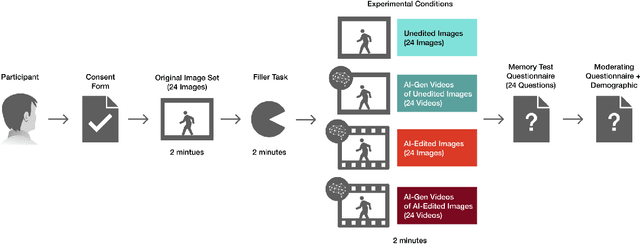
AI is increasingly used to enhance images and videos, both intentionally and unintentionally. As AI editing tools become more integrated into smartphones, users can modify or animate photos into realistic videos. This study examines the impact of AI-altered visuals on false memories--recollections of events that didn't occur or deviate from reality. In a pre-registered study, 200 participants were divided into four conditions of 50 each. Participants viewed original images, completed a filler task, then saw stimuli corresponding to their assigned condition: unedited images, AI-edited images, AI-generated videos, or AI-generated videos of AI-edited images. AI-edited visuals significantly increased false recollections, with AI-generated videos of AI-edited images having the strongest effect (2.05x compared to control). Confidence in false memories was also highest for this condition (1.19x compared to control). We discuss potential applications in HCI, such as therapeutic memory reframing, and challenges in ethical, legal, political, and societal domains.