 Add to Chrome
 Add to Firefox
 Add to Edge
Agentic AI Governance and Lifecycle Management in Healthcare
Jan 22, 2026
Healthcare organizations are beginning to embed agentic AI into routine workflows, including clinical documentation support and early-warning monitoring. As these capabilities diffuse across departments and vendors, health systems face agent sprawl, causing duplicated agents, unclear accountability, inconsistent controls, and tool permissions that persist beyond the original use case. Existing AI governance frameworks emphasize lifecycle risk management but provide limited guidance for the day-to-day operations of agent fleets. We propose a Unified Agent Lifecycle Management (UALM) blueprint derived from a rapid, practice-oriented synthesis of governance standards, agent security literature, and healthcare compliance requirements. UALM maps recurring gaps onto five control-plane layers: (1) an identity and persona registry, (2) orchestration and cross-domain mediation, (3) PHI-bounded context and memory, (4) runtime policy enforcement with kill-switch triggers, and (5) lifecycle management and decommissioning linked to credential revocation and audit logging. A companion maturity model supports staged adoption. UALM offers healthcare CIOs, CISOs, and clinical leaders an implementable pattern for audit-ready oversight that preserves local innovation and enables safer scaling across clinical and administrative domains.

Explanatory Analysis and Rectification of the Pitfalls in COVID-19 Datasets
Nov 10, 2021
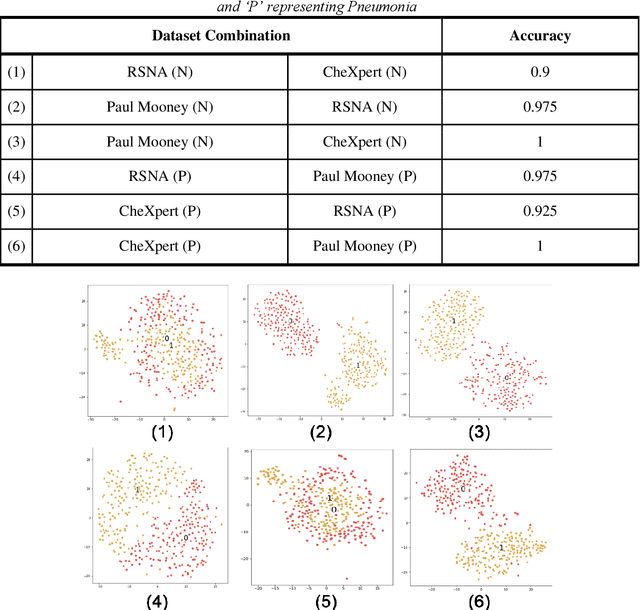

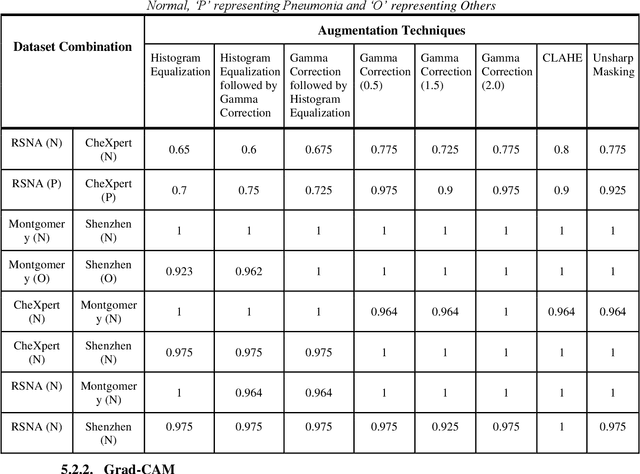
Since the onset of the COVID-19 pandemic in 2020, millions of people have succumbed to this deadly virus. Many attempts have been made to devise an automated method of testing that could detect the virus. Various researchers around the globe have proposed deep learning based methodologies to detect the COVID-19 using Chest X-Rays. However, questions have been raised on the presence of bias in the publicly available Chest X-Ray datasets which have been used by the majority of the researchers. In this paper, we propose a 2 staged methodology to address this topical issue. Two experiments have been conducted as a part of stage 1 of the methodology to exhibit the presence of bias in the datasets. Subsequently, an image segmentation, super-resolution and CNN based pipeline along with different image augmentation techniques have been proposed in stage 2 of the methodology to reduce the effect of bias. InceptionResNetV2 trained on Chest X-Ray images that were augmented with Histogram Equalization followed by Gamma Correction when passed through the pipeline proposed in stage 2, yielded a top accuracy of 90.47% for 3-class (Normal, Pneumonia, and COVID-19) classification task.