 Add to Chrome
 Add to Firefox
 Add to Edge
Learning Dynamics in RL Post-Training for Language Models
Jan 08, 2026
Reinforcement learning (RL) post-training is a critical stage in modern language model development, playing a key role in improving alignment and reasoning ability. However, several phenomena remain poorly understood, including the reduction in output diversity. To gain a broader understanding of RL post-training, we analyze the learning dynamics of RL post-training from a perspective that has been studied in supervised learning but remains underexplored in RL. We adopt an empirical neural tangent kernel (NTK) framework and decompose the NTK into two components to characterize how RL updates propagate across training samples. Our analysis reveals that limited variability in feature representations can cause RL updates to systematically increase model confidence, providing an explanation for the commonly observed reduction in output diversity after RL post-training. Furthermore, we show that effective learning in this regime depends on rapidly shaping the classifier, which directly affects the gradient component of the NTK. Motivated by these insights, we propose classifier-first reinforcement learning (CF-RL), a simple two-stage training strategy that prioritizes classifier updates before standard RL optimization. Experimental results validate our theoretical analysis by demonstrating increased model confidence and accelerated optimization under CF-RL. Additional analysis shows that the mechanism underlying CF-RL differs from that of linear-probing-then-fine-tuning in supervised learning. Overall, our study formalizes the learning dynamics of RL post-training and motivates further analysis and improvement.

Recurrent Self-Attention Dynamics: An Energy-Agnostic Perspective from Jacobians
May 26, 2025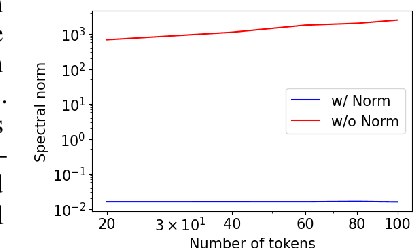
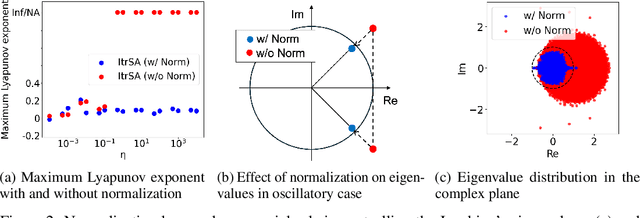


The theoretical understanding of self-attention (SA) has been steadily progressing. A prominent line of work studies a class of SA layers that admit an energy function decreased by state updates. While it provides valuable insights into inherent biases in signal propagation, it often relies on idealized assumptions or additional constraints not necessarily present in standard SA. Thus, to broaden our understanding, this work aims to relax these energy constraints and provide an energy-agnostic characterization of inference dynamics by dynamical systems analysis. In more detail, we first consider relaxing the symmetry and single-head constraints traditionally required in energy-based formulations. Next, to investigate more general SA architectures capable of oscillatory dynamics without necessarily admitting an energy function, we analyze the Jacobian matrix of the state. We reveal that normalization layers effectively normalize the Jacobian's complex eigenvalues, forcing the dynamics close to a critical state. This significantly enhances inference performance. Furthermore, we utilize the Jacobian perspective to develop regularization methods for training and a pseudo-energy for monitoring inference dynamics.
Understanding Linear Probing then Fine-tuning Language Models from NTK Perspective
May 27, 2024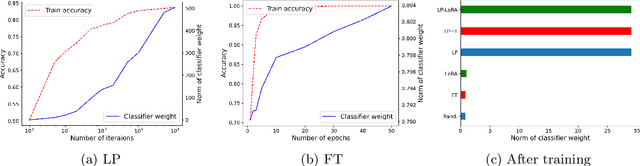
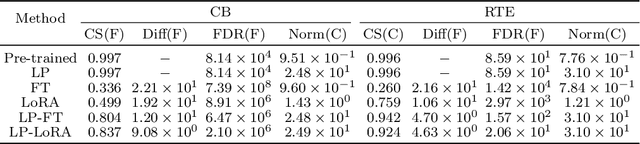
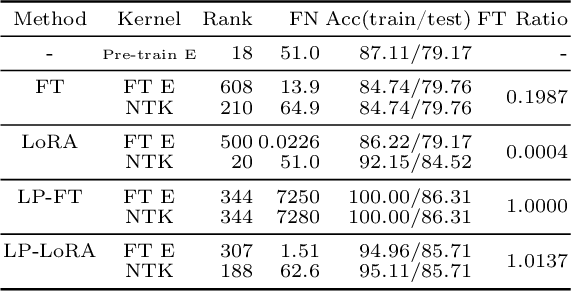
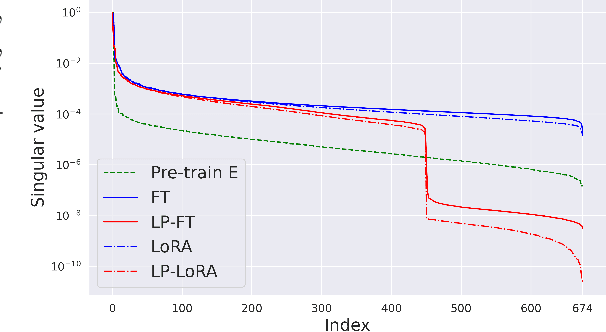
The two-stage fine-tuning (FT) method, linear probing then fine-tuning (LP-FT), consistently outperforms linear probing (LP) and FT alone in terms of accuracy for both in-distribution (ID) and out-of-distribution (OOD) data. This success is largely attributed to the preservation of pre-trained features, achieved through a near-optimal linear head obtained during LP. However, despite the widespread use of large language models, the exploration of complex architectures such as Transformers remains limited. In this paper, we analyze the training dynamics of LP-FT for classification models on the basis of the neural tangent kernel (NTK) theory. Our analysis decomposes the NTK matrix into two components, highlighting the importance of the linear head norm alongside the prediction accuracy at the start of the FT stage. We also observe a significant increase in the linear head norm during LP, stemming from training with the cross-entropy (CE) loss, which effectively minimizes feature changes. Furthermore, we find that this increased norm can adversely affect model calibration, a challenge that can be addressed by temperature scaling. Additionally, we extend our analysis with the NTK to the low-rank adaptation (LoRA) method and validate its effectiveness. Our experiments with a Transformer-based model on natural language processing tasks across multiple benchmarks confirm our theoretical analysis and demonstrate the effectiveness of LP-FT in fine-tuning language models. Code is available at https://github.com/tom4649/lp-ft_ntk.