 Add to Chrome
 Add to Firefox
 Add to Edge
Benford's Law as a Distributional Prior for Post-Training Quantization of Large Language Models
Jan 29, 2026
The rapid growth of Large Language Models (LLMs) intensifies the need for effective compression, with weight quantization being the most widely adopted technique. Standard uniform quantizers assume that parameters are evenly distributed, an assumption at odds with the highly skewed distributions observed in practice. We propose Benford-Quant, a simple, data-free non-uniform quantizer inspired by Benford's Law, which predicts that leading digits follow a logarithmic distribution. Benford-Quant replaces the uniform grid with a log-spaced codebook, dedicating more resolution to the frequent small-magnitude weights. We provide both theoretical intuition and empirical evidence: (i) weights in transformer transformational layers adhere closely to Benford statistics, while normalization layers systematically deviate; (ii) on Small Language Models (SLMs), Benford-Quant consistently improves perplexity, reducing 4-bit perplexity on Gemma-270M by more than 10%; and (iii) on larger LLMs, it remains competitive, with differences explained by over-parameterization effects. Our results indicate that incorporating a Benford-inspired prior into quantization grids is a low-cost modification that yields accuracy gains in aggressive few-bit regimes. Although it is not able to surpass the state of the art in tasks such as perplexity and LAMBADA, the Benford-Quant approach can be hybridized with other quantization methods-such as SmoothQuant and Activation-Aware Quantization-without major pipeline modification, potentially improving their performance.

Leveraging graph neural networks and mobility data for COVID-19 forecasting
Jan 20, 2025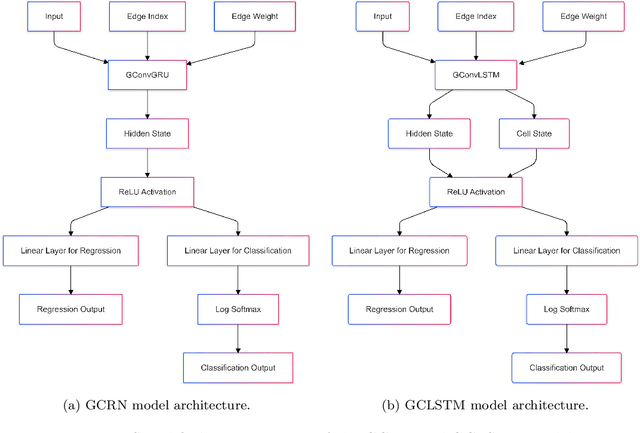
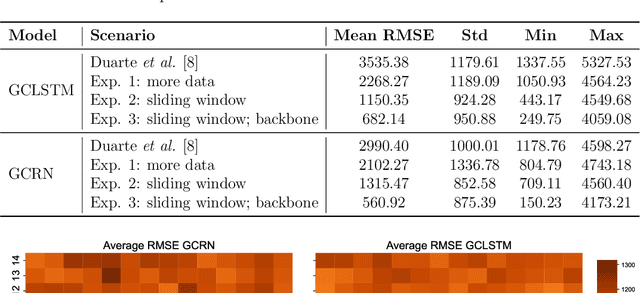
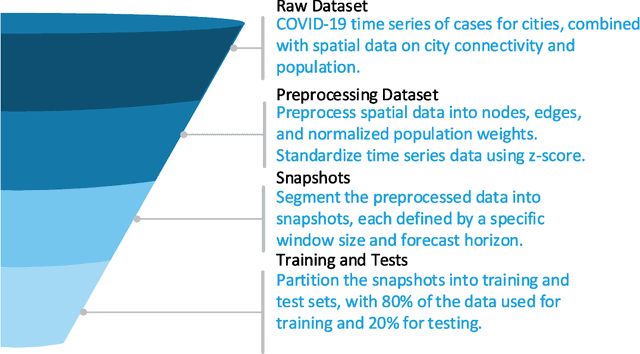
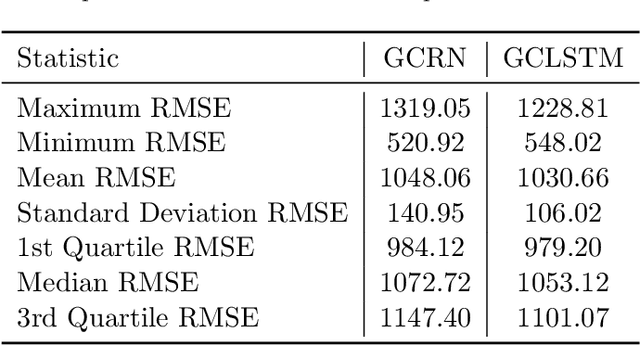
The COVID-19 pandemic has victimized over 7 million people to date, prompting diverse research efforts. Spatio-temporal models combining mobility data with machine learning have gained attention for disease forecasting. Here, we explore Graph Convolutional Recurrent Network (GCRN) and Graph Convolutional Long Short-Term Memory (GCLSTM), which combine the power of Graph Neural Networks (GNN) with traditional architectures that deal with sequential data. The aim is to forecast future values of COVID-19 cases in Brazil and China by leveraging human mobility networks, whose nodes represent geographical locations and links are flows of vehicles or people. We show that employing backbone extraction to filter out negligible connections in the mobility network enhances predictive stability. Comparing regression and classification tasks demonstrates that binary classification yields smoother, more interpretable results. Interestingly, we observe qualitatively equivalent results for both Brazil and China datasets by introducing sliding windows of variable size and prediction horizons. Compared to prior studies, introducing the sliding window and the network backbone extraction strategies yields improvements of about 80% in root mean squared errors.
Leveraging Visibility Graphs for Enhanced Arrhythmia Classification with Graph Convolutional Networks
Apr 19, 2024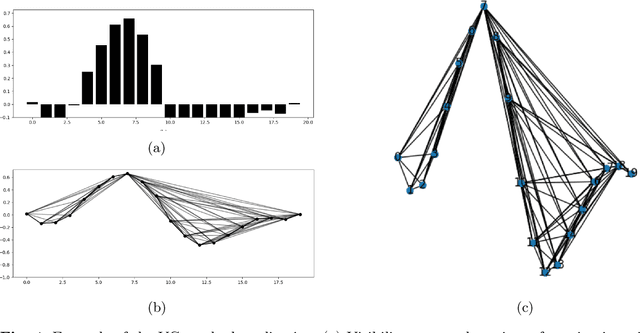
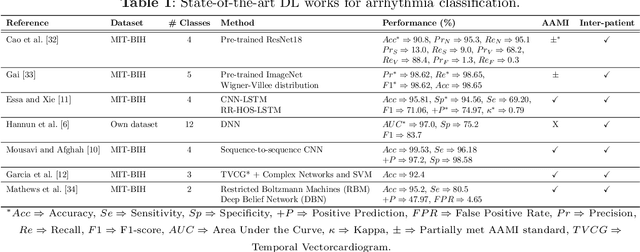
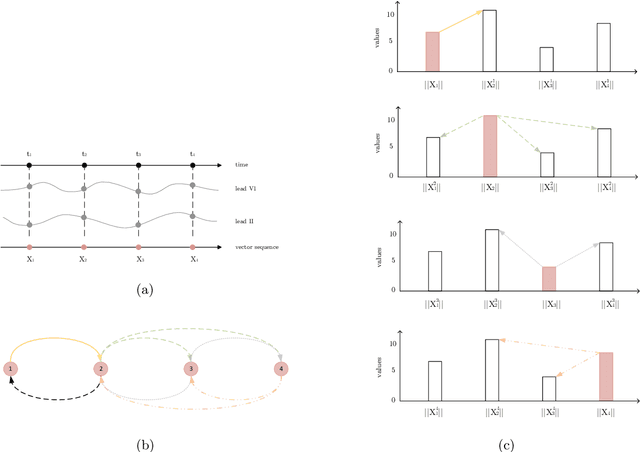
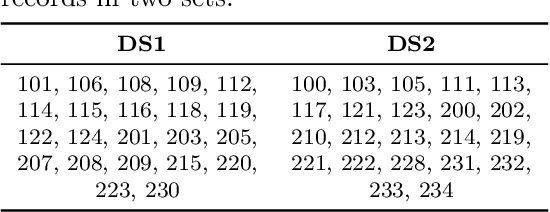
Arrhythmias, detectable via electrocardiograms (ECGs), pose significant health risks, emphasizing the need for robust automated identification techniques. Although traditional deep learning methods have shown potential, recent advances in graph-based strategies are aimed at enhancing arrhythmia detection performance. However, effectively representing ECG signals as graphs remains a challenge. This study explores graph representations of ECG signals using Visibility Graph (VG) and Vector Visibility Graph (VVG), coupled with Graph Convolutional Networks (GCNs) for arrhythmia classification. Through experiments on the MIT-BIH dataset, we investigated various GCN architectures and preprocessing parameters. The results reveal that GCNs, when integrated with VG and VVG for signal graph mapping, can classify arrhythmias without the need for preprocessing or noise removal from ECG signals. While both VG and VVG methods show promise, VG is notably more efficient. The proposed approach was competitive compared to baseline methods, although classifying the S class remains challenging, especially under the inter-patient paradigm. Computational complexity, particularly with the VVG method, required data balancing and sophisticated implementation strategies. The source code is publicly available for further research and development at https://github.com/raffoliveira/VG_for_arrhythmia_classification_with_GCN.