 Add to Chrome
 Add to Firefox
 Add to Edge
Automated Discontinuity Set Characterisation in Enclosed Rock Face Point Clouds Using Single-Shot Filtering and Cyclic Orientation Transformation
Feb 02, 2026
Characterisation of structural discontinuity sets in exposed rock faces of underground mine cavities is essential for assessing rock-mass stability, excavation safety, and operational efficiency. UAV and other mobile laser-scanning techniques provide efficient means of collecting point clouds from rock faces. However, the development of a robust and efficient approach for automatic characterisation of discontinuity sets in real-world scenarios, like fully enclosed rock faces in cavities, remains an open research problem. In this study, a new approach is proposed for automatic discontinuity set characterisation that uses a single-shot filtering strategy, an innovative cyclic orientation transformation scheme and a hierarchical clustering technique. The single-shot filtering step isolates planar regions while robustly suppressing noise and high-curvature artefacts in one pass using a signal-processing technique. To address the limitations of Cartesian clustering on polar orientation data, a cyclic orientation transformation scheme is developed, enabling accurate representation of dip angle and dip direction in Cartesian space. The transformed orientations are then characterised into sets using a hierarchical clustering technique, which handles varying density distributions and identifies clusters without requiring user-defined set numbers. The accuracy of the method is validated on real-world mine stope and against ground truth obtained using manually handpicked discontinuity planes identified with the Virtual Compass tool, as well as widely used automated structure mapping techniques. The proposed approach outperforms the other techniques by exhibiting the lowest mean absolute error in estimating discontinuity set orientations in real-world stope data with errors of 1.95° and 2.20° in nominal dip angle and dip direction, respectively, and dispersion errors lying below 3°.

Comparative Evaluation of Traditional and Deep Learning-Based Segmentation Methods for Spoil Pile Delineation Using UAV Images
Feb 01, 2024The stability of mine dumps is contingent upon the precise arrangement of spoil piles, taking into account their geological and geotechnical attributes. Yet, on-site characterisation of individual piles poses a formidable challenge. The utilisation of image-based techniques for spoil pile characterisation, employing remotely acquired data through unmanned aerial systems, is a promising complementary solution. Image processing, such as object-based classification and feature extraction, are dependent upon effective segmentation. This study refines and juxtaposes various segmentation approaches, specifically colour-based and morphology-based techniques. The objective is to enhance and evaluate avenues for object-based analysis for spoil characterisation within the context of mining environments. Furthermore, a comparative analysis is conducted between conventional segmentation approaches and those rooted in deep learning methodologies. Among the diverse segmentation approaches evaluated, the morphology-based deep learning segmentation approach, Segment Anything Model (SAM), exhibited superior performance in comparison to other approaches. This outcome underscores the efficacy of incorporating advanced morphological and deep learning techniques for accurate and efficient spoil pile characterisation. The findings of this study contribute valuable insights to the optimisation of segmentation strategies, thereby advancing the application of image-based techniques for the characterisation of spoil piles in mining environments.
A review of laser scanning for geological and geotechnical applications in underground mining
Nov 21, 2022Laser scanning can provide timely assessments of mine sites despite adverse challenges in the operational environment. Although there are several published articles on laser scanning, there is a need to review them in the context of underground mining applications. To this end, a holistic review of laser scanning is presented including progress in 3D scanning systems, data capture/processing techniques and primary applications in underground mines. Laser scanning technology has advanced significantly in terms of mobility and mapping, but there are constraints in coherent and consistent data collection at certain mines due to feature deficiency, dynamics, and environmental influences such as dust and water. Studies suggest that laser scanning has matured over the years for change detection, clearance measurements and structure mapping applications. However, there is scope for improvements in lithology identification, surface parameter measurements, logistic tracking and autonomous navigation. Laser scanning has the potential to provide real-time solutions but the lack of infrastructure in underground mines for data transfer, geodetic networking and processing capacity remain limiting factors. Nevertheless, laser scanners are becoming an integral part of mine automation thanks to their affordability, accuracy and mobility, which should support their widespread usage in years to come.
Three dimensional unique identifier based automated georeferencing and coregistration of point clouds in underground environment
Feb 22, 2021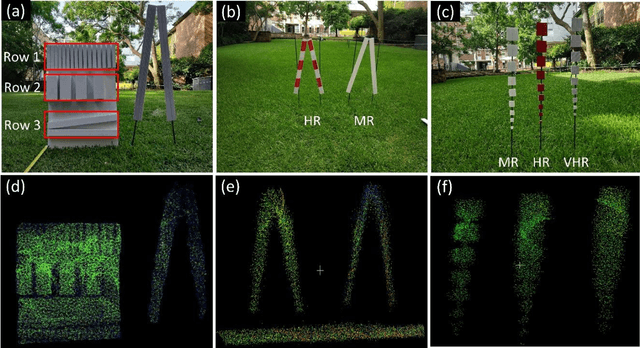


Spatially and geometrically accurate laser scans are essential in modelling infrastructure for applications in civil, mining and transportation. Monitoring of underground or indoor environments such as mines or tunnels is challenging due to unavailability of a sensor positioning framework, complicated structurally symmetric layouts, repetitive features and occlusions. Current practices largely include a manual selection of discernable reference points for georeferencing and coregistration purpose. This study aims at overcoming these practical challenges in underground or indoor laser scanning. The developed approach involves automatically and uniquely identifiable three dimensional unique identifiers (3DUIDs) in laser scans, and a 3D registration (3DReG) workflow. Field testing of the method in an underground tunnel has been found accurate, effective and efficient. Additionally, a method for automatically extracting roadway tunnel profile has been exhibited. The developed 3DUID can be used in roadway profile extraction, guided automation, sensor calibration, reference targets for routine survey and deformation monitoring.