 Add to Chrome
 Add to Firefox
 Add to Edge
Hybrid Deep Learning-Federated Learning Powered Intrusion Detection System for IoT/5G Advanced Edge Computing Network
Sep 19, 2025
The exponential expansion of IoT and 5G-Advanced applications has enlarged the attack surface for DDoS, malware, and zero-day intrusions. We propose an intrusion detection system that fuses a convolutional neural network (CNN), a bidirectional LSTM (BiLSTM), and an autoencoder (AE) bottleneck within a privacy-preserving federated learning (FL) framework. The CNN-BiLSTM branch captures local and gated cross-feature interactions, while the AE emphasizes reconstruction-based anomaly sensitivity. Training occurs across edge devices without sharing raw data. On UNSW-NB15 (binary), the fused model attains AUC 99.59 percent and F1 97.36 percent; confusion-matrix analysis shows balanced error rates with high precision and recall. Average inference time is approximately 0.0476 ms per sample on our test hardware, which is well within the less than 10 ms URLLC budget, supporting edge deployment. We also discuss explainability, drift tolerance, and FL considerations for compliant, scalable 5G-Advanced IoT security.

A Novel Zero-Touch, Zero-Trust, AI/ML Enablement Framework for IoT Network Security
Feb 05, 2025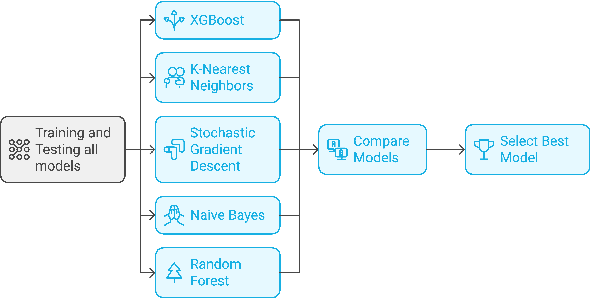
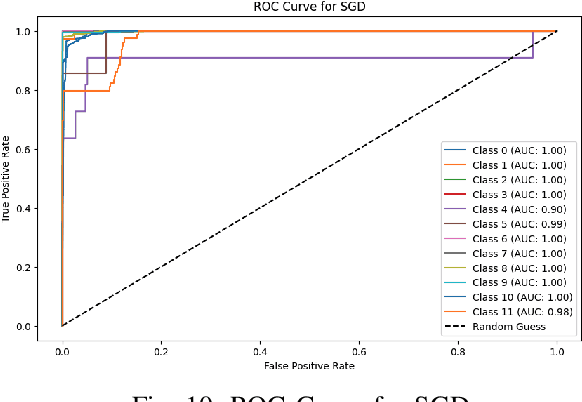
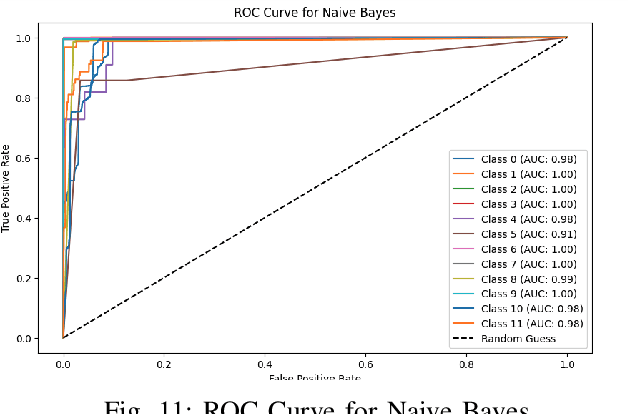
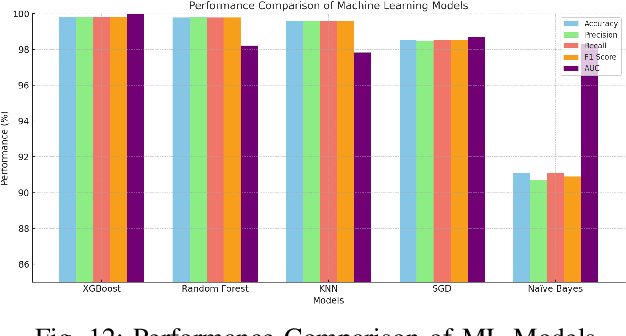
The IoT facilitates a connected, intelligent, and sustainable society; therefore, it is imperative to protect the IoT ecosystem. The IoT-based 5G and 6G will leverage the use of machine learning and artificial intelligence (ML/AI) more to pave the way for autonomous and collaborative secure IoT networks. Zero-touch, zero-trust IoT security with AI and machine learning (ML) enablement frameworks offers a powerful approach to securing the expanding landscape of Internet of Things (IoT) devices. This paper presents a novel framework based on the integration of Zero Trust, Zero Touch, and AI/ML powered for the detection, mitigation, and prevention of DDoS attacks in modern IoT ecosystems. The focus will be on the new integrated framework by establishing zero trust for all IoT traffic, fixed and mobile 5G/6G IoT network traffic, and data security (quarantine-zero touch and dynamic policy enforcement). We perform a comparative analysis of five machine learning models, namely, XGBoost, Random Forest, K-Nearest Neighbors, Stochastic Gradient Descent, and Native Bayes, by comparing these models based on accuracy, precision, recall, F1-score, and ROC-AUC. Results show that the best performance in detecting and mitigating different DDoS vectors comes from the ensemble-based approaches.