 Add to Chrome
 Add to Firefox
 Add to Edge
ActionMesh: Animated 3D Mesh Generation with Temporal 3D Diffusion
Jan 22, 2026
Generating animated 3D objects is at the heart of many applications, yet most advanced works are typically difficult to apply in practice because of their limited setup, their long runtime, or their limited quality. We introduce ActionMesh, a generative model that predicts production-ready 3D meshes "in action" in a feed-forward manner. Drawing inspiration from early video models, our key insight is to modify existing 3D diffusion models to include a temporal axis, resulting in a framework we dubbed "temporal 3D diffusion". Specifically, we first adapt the 3D diffusion stage to generate a sequence of synchronized latents representing time-varying and independent 3D shapes. Second, we design a temporal 3D autoencoder that translates a sequence of independent shapes into the corresponding deformations of a pre-defined reference shape, allowing us to build an animation. Combining these two components, ActionMesh generates animated 3D meshes from different inputs like a monocular video, a text description, or even a 3D mesh with a text prompt describing its animation. Besides, compared to previous approaches, our method is fast and produces results that are rig-free and topology consistent, hence enabling rapid iteration and seamless applications like texturing and retargeting. We evaluate our model on standard video-to-4D benchmarks (Consistent4D, Objaverse) and report state-of-the-art performances on both geometric accuracy and temporal consistency, demonstrating that our model can deliver animated 3D meshes with unprecedented speed and quality.

LIM: Large Interpolator Model for Dynamic Reconstruction
Mar 28, 2025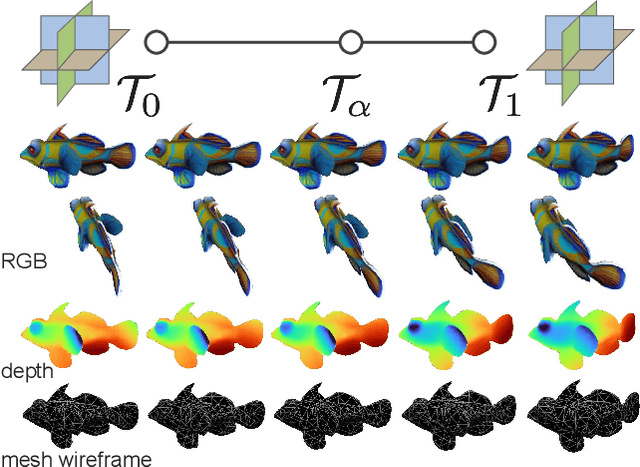
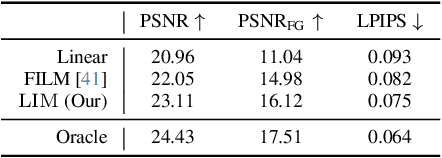
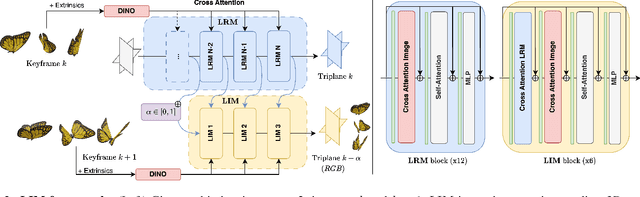
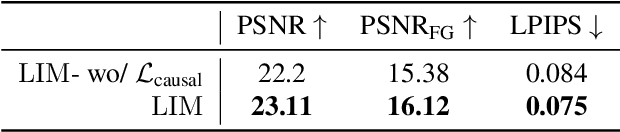
Reconstructing dynamic assets from video data is central to many in computer vision and graphics tasks. Existing 4D reconstruction approaches are limited by category-specific models or slow optimization-based methods. Inspired by the recent Large Reconstruction Model (LRM), we present the Large Interpolation Model (LIM), a transformer-based feed-forward solution, guided by a novel causal consistency loss, for interpolating implicit 3D representations across time. Given implicit 3D representations at times $t_0$ and $t_1$, LIM produces a deformed shape at any continuous time $t\in[t_0,t_1]$, delivering high-quality interpolated frames in seconds. Furthermore, LIM allows explicit mesh tracking across time, producing a consistently uv-textured mesh sequence ready for integration into existing production pipelines. We also use LIM, in conjunction with a diffusion-based multiview generator, to produce dynamic 4D reconstructions from monocular videos. We evaluate LIM on various dynamic datasets, benchmarking against image-space interpolation methods (e.g., FiLM) and direct triplane linear interpolation, and demonstrate clear advantages. In summary, LIM is the first feed-forward model capable of high-speed tracked 4D asset reconstruction across diverse categories.
Animal Avatars: Reconstructing Animatable 3D Animals from Casual Videos
Mar 25, 2024We present a method to build animatable dog avatars from monocular videos. This is challenging as animals display a range of (unpredictable) non-rigid movements and have a variety of appearance details (e.g., fur, spots, tails). We develop an approach that links the video frames via a 4D solution that jointly solves for animal's pose variation, and its appearance (in a canonical pose). To this end, we significantly improve the quality of template-based shape fitting by endowing the SMAL parametric model with Continuous Surface Embeddings, which brings image-to-mesh reprojection constaints that are denser, and thus stronger, than the previously used sparse semantic keypoint correspondences. To model appearance, we propose an implicit duplex-mesh texture that is defined in the canonical pose, but can be deformed using SMAL pose coefficients and later rendered to enforce a photometric compatibility with the input video frames. On the challenging CoP3D and APTv2 datasets, we demonstrate superior results (both in terms of pose estimates and predicted appearance) to existing template-free (RAC) and template-based approaches (BARC, BITE).