 Add to Chrome
 Add to Firefox
 Add to Edge
Assessment of Errors of Fundamental Frequency Estimation Methods in the Presence of Voltage Fluctuations and Distortions
Jan 23, 2026
The fundamental frequency is one of the parameters that define power quality. Correctly determining this parameter under the conditions that prevail in modern power grids is crucial. Diagnostic purposes often require an efficient estimation of this parameter within short time windows. Therefore, this article presents the results of numerical simulation studies that allow the assessment of errors in various fundamental frequency estimation methods, including the standard IEC 61000-4-30 method, when the analyzed signal has a form similar to that found in modern power grids. For the purposes of this study, a test signal was adopted recreating the states of the power grid, including the simultaneous occurrence of voltage fluctuations and distortions. Conclusions are presented based on conducted research.

Predicting popularity of EV charging infrastructure from GIS data
Oct 06, 2019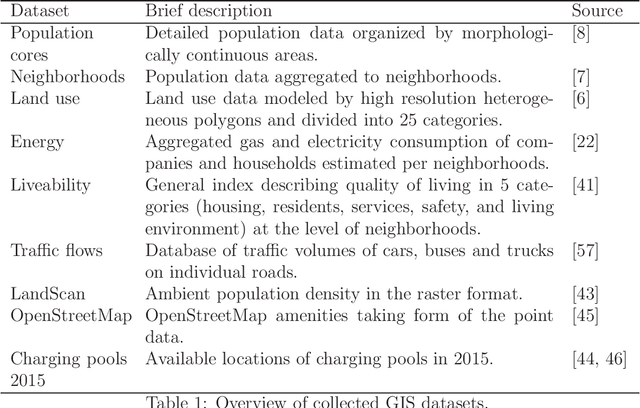
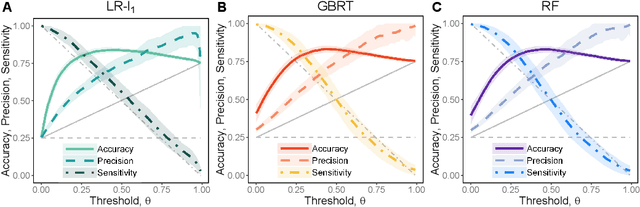
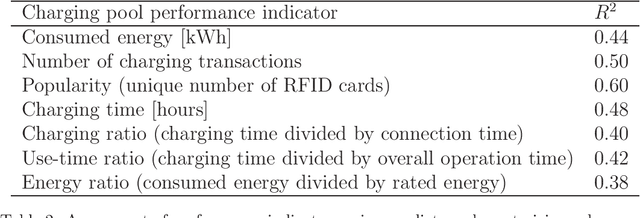
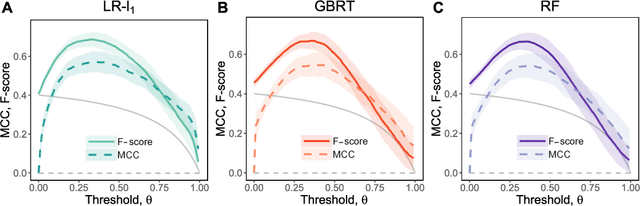
The availability of charging infrastructure is essential for large-scale adoption of electric vehicles (EV). Charging patterns and the utilization of infrastructure have consequences not only for the energy demand, loading local power grids but influence the economic returns, parking policies and further adoption of EVs. We develop a data-driven approach that is exploiting predictors compiled from GIS data describing the urban context and urban activities near charging infrastructure to explore correlations with a comprehensive set of indicators measuring the performance of charging infrastructure. The best fit was identified for the size of the unique group of visitors (popularity) attracted by the charging infrastructure. Consecutively, charging infrastructure is ranked by popularity. The question of whether or not a given charging spot belongs to the top tier is posed as a binary classification problem and predictive performance of logistic regression regularized with an l-1 penalty, random forests and gradient boosted regression trees is evaluated. Obtained results indicate that the collected predictors contain information that can be used to predict the popularity of charging infrastructure. The significance of predictors and how they are linked with the popularity are explored as well. The proposed methodology can be used to inform charging infrastructure deployment strategies.