 Add to Chrome
 Add to Firefox
 Add to Edge
Benchmarking Large Language Models for Zero-shot and Few-shot Phishing URL Detection
Feb 02, 2026
The Uniform Resource Locator (URL), introduced in a connectivity-first era to define access and locate resources, remains historically limited, lacking future-proof mechanisms for security, trust, or resilience against fraud and abuse, despite the introduction of reactive protections like HTTPS during the cybersecurity era. In the current AI-first threatscape, deceptive URLs have reached unprecedented sophistication due to the widespread use of generative AI by cybercriminals and the AI-vs-AI arms race to produce context-aware phishing websites and URLs that are virtually indistinguishable to both users and traditional detection tools. Although AI-generated phishing accounted for a small fraction of filter-bypassing attacks in 2024, phishing volume has escalated over 4,000% since 2022, with nearly 50% more attacks evading detection. At the rate the threatscape is escalating, and phishing tactics are emerging faster than labeled data can be produced, zero-shot and few-shot learning with large language models (LLMs) offers a timely and adaptable solution, enabling generalization with minimal supervision. Given the critical importance of phishing URL detection in large-scale cybersecurity defense systems, we present a comprehensive benchmark of LLMs under a unified zero-shot and few-shot prompting framework and reveal operational trade-offs. Our evaluation uses a balanced dataset with consistent prompts, offering detailed analysis of performance, generalization, and model efficacy, quantified by accuracy, precision, recall, F1 score, AUROC, and AUPRC, to reflect both classification quality and practical utility in threat detection settings. We conclude few-shot prompting improves performance across multiple LLMs.

Phishing Email Detection Using Large Language Models
Dec 14, 2025Email phishing is one of the most prevalent and globally consequential vectors of cyber intrusion. As systems increasingly deploy Large Language Models (LLMs) applications, these systems face evolving phishing email threats that exploit their fundamental architectures. Current LLMs require substantial hardening before deployment in email security systems, particularly against coordinated multi-vector attacks that exploit architectural vulnerabilities. This paper proposes LLMPEA, an LLM-based framework to detect phishing email attacks across multiple attack vectors, including prompt injection, text refinement, and multilingual attacks. We evaluate three frontier LLMs (e.g., GPT-4o, Claude Sonnet 4, and Grok-3) and comprehensive prompting design to assess their feasibility, robustness, and limitations against phishing email attacks. Our empirical analysis reveals that LLMs can detect the phishing email over 90% accuracy while we also highlight that LLM-based phishing email detection systems could be exploited by adversarial attack, prompt injection, and multilingual attacks. Our findings provide critical insights for LLM-based phishing detection in real-world settings where attackers exploit multiple vulnerabilities in combination.
Multivariate Empirical Mode Decomposition based Hybrid Model for Day-ahead Peak Load Forecasting
Oct 28, 2021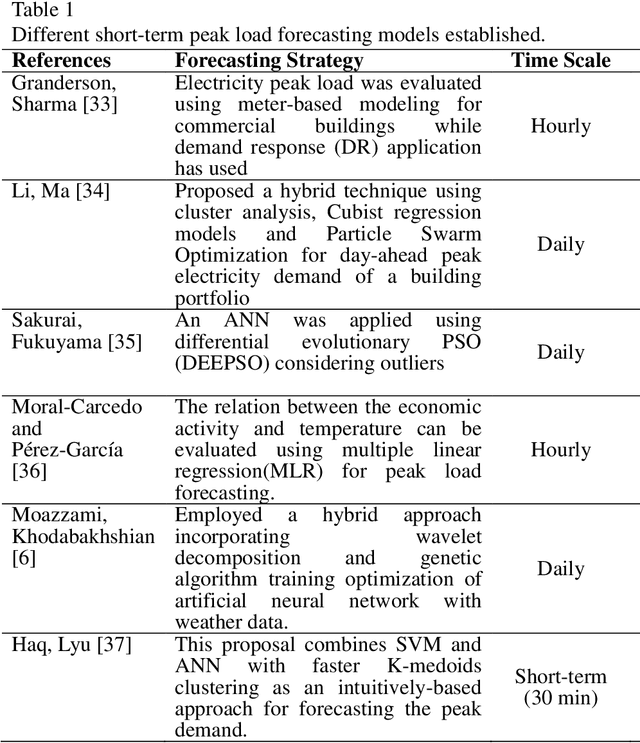
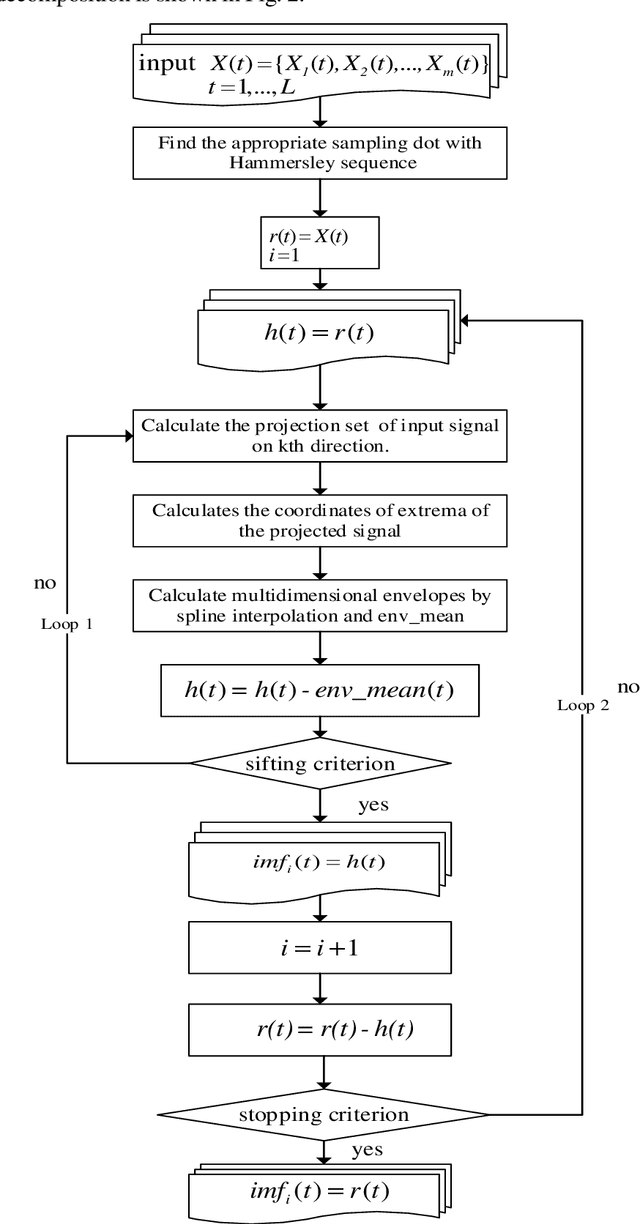


Accurate day-ahead peak load forecasting is crucial not only for power dispatching but also has a great interest to investors and energy policy maker as well as government. Literature reveals that 1% error drop of forecast can reduce 10 million pounds operational cost. Thus, this study proposed a novel hybrid predictive model built upon multivariate empirical mode decomposition (MEMD) and support vector regression (SVR) with parameters optimized by particle swarm optimization (PSO), which is able to capture precise electricity peak load. The novelty of this study mainly comes from the application of MEMD, which enables the multivariate data decomposition to effectively extract inherent information among relevant variables at different time frequency during the deterioration of multivariate over time. Two real-world load data sets from the New South Wales (NSW) and the Victoria (VIC) in Australia have been considered to verify the superiority of the proposed MEMD-PSO-SVR hybrid model. The quantitative and comprehensive assessments are performed, and the results indicate that the proposed MEMD-PSO-SVR method is a promising alternative for day-ahead electricity peak load forecasting.