 Add to Chrome
 Add to Firefox
 Add to Edge
CT Scans As Video: Efficient Intracranial Hemorrhage Detection Using Multi-Object Tracking
Jan 05, 2026
Automated analysis of volumetric medical imaging on edge devices is severely constrained by the high memory and computational demands of 3D Convolutional Neural Networks (CNNs). This paper develops a lightweight computer vision framework that reconciles the efficiency of 2D detection with the necessity of 3D context by reformulating volumetric Computer Tomography (CT) data as sequential video streams. This video-viewpoint paradigm is applied to the time-sensitive task of Intracranial Hemorrhage (ICH) detection using the Hemorica dataset. To ensure operational efficiency, we benchmarked multiple generations of the YOLO architecture (v8, v10, v11 and v12) in their Nano configurations, selecting the version with the highest mAP@50 to serve as the slice-level backbone. A ByteTrack algorithm is then introduced to enforce anatomical consistency across the $z$-axis. To address the initialization lag inherent in video trackers, a hybrid inference strategy and a spatiotemporal consistency filter are proposed to distinguish true pathology from transient prediction noise. Experimental results on independent test data demonstrate that the proposed framework serves as a rigorous temporal validator, increasing detection Precision from 0.703 to 0.779 compared to the baseline 2D detector, while maintaining high sensitivity. By approximating 3D contextual reasoning at a fraction of the computational cost, this method provides a scalable solution for real-time patient prioritization in resource-constrained environments, such as mobile stroke units and IoT-enabled remote clinics.

AugmenTory: A Fast and Flexible Polygon Augmentation Library
May 07, 2024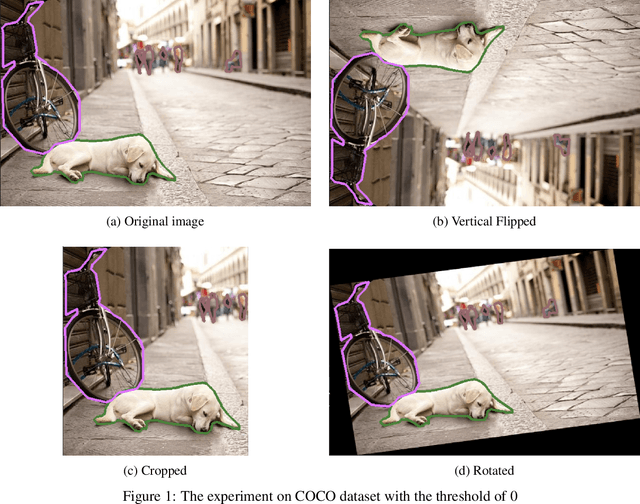

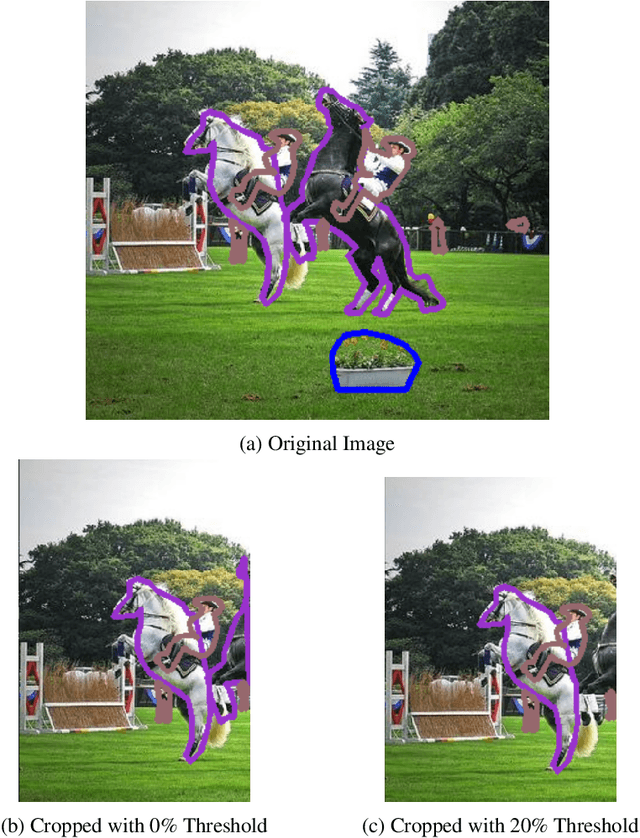
Data augmentation is a key technique for addressing the challenge of limited datasets, which have become a major component in the training procedures of image processing. Techniques such as geometric transformations and color space adjustments have been thoroughly tested for their ability to artificially expand training datasets and generate semi-realistic data for training purposes. Data augmentation is the most important key to addressing the challenge of limited datasets, which have become a major component of image processing training procedures. Data augmentation techniques, such as geometric transformations and color space adjustments, are thoroughly tested for their ability to artificially expand training datasets and generate semi-realistic data for training purposes. Polygons play a crucial role in instance segmentation and have seen a surge in use across advanced models, such as YOLOv8. Despite their growing popularity, the lack of specialized libraries hampers the polygon-augmentation process. This paper introduces a novel solution to this challenge, embodied in the newly developed AugmenTory library. Notably, AugmenTory offers reduced computational demands in both time and space compared to existing methods. Additionally, the library includes a postprocessing thresholding feature. The AugmenTory package is publicly available on GitHub, where interested users can access the source code: https://github.com/Smartory/AugmenTory