 Add to Chrome
 Add to Firefox
 Add to Edge
SonoVision: A Computer Vision Approach for Helping Visually Challenged Individuals Locate Objects with the Help of Sound Cues
Dec 27, 2025
Locating objects for the visually impaired is a significant challenge and is something no one can get used to over time. However, this hinders their independence and could push them towards risky and dangerous scenarios. Hence, in the spirit of making the visually challenged more self-sufficient, we present SonoVision, a smart-phone application that helps them find everyday objects using sound cues through earphones/headphones. This simply means, if an object is on the right or left side of a user, the app makes a sinusoidal sound in a user's respective ear through ear/headphones. However, to indicate objects located directly in front, both the left and right earphones are rung simultaneously. These sound cues could easily help a visually impaired individual locate objects with the help of their smartphones and reduce the reliance on people in their surroundings, consequently making them more independent. This application is made with the flutter development platform and uses the Efficientdet-D2 model for object detection in the backend. We believe the app will significantly assist the visually impaired in a safe and user-friendly manner with its capacity to work completely offline. Our application can be accessed here https://github.com/MohammedZ666/SonoVision.git.

Dense Neural Network Based Arrhythmia Classification on Low-cost and Low-compute Micro-controller
Apr 04, 2025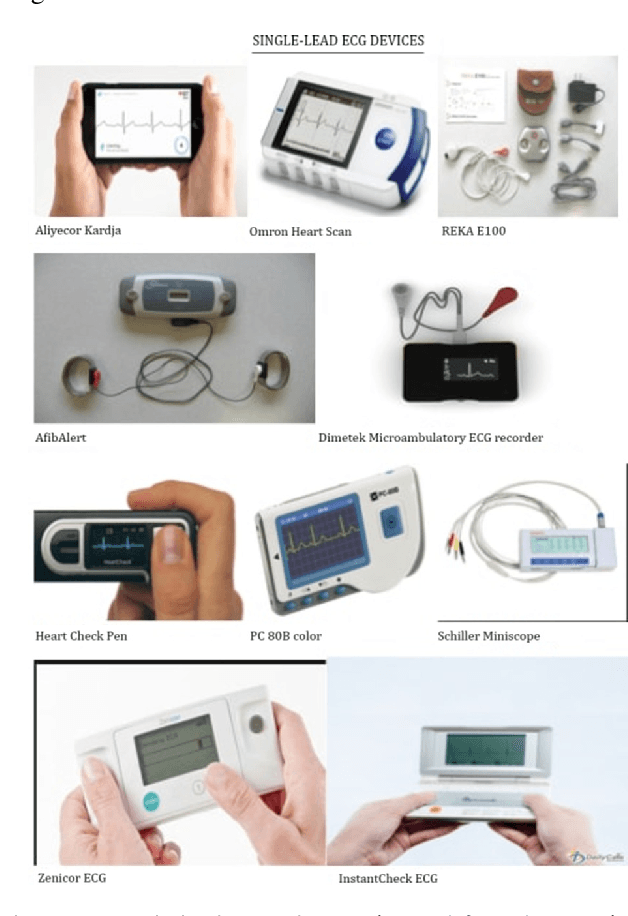

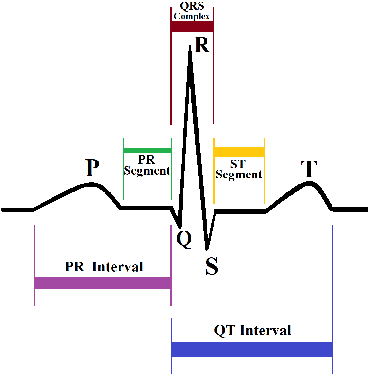
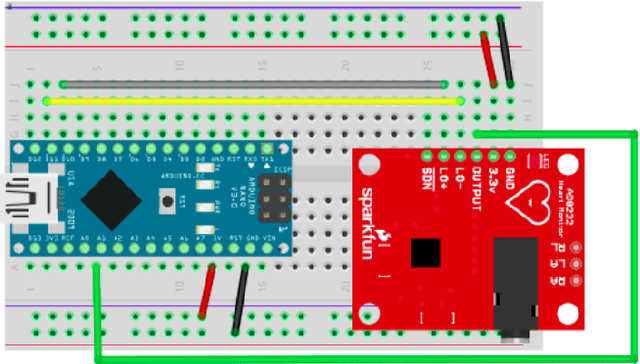
The electrocardiogram (ECG) monitoring device is an expensive albeit essential device for the treatment and diagnosis of cardiovascular diseases (CVD). The cost of this device typically ranges from $2000 to $10000. Several studies have implemented ECG monitoring systems in micro-controller units (MCU) to reduce industrial development costs by up to 20 times. However, to match industry-grade systems and display heartbeats effectively, it is essential to develop an efficient algorithm for detecting arrhythmia (irregular heartbeat). Hence in this study, a dense neural network is developed to detect arrhythmia on the Arduino Nano. The Nano consists of the ATMega328 microcontroller with a 16MHz clock, 2KB of SRAM, and 32KB of program memory. Additionally, the AD8232 SparkFun Single-Lead Heart Rate Monitor is used as the ECG sensor. The implemented neural network model consists of two layers (excluding the input) with 10 and four neurons respectively with sigmoid activation function. However, four approaches are explored to choose the appropriate activation functions. The model has a size of 1.267 KB, achieves an F1 score (macro-average) of 78.3\% for classifying four types of arrhythmia, an accuracy rate of 96.38%, and requires 0.001314 MOps of floating-point operations (FLOPs).