 Add to Chrome
 Add to Firefox
 Add to Edge
Intercomparison of Machine Learning Algorithms for Remote Sensing-based In-season Crop Mapping
Jun 04, 2026
In-season crop type mapping is critical for food security in the face of increasingly extreme climate-related threats to crops. Currently, the USDA Cropland Data Layer provides crop type labels at 30m resolution and is available the February after harvest, but no product exists that maps crop types before harvest with satisfactory accuracy that would allow emergency managers to respond to crop threats in near real time. Furthermore, the relative advantages of a wide range of algorithms have not been evaluated in a way that accounts for interannual variability, until this study. Here, Harmonized Landsat-Sentinel surface reflectance imagery time series and crop rotation history information are combined to map corn in Iowa and almonds in California at 30m resolution accurately by early June in unseen years, with robust quantification of uncertainty due to phenology and crop distribution. Thousands of model configurations across ten machine learning algorithms were compared using a year-wise cross-validation and a suite of metrics. Hyperparameter search revealed Support Vector Machines to be the most successful algorithm overall, with a mean F1 score of 0.74 (0.59) across five unseen validation years for almonds by early June in California (corn by early June in Iowa). Interannual variation was a large source of uncertainty, but patterns showed the potential to further improve performance with ensemble approaches or ancillary data. Future work may extend these methods to include multiclass maps of all crop types, CONUS-wide maps, and in-season crop yield forecasting.

A study on Machine Learning Approaches for Player Performance and Match Results Prediction
Aug 23, 2021Cricket is unarguably one of the most popular sports in the world. Predicting the outcome of a cricket match has become a fundamental problem as we are advancing in the field of machine learning. Multiple researchers have tried to predict the outcome of a cricket match or a tournament, or to predict the performance of players during a match, or to predict the players who should be selected as per their current performance, form, morale, etc. using machine learning and artificial intelligence techniques keeping in mind extensive detailing, features, and parameters. We discuss some of these techniques along with a brief comparison among these techniques.
Credit Card Fraud Detection using Machine Learning: A Study
Aug 23, 2021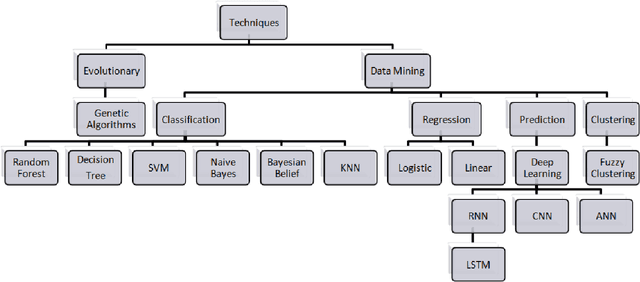
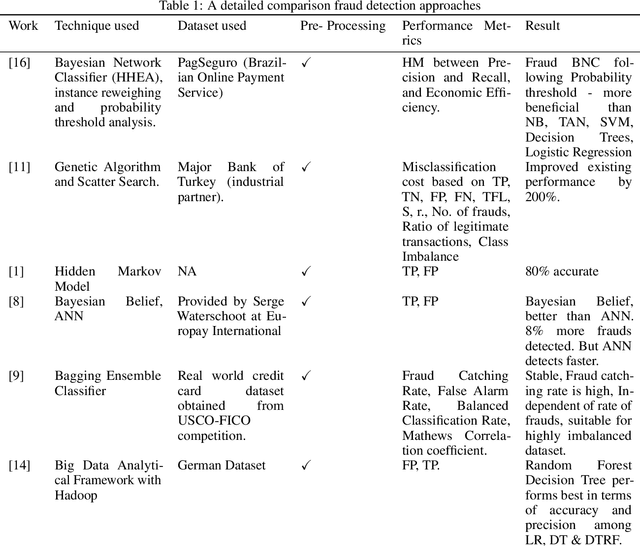
As the world is rapidly moving towards digitization and money transactions are becoming cashless, the use of credit cards has rapidly increased. The fraud activities associated with it have also been increasing which leads to a huge loss to the financial institutions. Therefore, we need to analyze and detect the fraudulent transaction from the non-fraudulent ones. In this paper, we present a comprehensive review of various methods used to detect credit card fraud. These methodologies include Hidden Markov Model, Decision Trees, Logistic Regression, Support Vector Machines (SVM), Genetic algorithm, Neural Networks, Random Forests, Bayesian Belief Network. A comprehensive analysis of various techniques is presented. We conclude the paper with the pros and cons of the same as stated in the respective papers.