 Add to Chrome
 Add to Firefox
 Add to Edge
A Novel, Beam-based Formalism for Active Impedance of Phased Arrays
Jan 16, 2026
The active impedance is a fundamental parameter for characterizing the behavior of large, uniform phased array antennas. However, its conventional calculation via the mutual impedance matrix (or the scattering matrix) offers limited physical intuition and can be computationally intensive. This paper presents a novel derivation of the active impedance directly from the radiated beam pattern of such arrays. This approach maps the scan-angle variation of the active impedance directly to the intrinsic angular variation of the beam, providing a more intuitive physical interpretation. The theoretical derivation is straightforward and rigorous. The validity of the proposed equation is conclusively confirmed through full-wave simulations of a prototype array. This work establishes a new and more intuitive framework for understanding, analyzing and accurately measuring the scan-dependent variations in phased arrays, which is one of the main challenges in modern phased array designs. Consequently, this novel formalism is expected to expedite and simplify the overall design and optimization process for next-generation, large-scale uniform phased arrays.

Anatomically-Grounded Fact Checking of Automated Chest X-ray Reports
Dec 03, 2024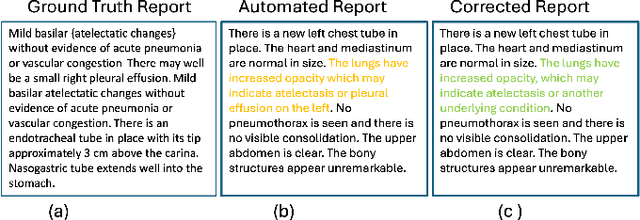
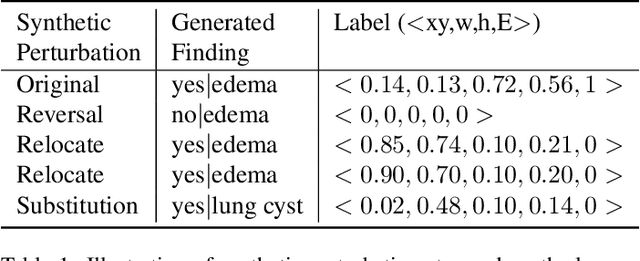
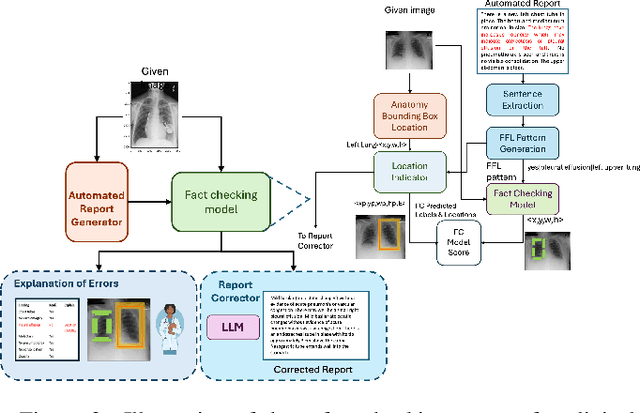
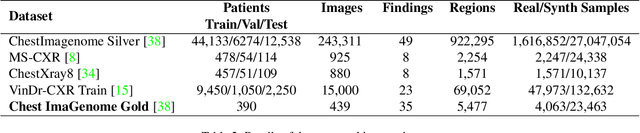
With the emergence of large-scale vision-language models, realistic radiology reports may be generated using only medical images as input guided by simple prompts. However, their practical utility has been limited due to the factual errors in their description of findings. In this paper, we propose a novel model for explainable fact-checking that identifies errors in findings and their locations indicated through the reports. Specifically, we analyze the types of errors made by automated reporting methods and derive a new synthetic dataset of images paired with real and fake descriptions of findings and their locations from a ground truth dataset. A new multi-label cross-modal contrastive regression network is then trained on this datsaset. We evaluate the resulting fact-checking model and its utility in correcting reports generated by several SOTA automated reporting tools on a variety of benchmark datasets with results pointing to over 40\% improvement in report quality through such error detection and correction.