 Add to Chrome
 Add to Firefox
 Add to Edge
A Relative-Budget Theory for Reinforcement Learning with Verifiable Rewards in Large Language Model Reasoning
Feb 02, 2026
Reinforcement learning (RL) is a dominant paradigm for improving the reasoning abilities of large language models, yet its effectiveness varies across tasks and compute budgets. We propose a \emph{relative-budget} theory explaining this variation through a single quantity called relative budget $ξ:= H/\mathbb{E}[T]$, where $H$ is the generation horizon (token budget) and $T$ denotes the number of tokens until the first correct solution under a base policy. We show that $ξ$ determines sample efficiency by controlling reward variance and the likelihood of informative trajectories. Our analysis reveals three regimes: in the \emph{deficient} regime ($ξ\to 0$), informative trajectories are rare and the sample complexity explodes; in the \emph{balanced} regime ($ξ=Θ(1)$), informative trajectories occur with non-negligible probability and RL is maximally sample-efficient; and in the \emph{ample} regime ($ξ\to \infty$), learning remains stable but marginal gains per iteration diminish. We further provide finite-sample guarantees for online RL that characterize learning progress across these regimes. Specifically, in a case study under idealized distributional assumptions, we show that the relative budget grows linearly over iterations. Our empirical results confirm these predictions in realistic settings, identifying a budget $ξ\in [1.5, 2.0]$ that maximizes learning efficiency and coincides with peak reasoning performance.

Mechanism design with multi-armed bandit
Nov 30, 2024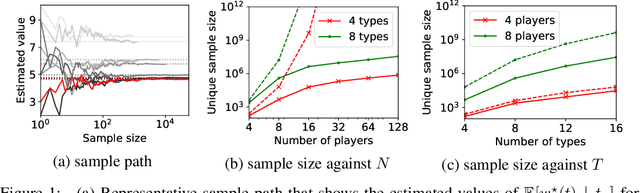
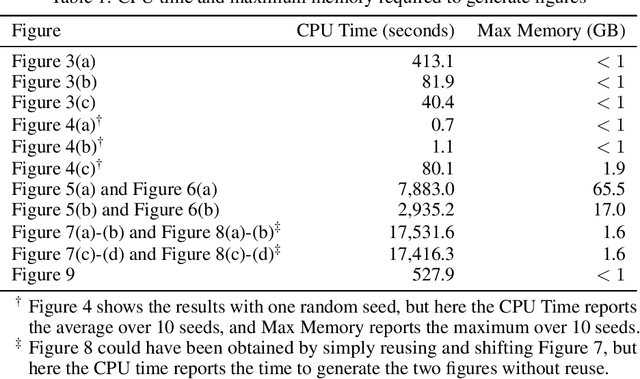
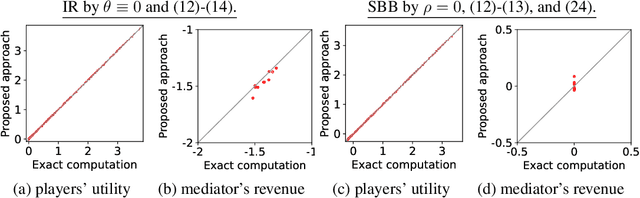
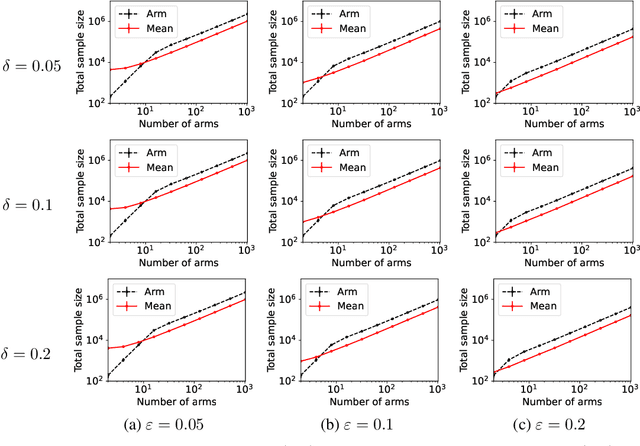
A popular approach of automated mechanism design is to formulate a linear program (LP) whose solution gives a mechanism with desired properties. We analytically derive a class of optimal solutions for such an LP that gives mechanisms achieving standard properties of efficiency, incentive compatibility, strong budget balance (SBB), and individual rationality (IR), where SBB and IR are satisfied in expectation. Notably, our solutions are represented by an exponentially smaller number of essential variables than the original variables of LP. Our solutions, however, involve a term whose exact evaluation requires solving a certain optimization problem exponentially many times as the number of players, $N$, grows. We thus evaluate this term by modeling it as the problem of estimating the mean reward of the best arm in multi-armed bandit (MAB), propose a Probably and Approximately Correct estimator, and prove its asymptotic optimality by establishing a lower bound on its sample complexity. This MAB approach reduces the number of times the optimization problem is solved from exponential to $O(N\,\log N)$. Numerical experiments show that the proposed approach finds mechanisms that are guaranteed to achieve desired properties with high probability for environments with up to 128 players, which substantially improves upon the prior work.