 Add to Chrome
 Add to Firefox
 Add to Edge
Multimodal Climate Disinformation Detection: Integrating Vision-Language Models with External Knowledge Sources
Jan 22, 2026
Climate disinformation has become a major challenge in today digital world, especially with the rise of misleading images and videos shared widely on social media. These false claims are often convincing and difficult to detect, which can delay actions on climate change. While vision-language models (VLMs) have been used to identify visual disinformation, they rely only on the knowledge available at the time of training. This limits their ability to reason about recent events or updates. The main goal of this paper is to overcome that limitation by combining VLMs with external knowledge. By retrieving up-to-date information such as reverse image results, online fact-checks, and trusted expert content, the system can better assess whether an image and its claim are accurate, misleading, false, or unverifiable. This approach improves the model ability to handle real-world climate disinformation and supports efforts to protect public understanding of science in a rapidly changing information landscape.

VLM Models and Automated Grading of Atopic Dermatitis
May 23, 2025The task of grading atopic dermatitis (or AD, a form of eczema) from patient images is difficult even for trained dermatologists. Research on automating this task has progressed in recent years with the development of deep learning solutions; however, the rapid evolution of multimodal models and more specifically vision-language models (VLMs) opens the door to new possibilities in terms of explainable assessment of medical images, including dermatology. This report describes experiments carried out to evaluate the ability of seven VLMs to assess the severity of AD on a set of test images.
AI and Non AI Assessments for Dementia
Jun 30, 2023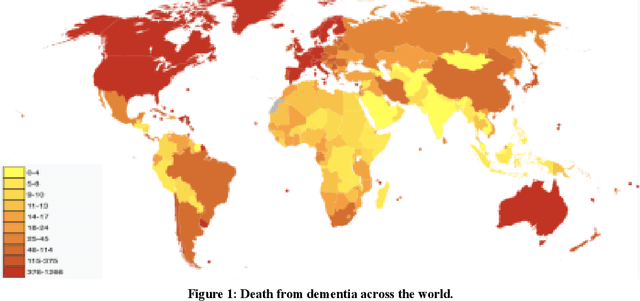
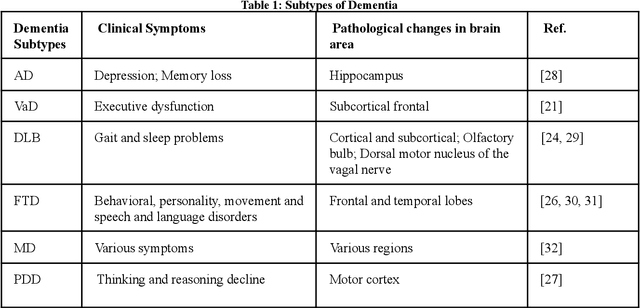
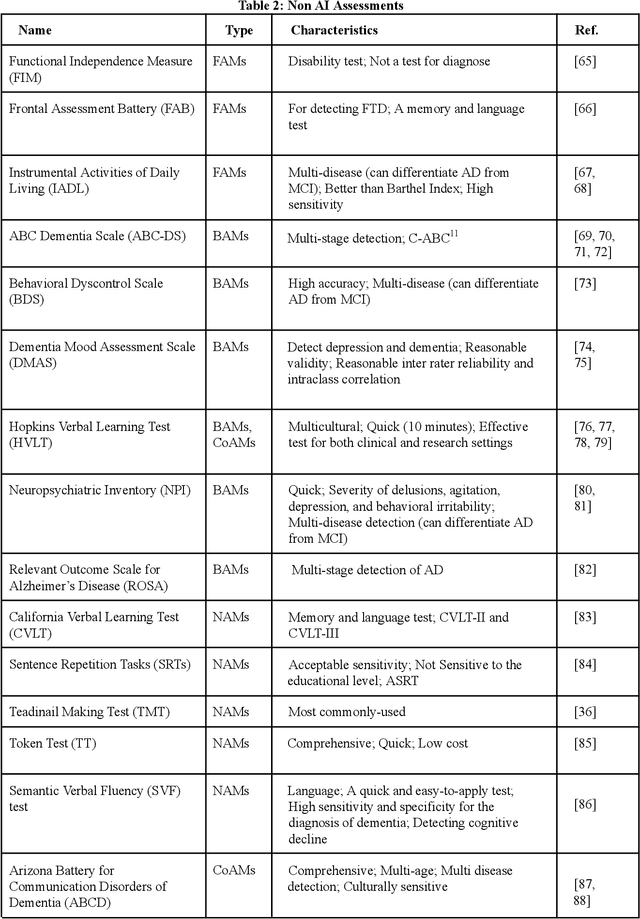
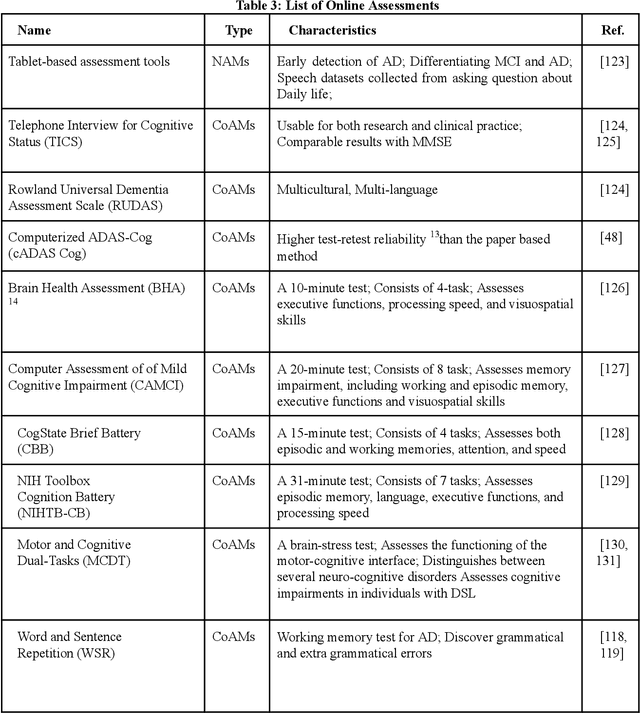
Current progress in the artificial intelligence domain has led to the development of various types of AI-powered dementia assessments, which can be employed to identify patients at the early stage of dementia. It can revolutionize the dementia care settings. It is essential that the medical community be aware of various AI assessments and choose them considering their degrees of validity, efficiency, practicality, reliability, and accuracy concerning the early identification of patients with dementia (PwD). On the other hand, AI developers should be informed about various non-AI assessments as well as recently developed AI assessments. Thus, this paper, which can be readable by both clinicians and AI engineers, fills the gap in the literature in explaining the existing solutions for the recognition of dementia to clinicians, as well as the techniques used and the most widespread dementia datasets to AI engineers. It follows a review of papers on AI and non-AI assessments for dementia to provide valuable information about various dementia assessments for both the AI and medical communities. The discussion and conclusion highlight the most prominent research directions and the maturity of existing solutions.