 Add to Chrome
 Add to Firefox
 Add to Edge
POSEIDON: Physics-Optimized Seismic Energy Inference and Detection Operating Network
Jan 05, 2026
Earthquake prediction and seismic hazard assessment remain fundamental challenges in geophysics, with existing machine learning approaches often operating as black boxes that ignore established physical laws. We introduce POSEIDON (Physics-Optimized Seismic Energy Inference and Detection Operating Network), a physics-informed energy-based model for unified multi-task seismic event prediction, alongside the Poseidon dataset -- the largest open-source global earthquake catalog comprising 2.8 million events spanning 30 years. POSEIDON embeds fundamental seismological principles, including the Gutenberg-Richter magnitude-frequency relationship and Omori-Utsu aftershock decay law, as learnable constraints within an energy-based modeling framework. The architecture simultaneously addresses three interconnected prediction tasks: aftershock sequence identification, tsunami generation potential, and foreshock detection. Extensive experiments demonstrate that POSEIDON achieves state-of-the-art performance across all tasks, outperforming gradient boosting, random forest, and CNN baselines with the highest average F1 score among all compared methods. Crucially, the learned physics parameters converge to scientifically interpretable values -- Gutenberg-Richter b-value of 0.752 and Omori-Utsu parameters p=0.835, c=0.1948 days -- falling within established seismological ranges while enhancing rather than compromising predictive accuracy. The Poseidon dataset is publicly available at https://huggingface.co/datasets/BorisKriuk/Poseidon, providing pre-computed energy features, spatial grid indices, and standardized quality metrics to advance physics-informed seismic research.

ELENA: Epigenetic Learning through Evolved Neural Adaptation
Jan 10, 2025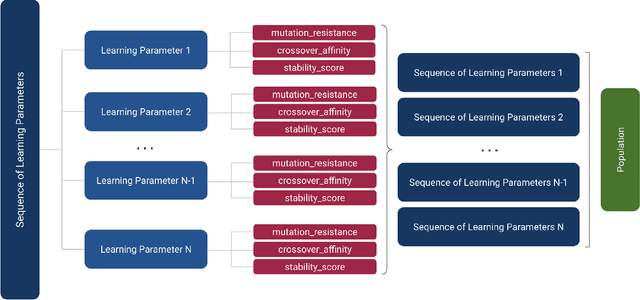
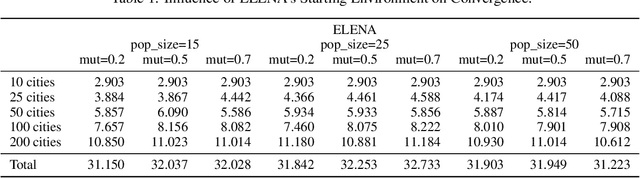
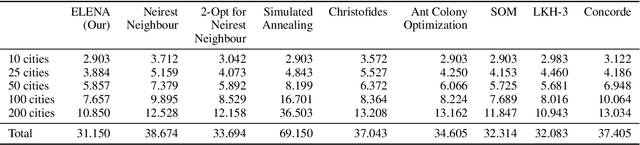

Despite the success of metaheuristic algorithms in solving complex network optimization problems, they often struggle with adaptation, especially in dynamic or high-dimensional search spaces. Traditional approaches can become stuck in local optima, leading to inefficient exploration and suboptimal solutions. Most of the widely accepted advanced algorithms do well either on highly complex or smaller search spaces due to the lack of adaptation. To address these limitations, we present ELENA (Epigenetic Learning through Evolved Neural Adaptation), a new evolutionary framework that incorporates epigenetic mechanisms to enhance the adaptability of the core evolutionary approach. ELENA leverages compressed representation of learning parameters improved dynamically through epigenetic tags that serve as adaptive memory. Three epigenetic tags (mutation resistance, crossover affinity, and stability score) assist with guiding solution space search, facilitating a more intelligent hypothesis landscape exploration. To assess the framework performance, we conduct experiments on three critical network optimization problems: the Traveling Salesman Problem (TSP), the Vehicle Routing Problem (VRP), and the Maximum Clique Problem (MCP). Experiments indicate that ELENA achieves competitive results, often surpassing state-of-the-art methods on network optimization tasks.