 Add to Chrome
 Add to Firefox
 Add to Edge
SORIS: A Self-Organized Reconfigurable Intelligent Surface Architecture for Wireless Communications
Jan 30, 2026
In this paper, a new reconfigurable intelligent surface (RIS) hardware architecture, called self-organized RIS (SORIS), is proposed. The architecture incorporates a microcontroller connected to a single-antenna receiver operating at the same frequency as the RIS unit elements, operating either in transmission or reflection mode. The transmitting RIS elements enable the low latency estimation of both the incoming and outcoming channels at the microcontroller's side. In addition, a machine learning approach for estimating the incoming and outcoming channels involving the remaining RIS elements operating in reflection mode is devised. Specifically, by appropriately selecting a small number of elements in transmission mode, and based on the channel reciprocity principle, the respective channel coefficients are first estimated, which are then fed to a low-complexity neural network that, leveraging spatial channel correlation over RIS elements, returns predictions of the channel coefficients referring to the rest of elements. In this way, the SORIS microcontroller acquires channel state information, and accordingly reconfigures the panel's metamaterials to assist data communication between a transmitter and a receiver, without the need for separate connections with them. Moreover, the impact of channel estimation on the proposed solution, and a detailed complexity analysis for the used model, as well as a wiring density and control signaling analysis, is performed. The feasibility and efficacy of the proposed self-organized RIS design and operation are verified by Monte Carlo simulations, providing useful guidelines on the selection of the RIS elements for operating in transmission mode for initial channel estimation.
* 12 figures, 1 table, journal

Simultaneous Information and Control Signalling Protocol for RIS-Empowered Wireless Systems
Aug 06, 2025Integration of RIS in radio access networks requires signaling between edge units and the RIS microcontroller (MC). Unfortunately, in several practical scenarios, the signaling latency is higher than the communication channel coherence time, which causes outdated signaling at the RIS. To counterbalance this, we introduce a simultaneous information and control signaling (SICS) protocol that enables operation adaptation through wireless control signal transmission. SICS assumes that the MC is equipped with a single antenna that operates at the same frequency as the RIS. RIS operates in simultaneous transmission and reflection (STAR) mode, and the source employs non-orthogonal multiple access (NOMA) to superposition the information signal to the control signal. To maximize the achievable user data rate while ensuring the MC's ability to decode the control signal, we formulate and solve the corresponding optimization problem that returns RIS's reflection and transmission coefficients as well as the superposition coefficients of the NOMA scheme. Our results reveal the robustness of the SICS approach.
Modeling blockage in high directional wireless. systems
Nov 17, 2024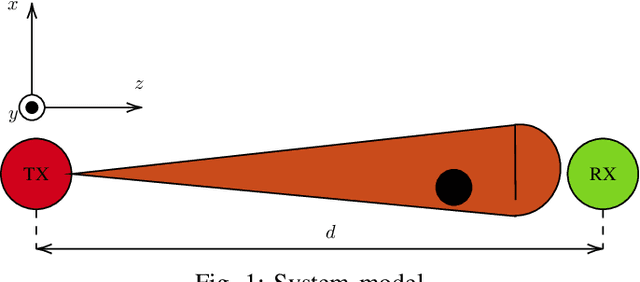
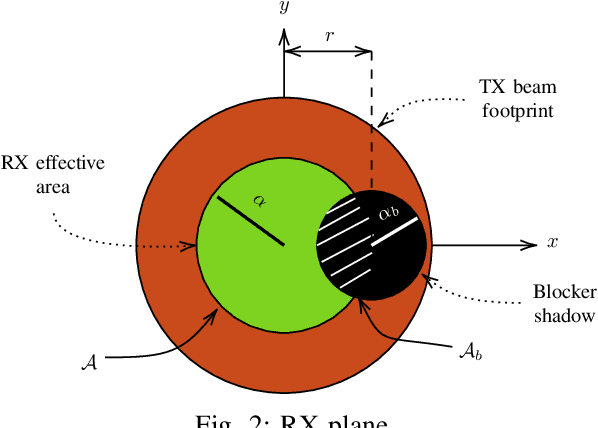
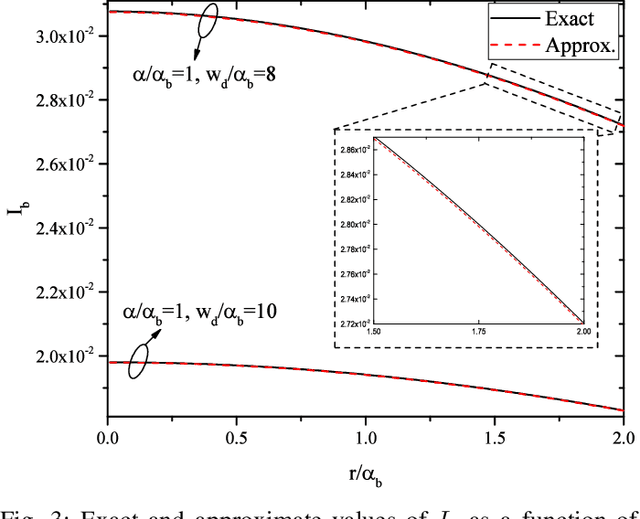
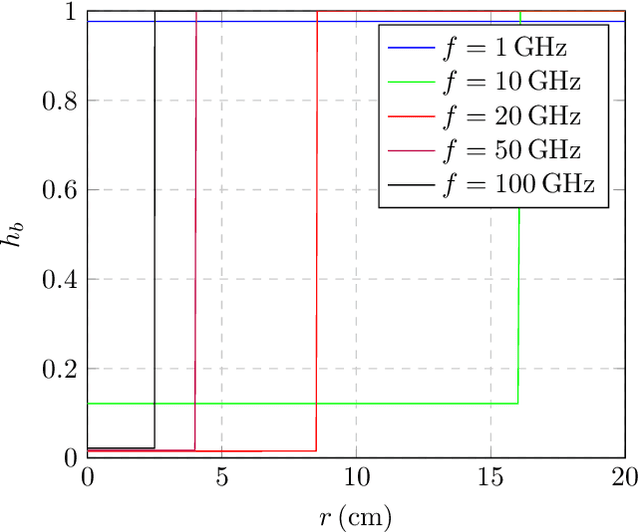
While the wireless word moves towards higher frequency bands, new challenges arises, due to the inherent characteristics of the transmission links, such as high path and penetration losses. Penetration losses causes blockages that in turn can significantly reduce the signal strength at the receiver. Most published contributions consider a binary blockage stage, i.e. either fully blocked or blockage-free links. However, in realistic scenarios, a link can be partially blocked. Motivated by this, in this paper, we present two low-complexity models that are based on tight approximations and accommodates the impact of partial blockage in high-frequency links. To demonstrate the applicability of the derived framework, we present closed-form expressions for the outage probability for the case in which the distance between the center of the receiver plane and the blocker's shadow center follow uniform distribution. Numerical results verify the derived framework and reveal how the transmission parameters affect blockage.