 Add to Chrome
 Add to Firefox
 Add to Edge
LLM-Based Behavior Tree Generation for Construction Machinery
Feb 01, 2026
Earthwork operations are facing an increasing demand, while workforce aging and skill loss create a pressing need for automation. ROS2-TMS for Construction, a Cyber-Physical System framework designed to coordinate construction machinery, has been proposed for autonomous operation; however, its reliance on manually designed Behavior Trees (BTs) limits scalability, particularly in scenarios involving heterogeneous machine cooperation. Recent advances in large language models (LLMs) offer new opportunities for task planning and BT generation. However, most existing approaches remain confined to simulations or simple manipulators, with relatively few applications demonstrated in real-world contexts, such as complex construction sites involving multiple machines. This paper proposes an LLM-based workflow for BT generation, introducing synchronization flags to enable safe and cooperative operation. The workflow consists of two steps: high-level planning, where the LLM generates synchronization flags, and BT generation using structured templates. Safety is ensured by planning with parameters stored in the system database. The proposed method is validated in simulation and further demonstrated through real-world experiments, highlighting its potential to advance automation in civil engineering.

Development of CPS Platform for Autonomous Construction
Nov 29, 2024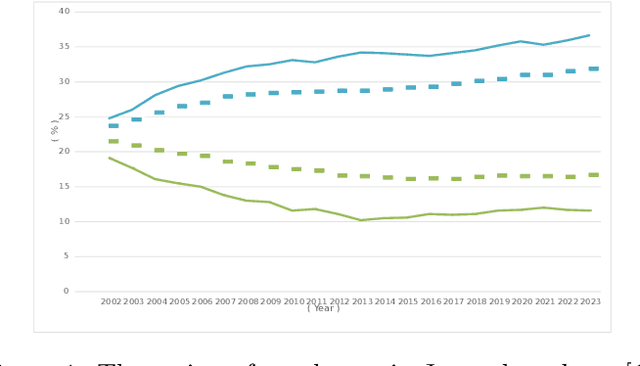
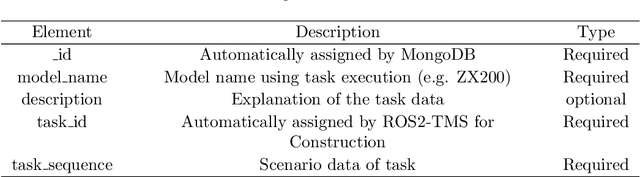
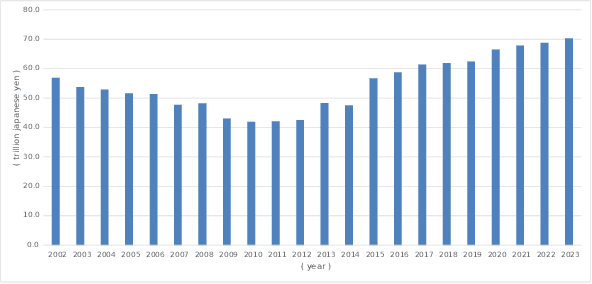
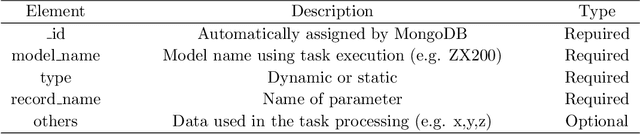
In recent years, labor shortages due to the declining birthrate and aging population have become significant challenges at construction sites in developed countries, including Japan. To address these challenges, we are developing an open platform called ROS2-TMS for Construction, a Cyber-Physical System (CPS) for construction sites, to achieve both efficiency and safety in earthwork operations. In ROS2-TMS for Construction, the system comprehensively collects and stores environmental information from sensors placed throughout the construction site. Based on these data, a real-time virtual construction site is created in cyberspace. Then, based on the state of construction machinery and environmental conditions in cyberspace, the optimal next actions for actual construction machinery are determined, and the construction machinery is operated accordingly. In this project, we decided to use the Open Platform for Earthwork with Robotics and Autonomy (OPERA), developed by the Public Works Research Institute (PWRI) in Japan, to control construction machinery from ROS2-TMS for Construction with an originally extended behavior tree. In this study, we present an overview of OPERA, focusing on the newly developed navigation package for operating the crawler dump, as well as the overall structure of ROS2-TMS for Construction as a Cyber-Physical System (CPS). Additionally, we conducted experiments using a crawler dump and a backhoe to verify the aforementioned functionalities.