 Add to Chrome
 Add to Firefox
 Add to Edge
Cross-Domain Offshore Wind Power Forecasting: Transfer Learning Through Meteorological Clusters
Jan 27, 2026
Ambitious decarbonisation targets are catalysing growth in orders of new offshore wind farms. For these newly commissioned plants to run, accurate power forecasts are needed from the onset. These allow grid stability, good reserve management and efficient energy trading. Despite machine learning models having strong performances, they tend to require large volumes of site-specific data that new farms do not yet have. To overcome this data scarcity, we propose a novel transfer learning framework that clusters power output according to covariate meteorological features. Rather than training a single, general-purpose model, we thus forecast with an ensemble of expert models, each trained on a cluster. As these pre-trained models each specialise in a distinct weather pattern, they adapt efficiently to new sites and capture transferable, climate-dependent dynamics. Through the expert models' built-in calibration to seasonal and meteorological variability, we remove the industry-standard requirement of local measurements over a year. Our contributions are two-fold - we propose this novel framework and comprehensively evaluate it on eight offshore wind farms, achieving accurate cross-domain forecasting with under five months of site-specific data. Our experiments achieve a MAE of 3.52\%, providing empirical verification that reliable forecasts do not require a full annual cycle. Beyond power forecasting, this climate-aware transfer learning method opens new opportunities for offshore wind applications such as early-stage wind resource assessment, where reducing data requirements can significantly accelerate project development whilst effectively mitigating its inherent risks.

Predicting Electricity Consumption with Random Walks on Gaussian Processes
Sep 09, 2024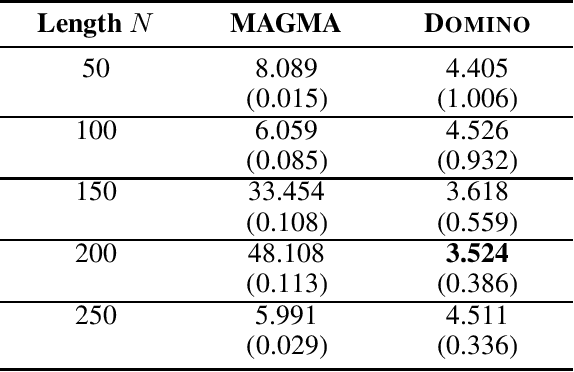
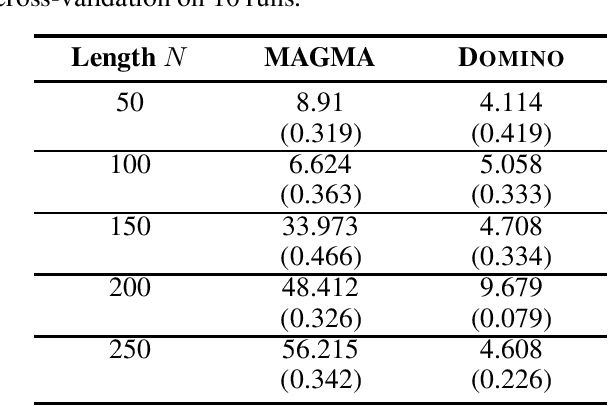
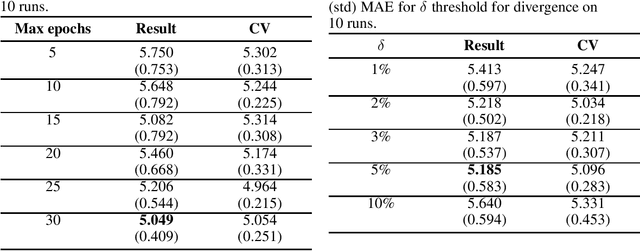
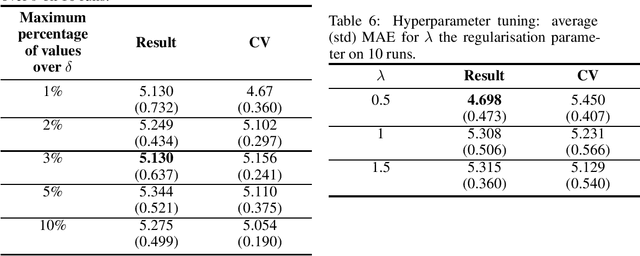
We consider time-series forecasting problems where data is scarce, difficult to gather, or induces a prohibitive computational cost. As a first attempt, we focus on short-term electricity consumption in France, which is of strategic importance for energy suppliers and public stakeholders. The complexity of this problem and the many levels of geospatial granularity motivate the use of an ensemble of Gaussian Processes (GPs). Whilst GPs are remarkable predictors, they are computationally expensive to train, which calls for a frugal few-shot learning approach. By taking into account performance on GPs trained on a dataset and designing a random walk on these, we mitigate the training cost of our entire Bayesian decision-making procedure. We introduce our algorithm called \textsc{Domino} (ranDOM walk on gaussIaN prOcesses) and present numerical experiments to support its merits.