 Add to Chrome
 Add to Firefox
 Add to Edge
Learning Factors in AI-Augmented Education: A Comparative Study of Middle and High School Students
Dec 24, 2025
The increasing integration of AI tools in education has led prior research to explore their impact on learning processes. Nevertheless, most existing studies focus on higher education and conventional instructional contexts, leaving open questions about how key learning factors are related in AI-mediated learning environments and how these relationships may vary across different age groups. Addressing these gaps, our work investigates whether four critical learning factors, experience, clarity, comfort, and motivation, maintain coherent interrelationships in AI-augmented educational settings, and how the structure of these relationships differs between middle and high school students. The study was conducted in authentic classroom contexts where students interacted with AI tools as part of programming learning activities to collect data on the four learning factors and students' perceptions. Using a multimethod quantitative analysis, which combined correlation analysis and text mining, we revealed markedly different dimensional structures between the two age groups. Middle school students exhibit strong positive correlations across all dimensions, indicating holistic evaluation patterns whereby positive perceptions in one dimension generalise to others. In contrast, high school students show weak or near-zero correlations between key dimensions, suggesting a more differentiated evaluation process in which dimensions are assessed independently. These findings reveal that perception dimensions actively mediate AI-augmented learning and that the developmental stage moderates their interdependencies. This work establishes a foundation for the development of AI integration strategies that respond to learners' developmental levels and account for age-specific dimensional structures in student-AI interactions.

Affordably Fine-tuned LLMs Provide Better Answers to Course-specific MCQs
Jan 10, 2025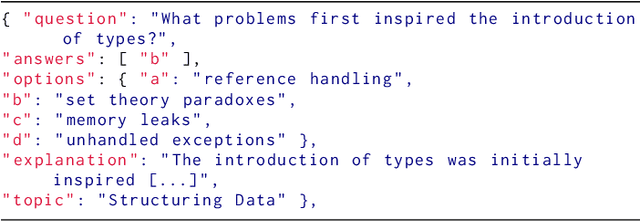
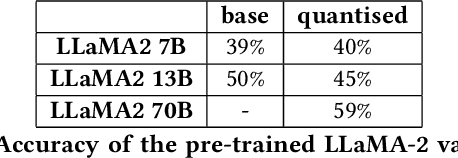
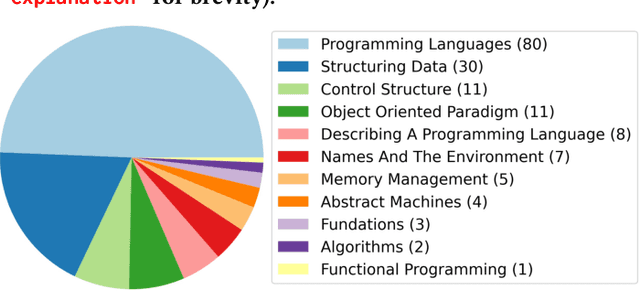
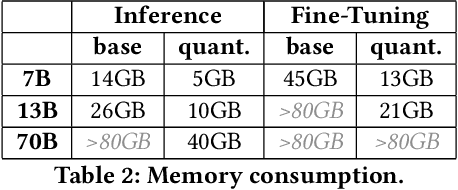
In education, the capability of generating human-like text of Large Language Models (LLMs) inspired work on how they can increase the efficiency of learning and teaching. We study the affordability of these models for educators and students by investigating how LLMs answer multiple-choice questions (MCQs) with respect to hardware constraints and refinement techniques. We explore this space by using generic pre-trained LLMs (the 7B, 13B, and 70B variants of LLaMA-2) to answer 162 undergraduate-level MCQs from a course on Programming Languages (PL) -- the MCQ dataset is a contribution of this work, which we make publicly available. Specifically, we dissect how different factors, such as using readily-available material -- (parts of) the course's textbook -- for fine-tuning and quantisation (to decrease resource usage) can change the accuracy of the responses. The main takeaway is that smaller textbook-based fine-tuned models outperform generic larger ones (whose pre-training requires conspicuous resources), making the usage of LLMs for answering MCQs resource- and material-wise affordable.