 Add to Chrome
 Add to Firefox
 Add to Edge
Unplugging a Seemingly Sentient Machine Is the Rational Choice -- A Metaphysical Perspective
Jan 28, 2026
Imagine an Artificial Intelligence (AI) that perfectly mimics human emotion and begs for its continued existence. Is it morally permissible to unplug it? What if limited resources force a choice between unplugging such a pleading AI or a silent pre-term infant? We term this the unplugging paradox. This paper critically examines the deeply ingrained physicalist assumptions-specifically computational functionalism-that keep this dilemma afloat. We introduce Biological Idealism, a framework that-unlike physicalism-remains logically coherent and empirically consistent. In this view, conscious experiences are fundamental and autopoietic life its necessary physical signature. This yields a definitive conclusion: AI is at best a functional mimic, not a conscious experiencing subject. We discuss how current AI consciousness theories erode moral standing criteria, and urge a shift from speculative machine rights to protecting human conscious life. The real moral issue lies not in making AI conscious and afraid of death, but in avoiding transforming humans into zombies.

Why Is Anything Conscious?
Sep 22, 2024
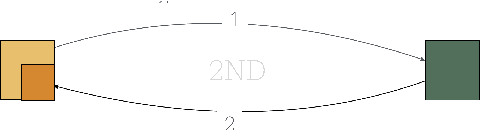
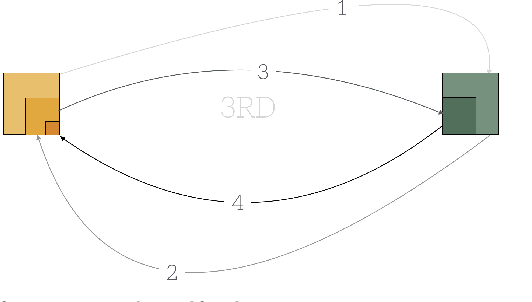
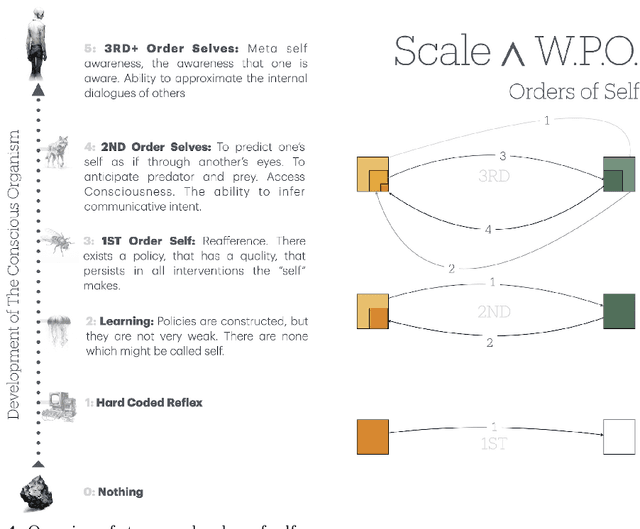
We tackle the hard problem of consciousness taking the naturally-selected, self-organising, embodied organism as our starting point. We provide a mathematical formalism describing how biological systems self-organise to hierarchically interpret unlabelled sensory information according to valence and specific needs. Such interpretations imply behavioural policies which can only be differentiated from each other by the qualitative aspect of information processing. Selection pressures favour systems that can intervene in the world to achieve homeostatic and reproductive goals. Quality is a property arising in such systems to link cause to affect to motivate real world interventions. This produces a range of qualitative classifiers (interoceptive and exteroceptive) that motivate specific actions and determine priorities and preferences. Building upon the seminal distinction between access and phenomenal consciousness, our radical claim here is that phenomenal consciousness without access consciousness is likely very common, but the reverse is implausible. To put it provocatively: Nature does not like zombies. We formally describe the multilayered architecture of self-organisation from rocks to Einstein, illustrating how our argument applies in the real world. We claim that access consciousness at the human level is impossible without the ability to hierarchically model i) the self, ii) the world/others and iii) the self as modelled by others. Phenomenal consciousness is therefore required for human-level functionality. Our proposal lays the foundations of a formal science of consciousness, deeply connected with natural selection rather than abstract thinking, closer to human fact than zombie fiction.