 Add to Chrome
 Add to Firefox
 Add to Edge
Context-Aware Pesticide Recommendation via Few-Shot Pest Recognition for Precision Agriculture
Jan 01, 2026
Effective pest management is crucial for enhancing agricultural productivity, especially for crops such as sugarcane and wheat that are highly vulnerable to pest infestations. Traditional pest management methods depend heavily on manual field inspections and the use of chemical pesticides. These approaches are often costly, time-consuming, labor-intensive, and can have a negative impact on the environment. To overcome these challenges, this study presents a lightweight framework for pest detection and pesticide recommendation, designed for low-resource devices such as smartphones and drones, making it suitable for use by small and marginal farmers. The proposed framework includes two main components. The first is a Pest Detection Module that uses a compact, lightweight convolutional neural network (CNN) combined with prototypical meta-learning to accurately identify pests even when only a few training samples are available. The second is a Pesticide Recommendation Module that incorporates environmental factors like crop type and growth stage to suggest safe and eco-friendly pesticide recommendations. To train and evaluate our framework, a comprehensive pest image dataset was developed by combining multiple publicly available datasets. The final dataset contains samples with different viewing angles, pest sizes, and background conditions to ensure strong generalization. Experimental results show that the proposed lightweight CNN achieves high accuracy, comparable to state-of-the-art models, while significantly reducing computational complexity. The Decision Support System additionally improves pest management by reducing dependence on traditional chemical pesticides and encouraging sustainable practices, demonstrating its potential for real-time applications in precision agriculture.

BDNet: Bengali handwritten numeral digit recognition based on densely connected convolutional neural networks
Jun 11, 2019
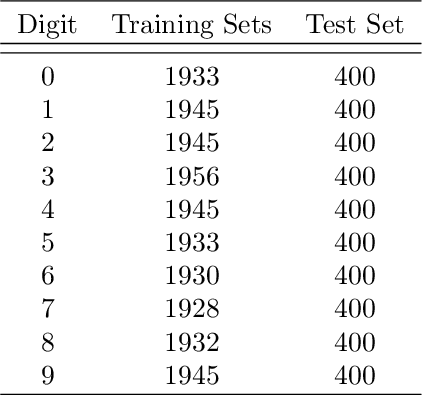
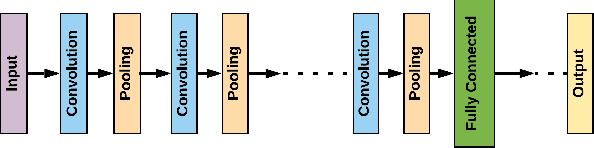
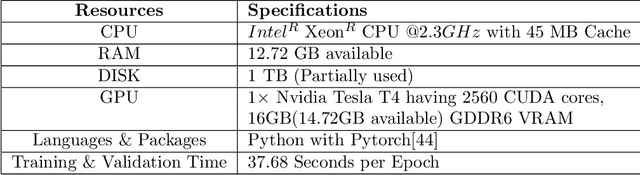
Bengali handwritten digit recognition can be done using different image classification techniques. But the images of handwritten digits are different from natural images as the orientation of a digit as well as similarity of features of different digits are important. On the other hand, deep convolutional neural networks are achieving huge success in computer vision problems, especially in image classification. This BDNet is a densely connected deep convolutional neural network model based on state-of-the-art algorithm DenseNet to classify Bengali handwritten numeral digits. The BDNet has end-to-end trained using ISI Bengali handwritten numeral dataset with 5-fold cross-validation. The BDNet has achieved a test accuracy of 99.65% (baseline was 99.40%) on test data of ISI Bengali handwritten numerals. The trained model also gives 97.50% on own created dataset (which are not used during training). That is, this model gives a 41.66% error reduction compared to the previous state-of-the-art model. Codes, trained model and own dataset available at: https://github.com/Sufianlab/BDNet.