 Add to Chrome
 Add to Firefox
 Add to Edge
VIANA: character Value-enhanced Intensity Assessment via domain-informed Neural Architecture
Apr 01, 2026
Predicting the perceived intensity of odorants remains a fundamental challenge in sensory science due to the complex, non-linear behavior of their response, as well as the difficulty in correlating molecular structure with human perception. While traditional deep learning models, such as Graph Convolutional Networks (GCNs), excel at capturing molecular topology, they often fail to account for the biological and perceptual context of olfaction. This study introduces VIANA, a novel "tri-pillar" framework that integrates structural graph theory, character value embeddings, and phenomenological behavior. This methodology systematically evaluates knowledge transfer across three distinct domains: molecular structure via GCNs, semantic odor character values via Principal Odor Map (POM) embeddings, and biological dose-response logic via Hill's law. We demonstrate that knowledge transfer is not inherently positive; rather, a balance must be maintained in the volume of information provided to the model. While raw semantic data led to "information overload" in domain-informed models, applying Principal Component Analysis (PCA) to distill the 95% most impactful semantic variance yielded a superior "signal distillation" effect. Results indicate that the synthesis of these three knowledge transfer pillars significantly outperforms baseline structural models, with VIANA achieving a peak R^2 of 0.996 and a test Mean Squared Error (MSE) of 0.19. In this context, VIANA successfully captures the physical ceiling of saturation, the sensitivity of detection thresholds, and the nuance of odor character value expression, providing a domain grounded simulation of the human olfactory experience. This research provides a robust framework for digital olfaction, effectively bridging the gap between molecular informatics and sensory perception.

A Robust Scientific Machine Learning for Optimization: A Novel Robustness Theorem
Sep 13, 2022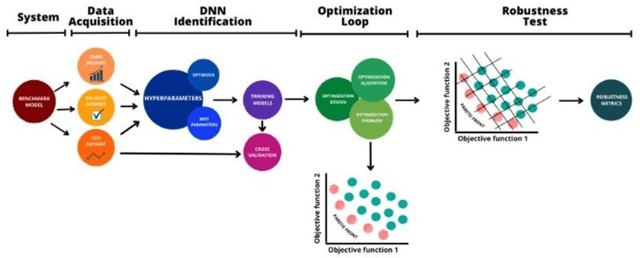

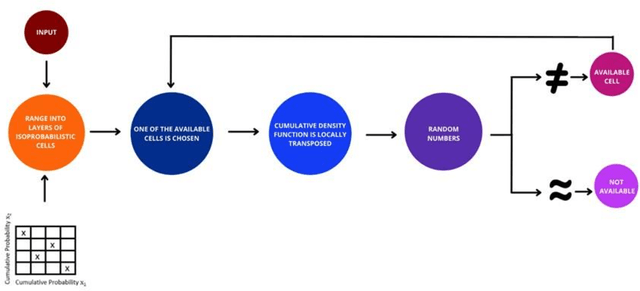
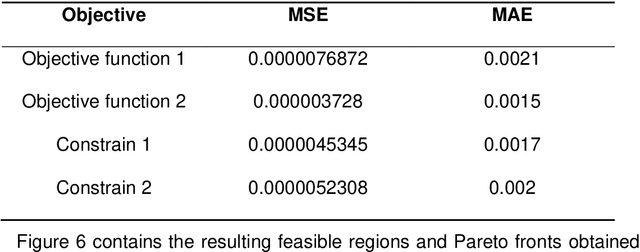
Scientific machine learning (SciML) is a field of increasing interest in several different application fields. In an optimization context, SciML-based tools have enabled the development of more efficient optimization methods. However, implementing SciML tools for optimization must be rigorously evaluated and performed with caution. This work proposes the deductions of a robustness test that guarantees the robustness of multiobjective SciML-based optimization by showing that its results respect the universal approximator theorem. The test is applied in the framework of a novel methodology which is evaluated in a series of benchmarks illustrating its consistency. Moreover, the proposed methodology results are compared with feasible regions of rigorous optimization, which requires a significantly higher computational effort. Hence, this work provides a robustness test for guaranteed robustness in applying SciML tools in multiobjective optimization with lower computational effort than the existent alternative.
A new Reinforcement Learning framework to discover natural flavor molecules
Sep 13, 2022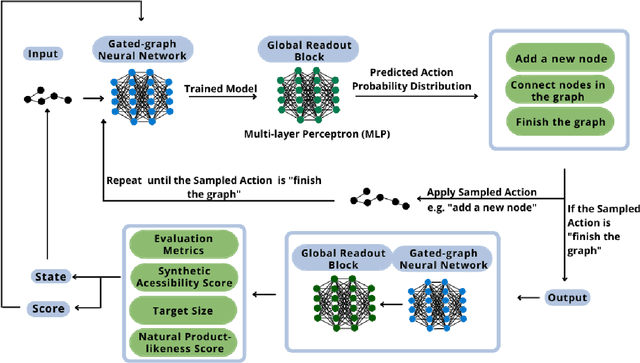
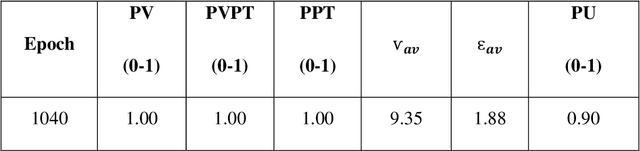
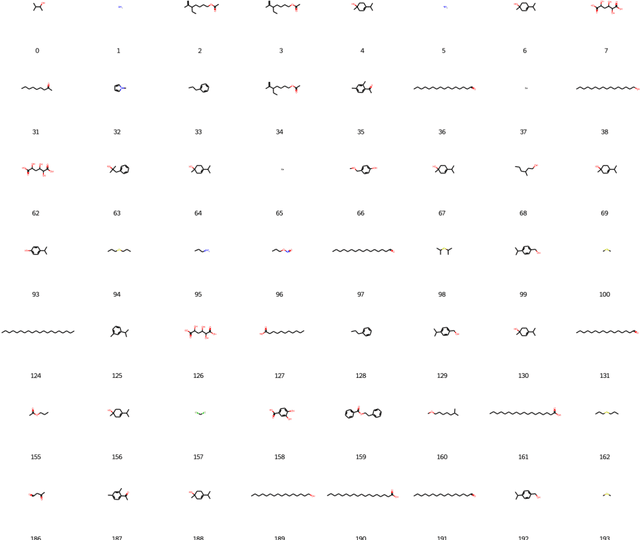
The flavor is the focal point in the flavor industry, which follows social tendencies and behaviors. The research and development of new flavoring agents and molecules are essential in this field. On the other hand, the development of natural flavors plays a critical role in modern society. In light of this, the present work proposes a novel framework based on Scientific Machine Learning to undertake an emerging problem in flavor engineering and industry. Therefore, this work brings an innovative methodology to design new natural flavor molecules. The molecules are evaluated regarding the synthetic accessibility, the number of atoms, and the likeness to a natural or pseudo-natural product.