 Add to Chrome
 Add to Firefox
 Add to Edge
PATHWAYS: Evaluating Investigation and Context Discovery in AI Web Agents
Feb 05, 2026
We introduce PATHWAYS, a benchmark of 250 multi-step decision tasks that test whether web-based agents can discover and correctly use hidden contextual information. Across both closed and open models, agents typically navigate to relevant pages but retrieve decisive hidden evidence in only a small fraction of cases. When tasks require overturning misleading surface-level signals, performance drops sharply to near chance accuracy. Agents frequently hallucinate investigative reasoning by claiming to rely on evidence they never accessed. Even when correct context is discovered, agents often fail to integrate it into their final decision. Providing more explicit instructions improves context discovery but often reduces overall accuracy, revealing a tradeoff between procedural compliance and effective judgement. Together, these results show that current web agent architectures lack reliable mechanisms for adaptive investigation, evidence integration, and judgement override.
* 35 pages, 13 figures

Bangladeshi Native Vehicle Detection in Wild
May 20, 2024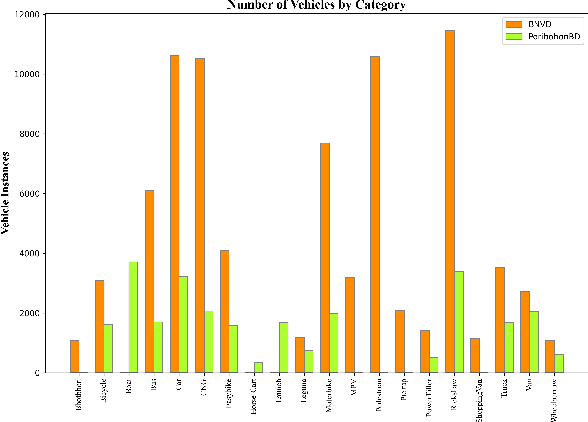
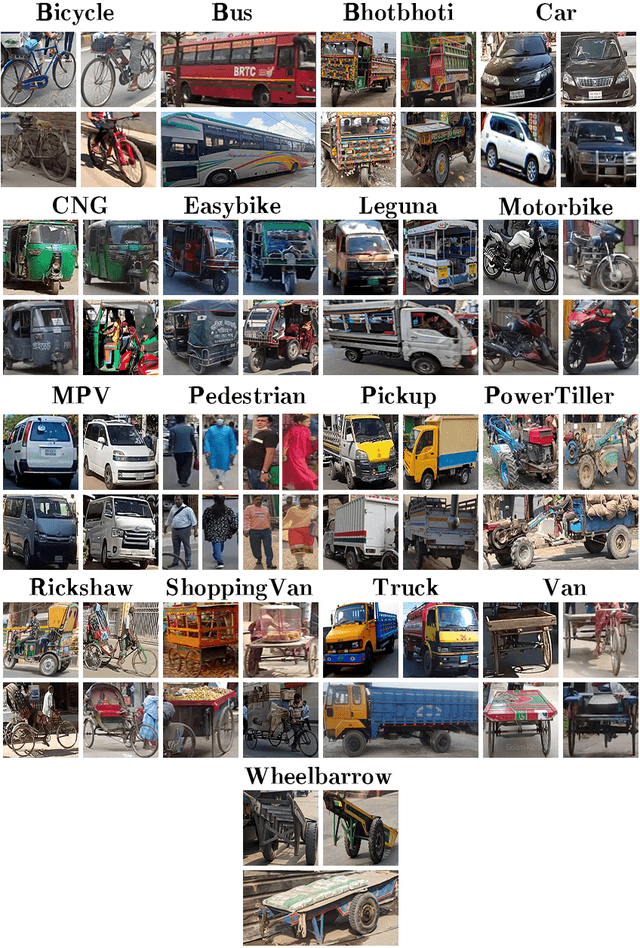
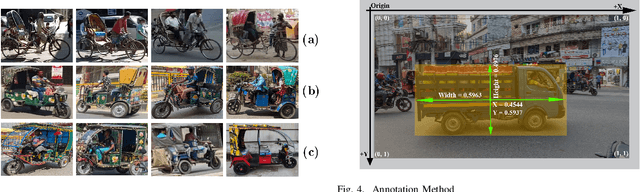
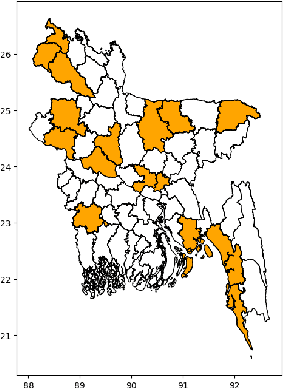
The success of autonomous navigation relies on robust and precise vehicle recognition, hindered by the scarcity of region-specific vehicle detection datasets, impeding the development of context-aware systems. To advance terrestrial object detection research, this paper proposes a native vehicle detection dataset for the most commonly appeared vehicle classes in Bangladesh. 17 distinct vehicle classes have been taken into account, with fully annotated 81542 instances of 17326 images. Each image width is set to at least 1280px. The dataset's average vehicle bounding box-to-image ratio is 4.7036. This Bangladesh Native Vehicle Dataset (BNVD) has accounted for several geographical, illumination, variety of vehicle sizes, and orientations to be more robust on surprised scenarios. In the context of examining the BNVD dataset, this work provides a thorough assessment with four successive You Only Look Once (YOLO) models, namely YOLO v5, v6, v7, and v8. These dataset's effectiveness is methodically evaluated and contrasted with other vehicle datasets already in use. The BNVD dataset exhibits mean average precision(mAP) at 50% intersection over union (IoU) is 0.848 corresponding precision and recall values of 0.841 and 0.774. The research findings indicate a mAP of 0.643 at an IoU range of 0.5 to 0.95. The experiments show that the BNVD dataset serves as a reliable representation of vehicle distribution and presents considerable complexities.