 Add to Chrome
 Add to Firefox
 Add to Edge
Noise-Robust Contrastive Learning with an MFCC-Conformer For Coronary Artery Disease Detection
Jan 26, 2026
Cardiovascular diseases (CVD) are the leading cause of death worldwide, with coronary artery disease (CAD) comprising the largest subcategory of CVDs. Recently, there has been increased focus on detecting CAD using phonocardiogram (PCG) signals, with high success in clinical environments with low noise and optimal sensor placement. Multichannel techniques have been found to be more robust to noise; however, achieving robust performance on real-world data remains a challenge. This work utilises a novel multichannel energy-based noisy-segment rejection algorithm, using heart and noise-reference microphones, to discard audio segments with large amounts of nonstationary noise before training a deep learning classifier. This conformer-based classifier takes mel-frequency cepstral coefficients (MFCCs) from multiple channels, further helping improve the model's noise robustness. The proposed method achieved 78.4% accuracy and 78.2% balanced accuracy on 297 subjects, representing improvements of 4.1% and 4.3%, respectively, compared to training without noisy-segment rejection.

Generative Deep Learning and Signal Processing for Data Augmentation of Cardiac Auscultation Signals: Improving Model Robustness Using Synthetic Audio
Oct 14, 2024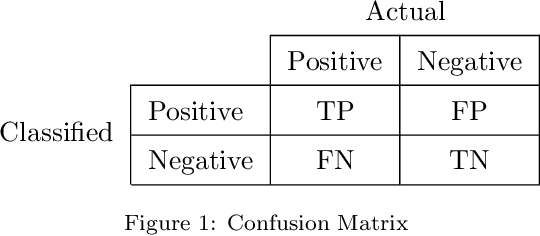
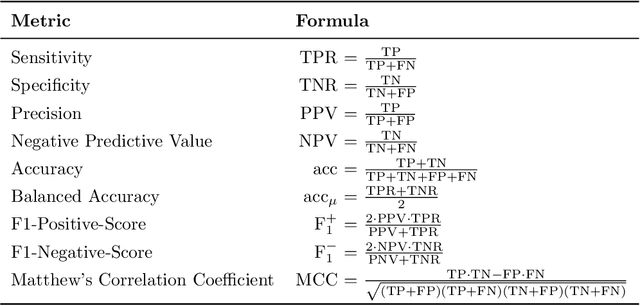
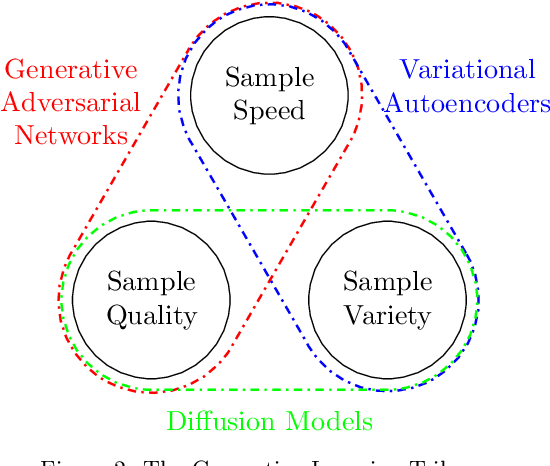
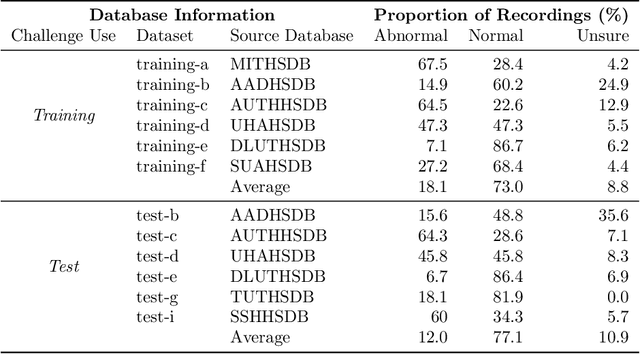
Accurately interpreting cardiac auscultation signals plays a crucial role in diagnosing and managing cardiovascular diseases. However, the paucity of labelled data inhibits classification models' training. Researchers have turned to generative deep learning techniques combined with signal processing to augment the existing data and improve cardiac auscultation classification models to overcome this challenge. However, the primary focus of prior studies has been on model performance as opposed to model robustness. Robustness, in this case, is defined as both the in-distribution and out-of-distribution performance by measures such as Matthew's correlation coefficient. This work shows that more robust abnormal heart sound classifiers can be trained using an augmented dataset. The augmentations consist of traditional audio approaches and the creation of synthetic audio conditionally generated using the WaveGrad and DiffWave diffusion models. It is found that both the in-distribution and out-of-distribution performance can be improved over various datasets when training a convolutional neural network-based classification model with this augmented dataset. With the performance increase encompassing not only accuracy but also balanced accuracy and Matthew's correlation coefficient, an augmented dataset significantly contributes to resolving issues of imbalanced datasets. This, in turn, helps provide a more general and robust classifier.