 Add to Chrome
 Add to Firefox
 Add to Edge
Software Vulnerability Management in the Era of Artificial Intelligence: An Industry Perspective
Dec 23, 2025
Artificial Intelligence (AI) has revolutionized software development, particularly by automating repetitive tasks and improving developer productivity. While these advancements are well-documented, the use of AI-powered tools for Software Vulnerability Management (SVM), such as vulnerability detection and repair, remains underexplored in industry settings. To bridge this gap, our study aims to determine the extent of the adoption of AI-powered tools for SVM, identify barriers and facilitators to the use, and gather insights to help improve the tools to meet industry needs better. We conducted a survey study involving 60 practitioners from diverse industry sectors across 27 countries. The survey incorporates both quantitative and qualitative questions to analyze the adoption trends, assess tool strengths, identify practical challenges, and uncover opportunities for improvement. Our findings indicate that AI-powered tools are used throughout the SVM life cycle, with 69% of users reporting satisfaction with their current use. Practitioners value these tools for their speed, coverage, and accessibility. However, concerns about false positives, missing context, and trust issues remain prevalent. We observe a socio-technical adoption pattern in which AI outputs are filtered through human oversight and organizational governance. To support safe and effective use of AI for SVM, we recommend improvements in explainability, contextual awareness, integration workflows, and validation practices. We assert that these findings can offer practical guidance for practitioners, tool developers, and researchers seeking to enhance secure software development through the use of AI.

A Qualitative Study on Using ChatGPT for Software Security: Perception vs. Practicality
Aug 01, 2024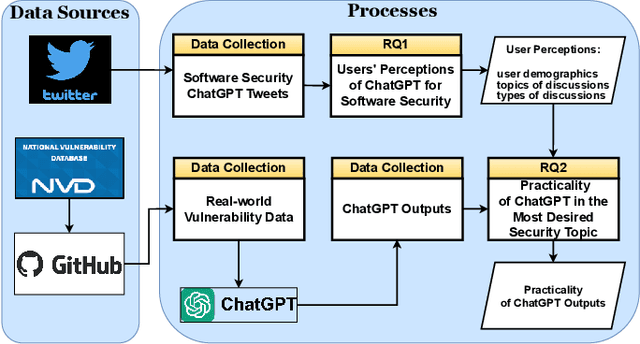
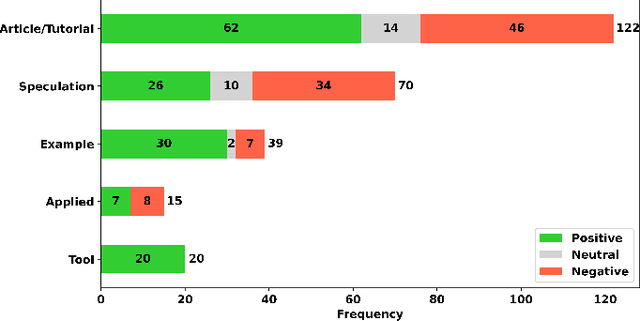
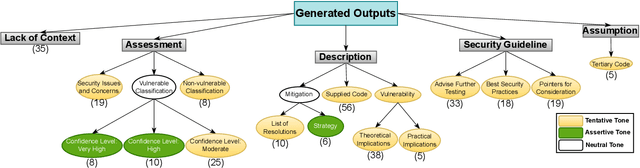

Artificial Intelligence (AI) advancements have enabled the development of Large Language Models (LLMs) that can perform a variety of tasks with remarkable semantic understanding and accuracy. ChatGPT is one such LLM that has gained significant attention due to its impressive capabilities for assisting in various knowledge-intensive tasks. Due to the knowledge-intensive nature of engineering secure software, ChatGPT's assistance is expected to be explored for security-related tasks during the development/evolution of software. To gain an understanding of the potential of ChatGPT as an emerging technology for supporting software security, we adopted a two-fold approach. Initially, we performed an empirical study to analyse the perceptions of those who had explored the use of ChatGPT for security tasks and shared their views on Twitter. It was determined that security practitioners view ChatGPT as beneficial for various software security tasks, including vulnerability detection, information retrieval, and penetration testing. Secondly, we designed an experiment aimed at investigating the practicality of this technology when deployed as an oracle in real-world settings. In particular, we focused on vulnerability detection and qualitatively examined ChatGPT outputs for given prompts within this prominent software security task. Based on our analysis, responses from ChatGPT in this task are largely filled with generic security information and may not be appropriate for industry use. To prevent data leakage, we performed this analysis on a vulnerability dataset compiled after the OpenAI data cut-off date from real-world projects covering 40 distinct vulnerability types and 12 programming languages. We assert that the findings from this study would contribute to future research aimed at developing and evaluating LLMs dedicated to software security.